English



Product Description
| thing | describe |
| Design/Size | According to customer's drawings or samples |
| Material |
Aluminum: 6061, 6063, 6082, 7075, 5052, A380, etc. Stainless steel: SS201, SS301, SS303, SS304, (SS304 food grade), SS316, SS316L, SUS430, SS416 Steel: low carbon steel, carbon steel, 4140, 4340, Q235, Q345B, 20#, 45#, etc. Alloy steel (15Cr, 20Cr, 42CrMo), etc. Brass: HPb63, HPb62, HPb61, HPb59, H59, H68, H80, H90, etc. Copper, bronze, copper, etc. Titanium: TC4 (TiAl6v4, Grade f5) Plastic: ABS, PC, PE, POM, Delrin, Nylon, Plastic, PP, PEI, Peek, etc. |
| process | CNC machining, turning, milling, stamping, turning, cutting, etc. |
| Delivery time | Samples usually take 3-7 working days, and mass production will be carried out according to the detailed quantity after sample approval. |
| Surface treatment | Transparent anodizing, color anodizing, chemical coating, brushing, passivation, polishing, chrome plating, sandblasting, laser engraving, zinc plating, black oxide, nickel plating, chrome plating, carburizing, heat treatment, painting |
| Test equipment | Coordinate measuring machine (CMM), 2D measuring instrument, projector, altimeter, micrometer, thread gauge, hardness tester, caliper, pin gauge, salt spray tester, concentricity measuring instrument, spectrometer. |
| Quality Management System |
ISO 9001:2015 ISO 13485:2016 |
| application | Auto parts, machinery parts, computer parts, medical parts, home appliance parts, electrical parts, electronic product parts, electronic parts, generator parts, alternator parts, generator parts, stationery, power switches, micro switches, construction, merchandise and A/V equipment. |
| File Format | Solidworks, Pro/Engineer, CAD, PDF, JPG, DXF, IGS |
| Package | Inner plastic bag, outer standard carton, or as per customer's requirements |
| Shipping | Sea freight, air freight, international express (DHL, FedEx, TNT, UPS). |
| Serve | The professional foreign trade team provides enthusiastic and fast response services. Dimensional inspection report/Raw material certificate/Surface treatment report/Engineering drawing RoHS report/Salt spray test report/Hardness test report |
Processing Introduction of Lightning Arrester Matching Electrode for 4G Signal Stations
This product is a core matching electrode for lightning arresters of 4G signal stations, a non-standard custom precision structural part perfectly adapted to lightning arrester housings. Exclusively engineered for lightning protection equipment of outdoor 4G signal stations, it demands stringent requirements for structural adaptability, dimensional accuracy, surface technology and detailed forming. Our factory combines cold extrusion forming with high-precision machining technology, and relying on mature non-standard precision processing expertise and experience in communication accessory manufacturing, we achieve high-precision custom mass production of this electrode. It balances structural strength and fitting accuracy, ensuring perfect compatibility with matching components.
1. Core Product Parameters & Design Features
- Base Material: Aluminum alloy 6061-T6 is adopted, featuring high strength, excellent corrosion resistance, as well as superior cold extrusion formability and machinability. It is suitable for the complex working environment of outdoor 4G signal stations with temperature changes and rain exposure. Cold extrusion enhances the surface hardness and structural compactness of the base material, which not only ensures the structural stability and electrical conductivity of the electrode, but also forms performance matching with the material of the matching housing, improving the durability of the entire lightning arrester system.
- Surface Technology: A fine machined surface with roughness controlled at Ra1.5-3.5μm is adopted without painting treatment. The surface is required to be free of oil stains, burrs, chips, dents and other processing defects. The base surface formed by cold extrusion has high flatness, laying a solid foundation for subsequent precision machining. The high-precision surface technology not only prevents the paint layer from affecting electrical conductivity, but also ensures the fitting accuracy with matching components, avoiding the impact of assembly gaps on lightning protection efficiency.
- Structural Design: The product features an integrated precision micro-structure with designed slots, Whitworth threaded holes, multiple sets of small-radius arc transitions and symmetrical tiny structures. All surfaces are parallel to the datum plane with rich details and fine dimensions, including thin-walled and micro-cavity features. The integrated forming of the main blank is completed by cold extrusion, replacing traditional rough cutting and accurately restoring the structural prototype. It is a typical non-standard precision micro-part combining cold extrusion and fine carving. The overall structure is precisely adapted to the lightning arrester housing, meeting the requirements of modular assembly.
- Version Specification: The current production version is optimized after multiple rounds of design iterations with added structural features such as slots. Our factory has simultaneously upgraded the cold extrusion die and precision machining process, making the product structure and accuracy highly consistent with the latest assembly requirements of lightning arresters and ensuring the stability of supporting use.
2. Core Machining Process Flow
Combined with the product's fine structure, high-precision fitting requirements and material characteristics of aluminum alloy 6061-T6, our factory adopts a one-piece flow processing scheme of cold extrusion forming + high-precision CNC precision machining, following the third-angle projection drawing specification throughout the process. The core process is as follows:
- Raw Material Pretreatment: Select qualified aluminum alloy 6061-T6 bars, conduct precision cutting for fixed length and straightening, and remove oxide layers and surface defects; perform soft annealing and surface phosphating-saponification on the blanks to improve cold extrusion formability and reduce die wear, and finally complete oil stain cleaning in preparation for cold extrusion.
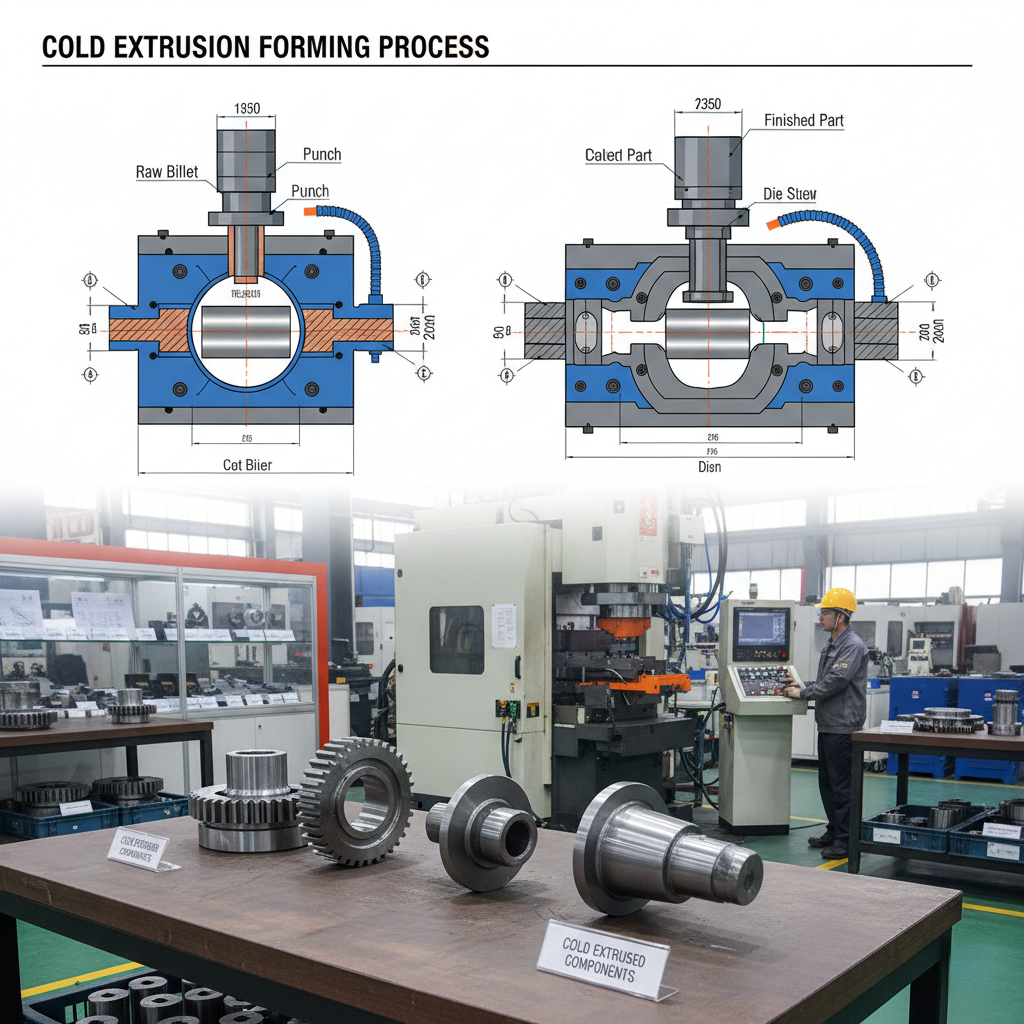
- Cold Extrusion Forming: Adopt customized high-precision micro cold extrusion dies to complete the integrated forming of the product's main blank on a special cold extrusion machine. Extrude the electrode's basic contour, slot prototype, symmetrical tiny structures and cavities at one time to ensure compact structure and uniform wall thickness of the blank. A cold work hardening layer is formed to enhance structural strength and greatly reduce the cutting amount of subsequent precision machining.
- Blank Post-treatment: Conduct stress relief annealing on the cold-extruded blanks to eliminate extrusion internal stress and prevent deformation in subsequent precision machining; perform fine grinding on the datum plane of the blanks to remove extrusion flash and burrs, trim the positioning datum, and ensure the accuracy of subsequent clamping and positioning.
- Precision Clamping and Positioning: Adopt customized high-precision micro special fixtures, and fix the blanks accurately by vacuum adsorption + elastic pressure block light clamping method to establish a unique core machining datum, reducing clamping errors and blank micro-deformation to adapt to the processing requirements of tiny structures.
- CNC Milling Precision Machining: Use a high-precision small CNC machining center to perform finish milling on the cold-extruded blanks with the trimmed datum plane as a reference, refine the main contour, slots, small-radius arcs, thin walls and other structures, accurately control the parallelism of each plane and the positional accuracy of structures, and ensure the fitting dimensions with the matching housing.
- Hole System & Thread Machining: Complete precision drilling of through holes and counterbores through a high-precision CNC drilling machine, and perform tapping on Whitworth threaded holes with special tools; conduct fine chamfering on the hole orifices before tapping to avoid thread crest cracking and ensure thread fitting accuracy and assembly smoothness.
- Precision Chamfering & Fine Deburring: Conduct customized fine chamfering on all sharp edges, hole orifices and slot edges of the product; for parts prone to residual fine burrs such as small-radius arcs and tiny hole orifices, adopt the method of micro ultrasonic deburring + manual fine finishing by senior technicians to completely remove chips and fine burrs and avoid scratching matching components.
- Comprehensive Precision Inspection: Adopt precision instruments such as coordinate measuring machines, dial indicators and roughness meters during processing to conduct comprehensive inspection on dimensional accuracy, geometric tolerance and surface roughness, focus on checking the fitting dimensions with the matching housing, and ensure compliance with design and assembly requirements.
- Final Inspection & Cleaning Packaging: Conduct overall appearance and dimensional final inspection after all processing is completed; perform high-pressure spray + ultrasonic deep cleaning with a special cleaning agent to remove oil stains and chips, and after vacuum drying, adopt anti-static and scratch-resistant special packaging for precision micro-parts to avoid secondary damage during transportation and storage and ensure the perfect delivery state.
3. Main Machining Difficulties
As a core matching precision electrode for lightning arresters, it is a non-standard precision micro-part combining cold extrusion and fine carving. Combined with its fine structure, high-precision fitting requirements and composite process characteristics, the main machining difficulties are as follows:
- Difficulties in Micro Cold Extrusion Die & Blank Forming Control: The product has a tiny structure and complex features, so the cavity design accuracy of the cold extrusion die is extremely demanding. Problems such as die wear, insufficient blank filling and irregular forming of tiny structures are prone to occur; aluminum alloy 6061-T6 is prone to micro-deformation during cold extrusion, making it difficult to ensure the dimensional consistency of each tiny structure of the blank, which directly affects the efficiency of subsequent precision machining.
- Difficulties in Datum Unification & Clamping Positioning: The product is small in size, and the cold-extruded blanks have slight deformation, which is prone to positioning offset during clamping; in addition, tool wear and improper clamping force during precision machining may lead to secondary micro-deformation of the blanks, affecting the parallelism of the datum plane and the positional accuracy of structures, which is directly related to the adaptability with the matching housing.
- Difficulties in Precision Machining of Whitworth Threaded Holes: The Whitworth threaded holes of the product are fine in size, with thread profile and pitch different from conventional metric threads, and conventional tools cannot be adapted; in addition, irregular thread profile and tap breakage are prone to occur during tapping of tiny holes, putting forward stringent requirements for processing tools and process parameters.
- Difficulties in Surface Quality & Defect-free Machining: A fine machined surface without any defects is required. Aluminum alloy has good plasticity, so tool adhesion and built-up edge are prone to occur during precision machining of tiny structures, resulting in surface scratches; at the same time, the tiny surface defects of cold-extruded blanks will be amplified after precision machining, making it difficult to ensure the consistency of roughness.
- Difficulties in Fine Deburring of Micro Structures: Fine burrs are prone to remain in parts such as small-radius arcs, slots and tiny hole orifices of the product, which are difficult to completely remove by traditional methods; manual deburring is prone to surface scratches and structural deformation due to improper operation, affecting product accuracy and assembly effect.
- Difficulties in Controlling Matching Fitting Accuracy: As a matching part, it needs to be precisely matched with the lightning arrester housing. Tiny dimensional deviations in each process of cold extrusion + precision machining may lead to excessive assembly gaps or inability to assemble, putting forward extremely high requirements for the collaborative control of the entire machining accuracy.
4. Targeted Process Solutions
In view of the above machining difficulties, relying on years of experience in aluminum alloy cold extrusion + micro precision part machining, our factory has formulated exclusive solutions from the aspects of die, equipment, tool, process and inspection to fully ensure the product machining quality and matching adaptability:
- Micro Cold Extrusion Forming Control Solution: Customize carbide high-precision micro cold extrusion dies, optimize the design of cavity runners and tiny structures to ensure full blank filling; conduct polishing + nitriding treatment on the die surface to improve wear resistance and service life; precisely control extrusion speed and pressure during cold extrusion, and match with phosphating-saponification lubrication to reduce friction between blanks and dies; conduct 100% appearance and basic dimension inspection on the blanks after extrusion, eliminate unqualified products, and ensure forming quality from the source.
- Datum Unification & Clamping Positioning Solution: Conduct precision milling and trimming on the datum plane of cold-extruded blanks to establish a unified pre-positioning datum; adopt custom micro vacuum fixtures for precision machining, and use elastic pressure blocks for light clamping to minimize blank micro-deformation; calibrate the fixture accuracy before processing, take the datum plane as the only reference throughout the process, and recheck the datum accuracy for every 10 pieces processed to ensure no offset.
- Whitworth Threaded Hole Precision Machining Solution: Customize special micro-diameter taps and drilling tools for Whitworth threads adapted to the product, and use micro chamfering tools to finely chamfer the hole orifices before tapping to ensure smooth thread entry; optimize tapping parameters, adopt the tapping method of CNC low-speed feeding + manual assistance to precisely control the force and avoid tap breakage; conduct 100% inspection with micro thread plug gauges after machining to ensure regular thread profile and qualified fitting accuracy.
- Surface Quality Defect-free Machining Solution: Perform fine grinding on the surface defects of cold-extruded blanks to retain the cold work hardening layer; select special coated micro-diameter tools for aluminum alloy for precision machining, and match with environmental protection cutting fluid for continuous cooling and lubrication to reduce tool adhesion and built-up edge; adopt layered milling for tiny structures to reduce the damage of cutting force to the surface; detect the surface roughness piece by piece with a roughness meter after machining to ensure compliance with design requirements.
- Micro Structure Fine Deburring Solution: Formulate a graded deburring process, first conduct basic deburring with a micro ultrasonic deburring device, then senior technicians manually finish the dead corners with micro grinding tools with the help of magnifying glasses; conduct full inspection after grinding to ensure no burr residue, and avoid surface scratches and structural deformation at the same time.
- Matching Fitting Accuracy Control Solution: Establish a special inspection standard for matching dimensions, and incorporate the key fitting dimensions of the lightning arrester housing into the product inspection scope; inspect the basic fitting dimensions of the blanks after cold extrusion forming, and conduct 100% inspection of the fitting dimensions with a coordinate measuring machine after precision machining; conduct physical assembly testing after the completion of the first piece processing, and start mass production only after confirming the precise fit with the housing to control the matching accuracy throughout the process.
5. Our Machining Advantages & Quality Control Assurance
- Composite Process Advantage: Our factory has a mature composite process system of aluminum alloy cold extrusion + micro precision machining. Cold extrusion realizes the integrated forming of the product main body, improves structural compactness and strength, reduces cutting amount and improves production efficiency; high-precision precision machining ensures dimensional accuracy and surface quality, balancing product performance and adaptability, which is the core advantage of machining non-standard precision micro-structural parts.
- Equipment & Die Advantage: We are equipped with a full set of processing equipment such as special high-precision micro cold extrusion machines, high-precision small CNC machining centers and micro drilling and tapping centers, as well as precision inspection equipment such as coordinate measuring machines. The equipment positioning accuracy reaches 0.005mm, adapting to the processing of micro-parts; we have a professional die design team that can quickly customize and modify cold extrusion dies to accurately adapt to product structure iteration.
- Matching Processing Advantage: Our factory can process the core components such as lightning arrester housings and matching electrodes simultaneously, unify the control of the cold extrusion and precision machining accuracy of the entire set of components, ensure the adaptability of each matching component from the source of the process, reduce the customer's multi-manufacturer collaboration cost, and improve the assembly efficiency and stability of the entire lightning arrester system.
- Full-process Quality Control Advantage: We have established a special quality control system for cold extrusion - precision machining. From incoming raw material inspection, 100% inspection of cold-extruded blanks, to first-piece inspection and patrol inspection in precision machining process, and finally to finished product final inspection and assembly testing, each link has detailed inspection records, and all products are accompanied by inspection reports, ensuring that 100% of the delivered products are qualified without processing defects and dimensional deviations.
- Custom Service Advantage: As a professional non-standard custom precision machining factory, we can flexibly optimize the cold extrusion die and precision machining process according to the overall design requirements of customers' lightning arresters, and quickly respond to design changes; at the same time, we provide customers with professional suggestions on product structure optimization and matching accuracy improvement to help upgrade the performance of the entire set of lightning protection equipment.
With the composite process advantages of cold extrusion and precision machining, a complete quality control system and rich experience in matching part manufacturing, our factory can complete the high-precision and high-quality machining of this lightning arrester matching electrode in strict accordance with design specifications, control every machining detail throughout the process, ensure the product's structural strength, surface quality and matching adaptability, and achieve perfect fit with the lightning arrester housing. We provide a stable and reliable solution for core matching precision parts of lightning arresters for 4G signal stations.
Tel: +86 187 5714 8656
Email: zhouli@chinaliqin.com
WhatsApp: +86 187 5714 8656
Website: https://www.cncliq.com/
Email: zhouli@chinaliqin.com
WhatsApp: +86 187 5714 8656
Website: https://www.cncliq.com/