English




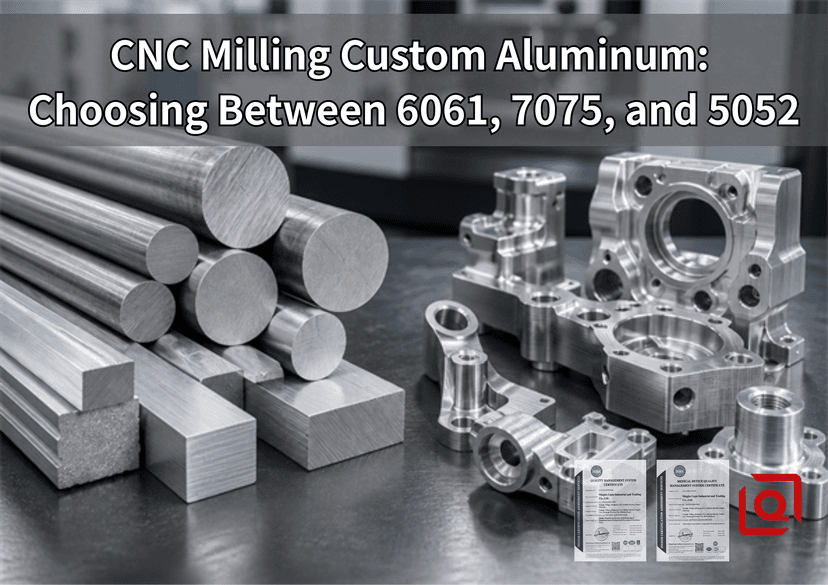
Stop treating aluminum alloy callouts like simple checkboxes on a 2D drawing. Material choice makes or breaks a custom run. Your alloy drives tool push-off, chip clearing, face quality, and whether stock pretzels the second you pop the vise. Weighing 6061-T6 against 7075-T651 or 5052-H32 isn’t just about print callouts. An edge either bites cleanly or gums up and tears, while skimpy walls snap out of true the moment cutter pressure vanishes.
+------------------------------------------------------------------------+
| QUICK SUMMARY:                                                         |
| - 6061-T6: Universal baseline. Predictable shearing, cost-effective,   |
|   and takes color anodizing with uniform, deep luster.                 |
| - 7075-T651: High shear strength and stiff thin walls. Resists flex,  |
|   but costs more, wears tool flutes faster, and can look dull after    |
|   anodizing.                                                           |
| - 5052-H32: Ductile sheet and plate workhorse.Outstanding salt-spray  |
|   resistance, but gummy under end mills; requires flood coolant to     |
|   prevent melted chip buildup.                                         |
+------------------------------------------------------------------------+
Technical Baseline: Practical Material Comparison
Before clamping stock onto the machine table, check your material test report against recognized manufacturing standards. Knowing how each alloy behaves under cut saves broken cutters and scrapped setups.
| Engineering Metric | 6061-T6 (ASTM B221 / B209) | 7075-T651 (ASTM B209 / AMS 4045) | 5052-H32 (ASTM B209) |
| Primary Alloying Blend | Magnesium and Silicon | High Zinc balanced with Magnesium | Magnesium with Chromium traces |
| Yield Strength | 276 MPa | 503 MPa | 193 MPa |
| Brinell Hardness | 95 HBW | 150 HBW | 60 HBW |
| Machinability Nature | Predictable, crisp chip shearing | Brittle, abrasive chips; high tool wear | Gummy,ductile ribbons; prone to smear |
| Material Cost Factor | 1.0x (Shop standard baseline) | 1.45x to 1.80x | 0.90x to 1.05x |
| Target Surface Finish | Ra 0.4 to 0.8 um | Ra 0.2 to 0.6 um | Ra 0.8 to 1.6 um |
| Type II Anodizing Appearance | Crisp, bright satin tone | Slightly dull or dark tint | Inconsistent sheen, visible grain lines |
6061-T6: The Reliable Shop Standard
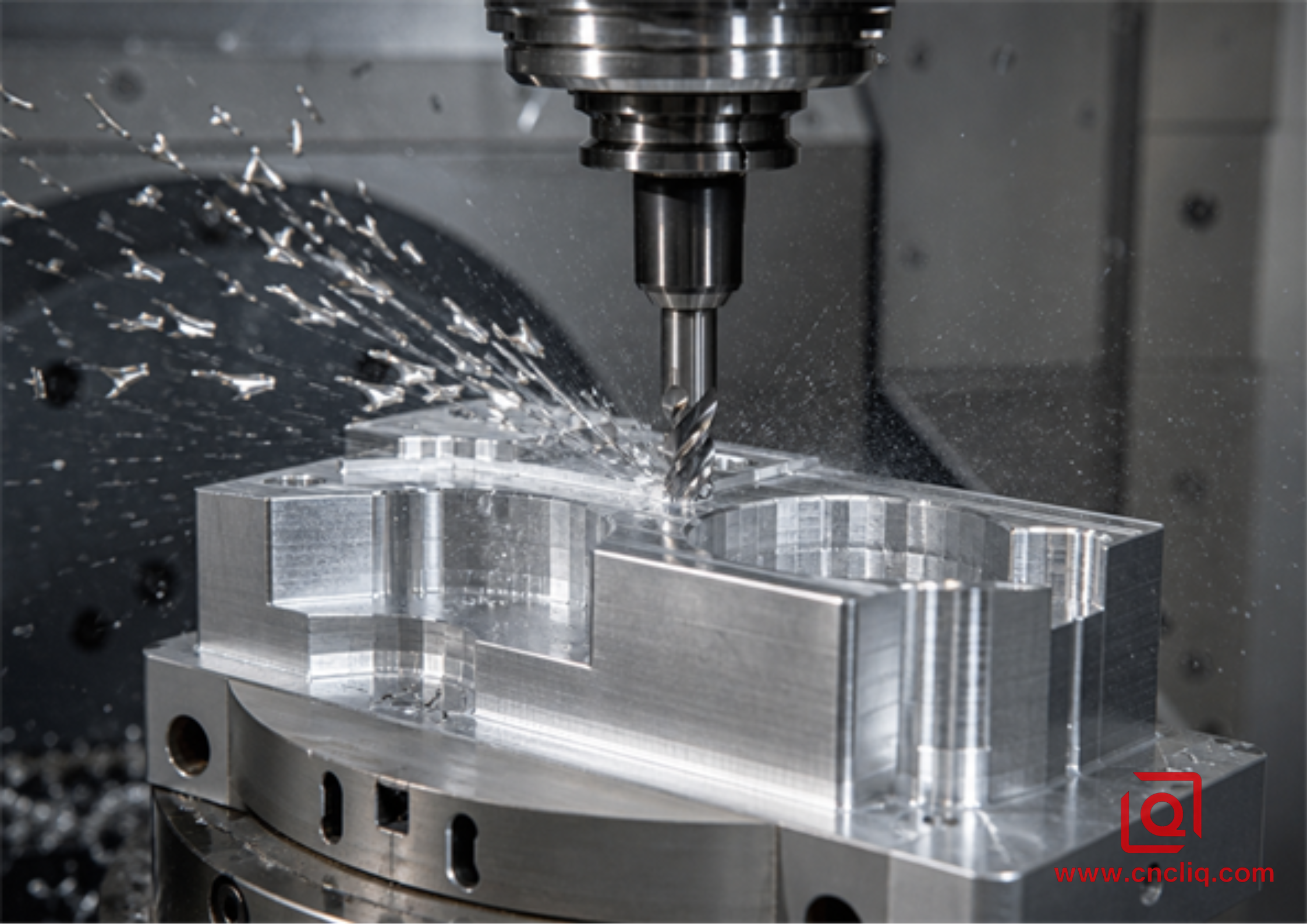
Unless a project calls for extreme mechanical loading or constant exposure to harsh chemicals, 6061-T6 is the natural choice.Its balanced chemistry allows carbide cutters to slice through cleanly without dragging or galling. Under a sharp three-flute mill, the chips break away cleanly and clear out of deep pockets instead of packing into flutes.
Moderate tool pressure ──> Stable chip shearing ──> Predictable cutter edge life
It is the standard choice for electronics housings, mounting brackets, fixture plates, and fluid distribution blocks.
             TYPICAL 6061-T6 MILLING PRACTICES
+-------------------------------------------------------------+
| Spindle Strategy: Runs freely at higher speeds              |
| Chip Evacuation: Standard water-soluble emulsion wash       |
| Cutting Style: Balanced cuts without excessive cutter wear  |
+-------------------------------------------------------------+
6061 responds exceptionally well to post-processing.Type II cosmetic anodizing yields an even satin face with bright color matching across large batches. If sliding surfaces need wear resistance, Type III hardcoat builds a durable ceramic-like barrier that bonds tight without flaking.
Need welding in the print—say, tacking a milled baseplate to an extruded tube frame? 6061 lays down solid TIG or MIG beads without fighting you. Just watch the torch: that heat footprint anneals adjacent stock dead soft, knocking local yield down by about 40% unless you bake the whole assembly through a full solution and aging cycle afterward.
7075-T651: High Shear Strength and Thin-Wall Rigidity
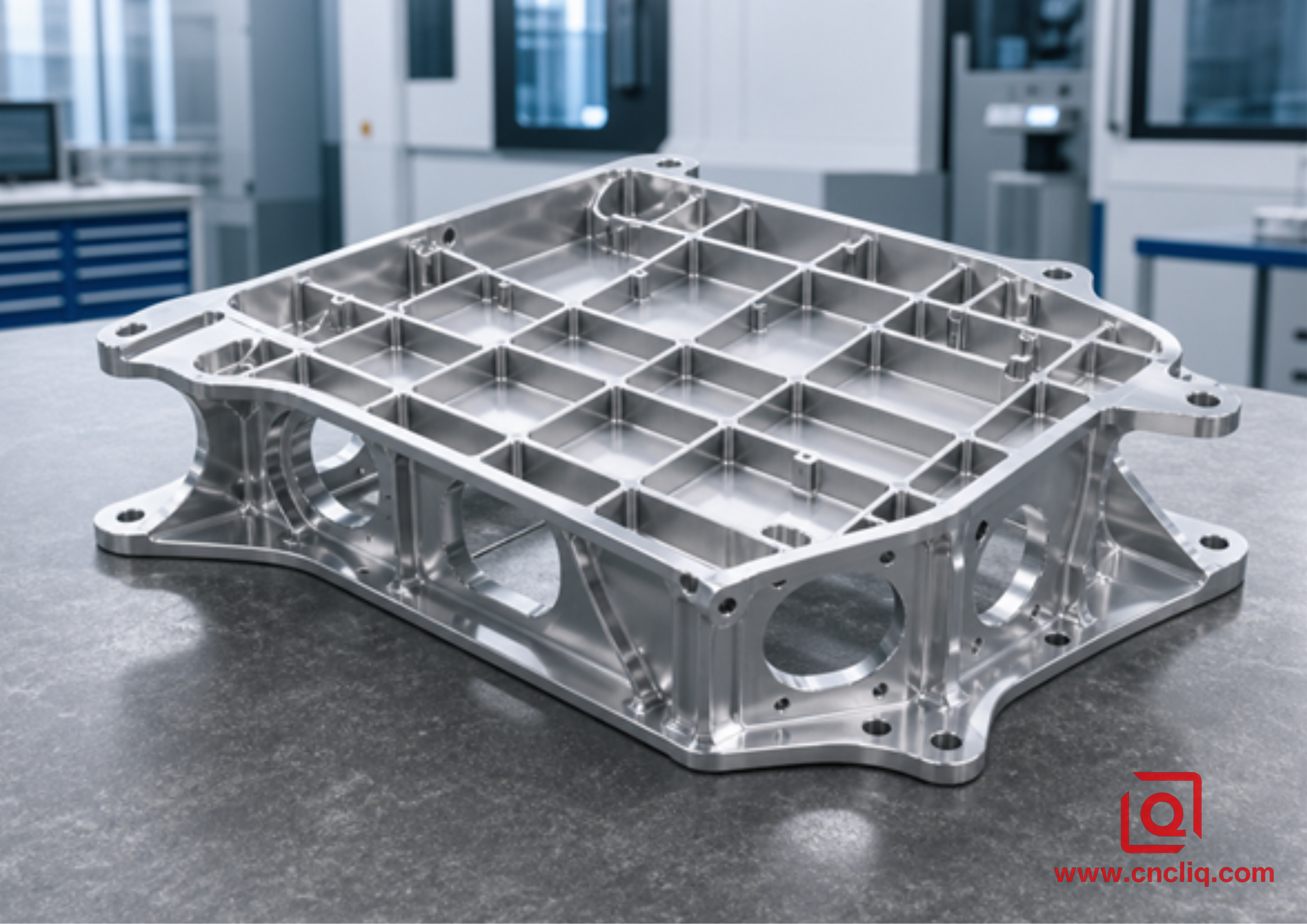
7075-T651 handles heavy stress. Packed with zinc, this grade delivers yield strength exceeding 500 MPa, rivaling mild structural steel while remaining light in hand.
The "51" temper callout indicates that the mill stretched the plate after heat treatment to relieve internal stresses. That internal balance keeps large parts from bowing into banana shapes when you hog out heavy pockets.
Shop Floor Reality: Tool Wear and Machine Chatter
Because 7075 is hard, cut chips do not tear; they pop off crisp, fine, and short. However, you will hear and feel the spindle laboring harder.The material puts heavy side loads on long-reach tools, pushing cutting edges away and causing tool push-off errors.
                              CUTTING FORCE PROFILE
  6061-T6:   [==== Low cutter deflection, easy on edge life ====]
  7075-T651: [======== Heavy tool side loads; chatter risk on deep cuts ========]
To prevent chatter marks and keep tall walls upright:
-
Use dual-contact spindle tooling to eliminate tool taper play under heavy side loads.
-
Moderate peripheral speeds slightly to reduce thermal wear on the carbide tips.
-
Lighten radial engagement on finish cuts so the tool stays straight.
       7075-T651 TALL WALL FINISHING SEQUENCE
Roughing Profile ──> Leave 0.35 mm stock ──> Semi-finish (0.10 mm) ──> Final Spring Pass
Running an extra spring pass at final depth cleans up tool push-off deflection, keeping vertical faces straight and square within 0.015 mm.
Finishing and Corrosion Protection
7075 polishes to a clean gloss straight from the cutter path, but its chemistry calls for care on the back end:
-
Cosmetics: The high zinc content can give standard clear anodizing a smoky olive or pale yellowish cast. If parts require a matching cosmetic look alongside 6061 components, anodize a test coupon first.
-
Corrosion Resistance: Raw 7075 corrodes quickly in humid or salty air. Never leave dynamic 7075 components unprotected outdoors.Apply a chemical conversion coat for paint adhesion, or seal them under a thick hardcoat layer followed by a hot nickel acetate bath.
5052-H32: Highly Corrosion Resistant, Gummy Under the Spindle
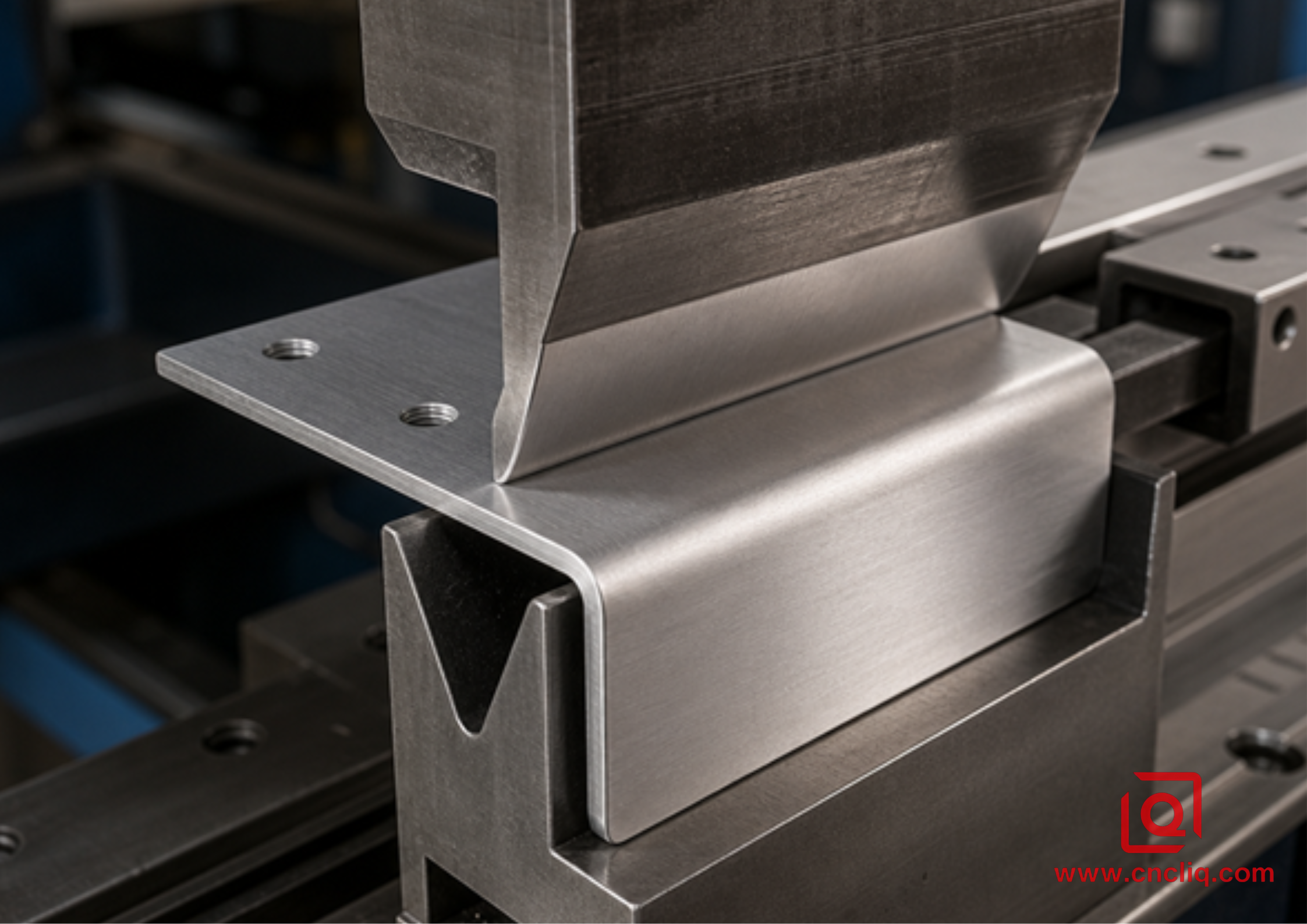
5052-H32 gets its temper from cold rolling alone, bypassing the quench-and-age ovens entirely. It shrugs off saltwater, brine mist, and caustic washdowns without pitting, earning its spot as the default pick for boat hardware, gasketed sensor pods, and welded fluid cells.
However, milling 5052 requires a completely different touch in the vise:
[Viscous/Gummy Material] + [Low Hardness 60 HBW] ──> High risk of Built-Up Edge
Soft, gummy 5052 refuses to shear off crisp. Instead of breaking into short needles, it glazes the flutes. Once hot swarf friction-welds to the rake face, packed pockets bind the cutter—and an undersized end mill snaps in a heartbeat.
            AVOIDING BUILT-UP EDGE IN 5052-H32
+---------------------------------------------------------------+
| Cutter Style: High-rake single or two-flute polished geometry |
| Flute Prep: Mirror-polished flutes (or slick DLC coating)     |
| Coolant Setup: Pressurized flood lines aimed at the cut zone  |
| Cutting Path: Dedicated climb cuts; avoid shallow rubbing     |
+---------------------------------------------------------------+
Keep the cutter moving forward with a positive bite. If the tool rubs lightly without taking a real chip, the surface work-hardens, the flute begins dragging, and the milled face tears into a rough Ra 1.6 um surface.
Clamping calls for caution as well. Tightening a heavy vise against 5052 plate can dish the middle of the workpiece. The metal compresses under clamping, you mill it flat, and then it springs out of true once unclamped.
-
Rest raw plate on soft jaws matched to the part profile.
-
Snug clamping screws with measured, moderate torque—just enough to hold position without dishing the raw blank.
-
Chasing a dead-flat face? Break vise torque right after hogging the cavities so trapped stress can relax. Snug the jaws back down with zero pinch, then skim off a dusting pass to true up the deck.
Real-World Case Study: Industrial Robot End-Effector
                        ASSEMBLY INTERFACE SCHEMATIC
          +---------------------------------------------------+
          |  7075-T651 Core Bracket (High load, 0.01mm pins)  |
          +---------------------------------------------------+
                                    |
          +---------------------------------------------------+
          |  6061-T6 Manifold (Tapped holes, Type II Black)   |
          +---------------------------------------------------+
                                    |
          +---------------------------------------------------+
          |  5052-H32 Splash Guard (BENT sheet, washdown safe)|
          +---------------------------------------------------+
The design crew on a high-speed wrapper pegged 7075-T651 across all 18 frame components for a pneumatic grabber head. Their angle: lock in sheer stiffness throughout the stack.
That choice introduced several shop floor headaches:
-
Tapping 48 fine blind threads across multiple mounting blocks resulted in high tool wear and repeated tap binding in the tough 7075 stock.
-
The clear anodized plates showed visible color mismatching across mating faces due to alloy grain variations.
-
Raw stock costs rose sharply by using an expensive aerospace grade on simple perimeter dust covers and secondary blocks.
       PROJECT REDESIGN: COST & CYCLE TIME COMPARISON
+-------------------------+-------------------------+-------------------------+
| Initial Build (All 7075)| Optimized Multi-Alloy   | Result                  |
| $1,420 per assembly     | $910 per assembly       | 35.9% cost reduction    |
| Cycle time: 145 minutes | Cycle time: 98 minutes  | 32.4% faster throughput |
+-------------------------+-------------------------+-------------------------+
We reorganized the bill of materials across three distinct grades:
-
Core Pivot Mounting Bracket: Kept in 7075-T651. This piece handles high acceleration forces and sudden stops carrying a 15 kg payload. Its 503 MPa yield strength stopped locating pin holes from ovalizing under cyclic loads, holding alignment within 0.010 mm.
-
Pneumatic Manifold Block: Shifted to 6061-T6. The 6061 cut freely, eliminated tap breakage on tiny internal threads, and took an even satin-black anodize that matched adjacent off-the-shelf valves.
-
Perimeter Splash Cover: Converted to 5052-H32. Cut from 3 mm sheet stock, milled along the mounting edges, and folded on a press brake. This eliminated extensive pocketing time, avoided corner tearing during bending, and easily withstood caustic washdowns.
This material pairing dropped total assembly costs by 35.9% and reduced spindle cycle time from 145 minutes down to 98 minutes, while meeting all dynamic rigidity and positional accuracy goals.
The Decision Tree: How to Choose for Your Next Part
                                  MATERIAL SELECTION PATH
                                             │
                       Is the component dynamically loaded?
                       Extreme stress / thin flex-prone ribs?
                                    ┌────────┴────────┐
                                   YES                NO
                                    │                 │
                             [ 7075-T651 ]     Requires sheet bending,
                                               welding,or washdown?
                                                      ┌──┴──┐
                                                     YES    NO
                                                      │     │
                                                [ 5052-H32 ] [ 6061-T6 ]
Run 6061-T6 when:
-
You want an affordable workhorse for bodies, gussets, sensor brackets, or cosmetic covers.
-
The print calls out even, dyed Type II color or tough Type III hardcoat.
-
You have to lay down structural TIG beads or thread a mess of blind holes under M4.
Step up to 7075-T651 when:
-
Loads cycle hard, take violent hits, or flex constantly—think flight linkages, quadcopter booms, or uprights on a track car.
-
Ribs stand skinny and deep (sub-1.5 mm) where 6061 deflects away from the flute, while 7075 cuts dead true.
-
Ounces matter, and you demand billet stock that hits like alloy steel.
Choose 5052-H32 if:
-
The component operates in marine environments, chemical process lines, or areas exposed to road salt.
-
The manufacturing process combines CNC pocket milling with press brake bending or deep drawing.
-
The part is a sheet-based enclosure, cover panel, or liquid tray where high mechanical strength is secondary to corrosion resistance.
FAQs
Q1: Can I swap 7075-T651 straight into a 6061-T6 job without reposting the code?
Don’t risk it. Running the same code invites gnarly chatter, chipped flutes, and size creep. 7075-T651 fights the taper far more aggressively. Lock it down with Big Plus toolholders for stiffness, tighten your radial step-over, and program a zero-depth cleanup run to wipe taper off deep pocket walls.
Q2: Why do clear Type II anodized 6061 and 7075 parts look completely mismatched on the same rig?
Blame the chemistry, not the tank setup. 6061 gets its clean look from magnesium and silicon, pulling a flat, even satin off the rack. 7075 is packed with 5.6% zinc. That zinc skews light through the anodize layer, souring the panel into a drab olive-gold that looks completely wrong bolted beside 6061.
Q3: How do you keep gummy 5052-H32 from fusing inside tool flutes during pocketing?
Keep soft chips moving with polished one- or two-flute high-rake carbide (a slick DLC film helps a ton). Keep down-milling chip loads aggressive—let the inserts bite metal instead of burnishing it. Peg your blast nozzles straight at the contact patch; you want coolant pressure blowing hot chips clear before flute gullets choke.
Q4: Can you weld CNC-milled 6061-T6 mounts straight onto an extruded skeleton?
Absolutely, running 4043 or 5356 wire lays down solid beads. Just remember arc heat cooks the surrounding zone dead back to an O or T4 temper. That dings local yield strength by roughly 40% along the weld bead unless you reheat the full weldment back to a T6 state.
Q5: What stops skinny 5052 and 6061 sheets from potato-chipping once jaws open?
Grab parts with machined soft jaws to spread clamp bite. Crack the vise entirely after heavy roughing to let rolling stresses blow off, snug the part back down with bare-minimum torque, and kiss the face with a light skim cut to hold flatness inside 0.05 mm.
Summary
Picking billet for a mill job boils down to three things: service load, tool response, and how parts look out of final wash. 6061-T6 is your bread-and-butter standard. Chips fly free, it takes welds with zero fuss, and panels pull an even, bright color in the tank. Step up to 7075-T651 and you get steel-grade yield (>500 MPa) that keeps tall, skinny ribs from bending under brutal cycle fatigue. The trade-off? It chews through carbide fast and leaves you with an off-color olive-gray dip. Then comes 5052-H32. Salt fog won't touch it and bends form easily, but the stock cuts like gum. You have to run mirror-polished flutes, blast high-pressure fluid, and back off jaw clamping so you don't fight built-up edge or pull the plate out of flat.
Contact Information
Disclaimer
All technical articles, material specifications, machining recommendations, and surface treatment details published on this blog are for informational and reference purposes only. Please note that general blog insights do not replace signed technical agreements. Because custom parts vary by material heat numbers, machine calibrations, and specific tolerances, binding quality specs are governed solely by your approved CAD drawings, signed contracts, and formal quality plans.
All customer case studies featured on this blog have been thoroughly anonymized and sanitized.The performance metrics, manufacturing workflows, and imagery displayed serve solely to demonstrate our custom machining capabilities and do not represent a single universal standard for all orders.
Liqin Manufacturing Team
Built on 18 years of precision engineering experience, Ningbo Liqin Industry manufactures high-tolerance metal components for demanding global markets. We operate out of a 6,500 m² production hub equipped with over 150 machines, running 4-axis and 5-axis CNC machining, mill-turn machining, cold extrusion, and pressure die casting under one roof. This setup allows us to manage projects seamlessly, taking parts from initial CAD concepts directly to finalized shipments.
We handle quality control with zero compromise. We treat tight tolerances with the engineering discipline they require. Backed by ISO 9001, ISO 13485, and IATF 16949 certifications, our QA engineers run strict IPQC, FQC, and OQC checks on every single production batch. From CMM dimensional mapping and optical profiling to hardness and salt-spray testing, we validate your critical specs upfront—so you receive drop-in ready components with zero assembly headaches or costly line stoppages. On top of manufacturing, you can rely on us for two-hour response times on new RFQs, direct support for prototype sampling, and smooth export shipping across Europe, North America, Asia, and Oceania.
Welcome your inquiries and samples.Visit our website or contact us directly for a competitive quote!