 English




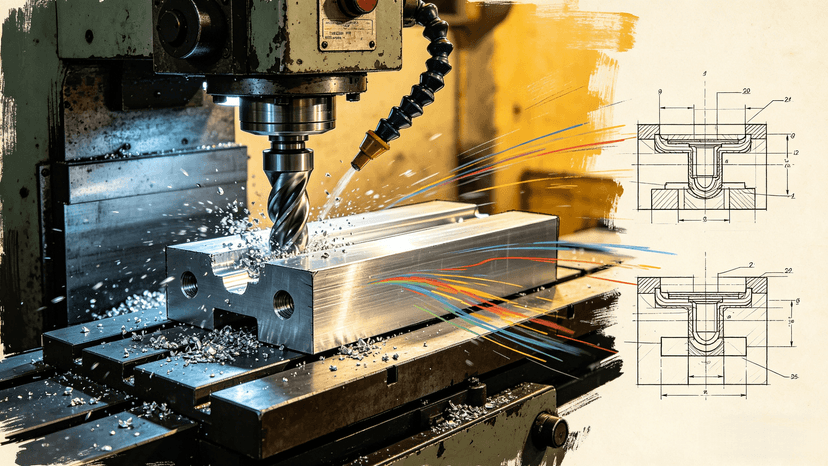
Complete Analysis of Milling Process: From Emergency DIY to Industrial‑Grade Precision Milling
Unlock the Core Code of Metal Processing
Late at night, you are debugging a custom piece of equipment and urgently need a special‑shaped metal bracket. The drawing is in your hand, but professional milled parts require a 3‑day lead time — production cannot stop, and the deadline is urgent. Looking at an angle grinder and a scrap steel plate nearby, you wonder: Can I mill this simple profile myself?
The answer is: theoretically yes! With an angle grinder fitted with a milling cutter, manual feed can roughly machine simple planes and grooves. This is the charm of homemade milling: simplifying the complex in emergencies to solve immediate problems.
However, reality is often harsher than imagination. Manual milling relies entirely on feel, resulting in crooked cuts, dimensional deviations, and rough surfaces. A slight mistake can damage the workpiece or even cause safety hazards from tool bounce or material splashing. Complex surfaces and high‑precision steps are simply impossible with manual operation.
Welcome to the world of milling technology — a field that balances precision and efficiency, emergency solutions and professionalism, creativity and standards. It is both a “lifeline” in urgent situations and an indispensable core process in industrial production. Next, we will unlock the mysteries of milling, from emergency DIY skills to industrial‑grade precision milling, from process principles to practical cases, helping you fully master core milling knowledge and avoid common pitfalls.
As an engineer at Liqin, I witness hundreds of milled parts produced in our workshop every day. I deeply understand that the details of milling directly determine the precision, strength, and service life of parts. We have seen customers scrap valuable custom components due to incorrect milling processes, and we have helped solve numerous tough machining problems by optimizing parameters and selecting proper tools. This blog combines our frontline experience to provide you with the most practical and professional guide to milling.
1. Comparison of Milling Processes: The Gap Between Emergency DIY and Professional Manufacturing
Milling removes material with a rotating cutter to create planes, grooves, steps, surfaces, and other shapes. It is divided into emergency DIY milling and professional precision milling, with major differences as follows:
表格
| Method | Suitable Materials | Required Process / Equipment | Reliability / Result | Application Scenario |
|---|---|---|---|---|
| DIY (Emergency Milling) | Soft metals (aluminum, low‑carbon steel), plastics, wood | Angle grinder / handheld grinder + simple cutter head, manual fixturing and feed | Very low: dimensional error ≥0.5mm, rough surface, easy chipping / deflection | Extreme emergencies only, temporary parts with no precision requirements |
| Professional Milling | Tool steel, stainless steel, aluminum alloy, copper alloy, high‑temperature alloy, etc. | CNC milling machine / machining center, professional fixtures, precision cutters, CNC programming, coolant cooling, multi‑stage finishing | Extremely high: dimensional precision ±0.01mm, smooth surface (Ra ≤1.6μm), long tool life, high efficiency | Industrial production, custom parts, high‑precision equipment, high‑value components |
2. Emergency Manual: DIY Milling with Simple Tools
This is only for emergency use on non‑critical temporary parts. Always wear safety goggles and cut‑resistant gloves to avoid injury from tool bounce or flying chips.
These steps apply only to soft materials (aluminum, low‑carbon steel, plastics). Do NOT attempt on hard materials such as stainless steel or tool steel.
DIY Milling Steps
表格
| Step | Core Operation | Key Notes |
|---|---|---|
| 1 | Prepare tools and workpiece | Angle grinder / grinder, milling head (carbide preferred), vise; clean and deburr soft material workpiece |
| 2 | Secure the workpiece | Clamp firmly on a stable table to eliminate movement |
| 3 | Install and test cutter | Mount cutter securely; run to ensure stable rotation without wobble or noise |
| 4 | Manual milling | Low speed, light contact, slow feed ≤0.2mm per pass; avoid excessive pressure |
| 5 | Deburr and finish | Sand edges; check dimensions for temporary use only |
Key Safety & Operational Notes
- Tool selection: Use carbide cutters; avoid HSS for soft materials.
- Feed control: Keep speed low and feed slow; do not force the cutter.
- Safety: Wear goggles, gloves, and a dust mask; keep hands away from rotating cutters.
- Limitations: Only simple planes and shallow grooves; no complex surfaces or high‑precision features.
DIY milling is a last resort. For reliable results, always use professional milling services.
3. Professional Choice: The Technology Behind Industrial‑Grade Precision Milling
A high‑precision, smooth milled part is not just “cut metal” — it is the integration of materials science, CNC technology, tool engineering, and heat treatment. At Liqin, our precision milled parts go through over 50 processes with total error controlled within 0.02mm.
The core of professional milling is control: precision, efficiency, and quality.
Complete Professional Milling Process
表格
| Stage | Core Process | Key Equipment / Technology | Purpose |
|---|---|---|---|
| 1. Material Selection | Select material based on part function | Hardness tester, spectrometer | Ensure strength, wear resistance, corrosion resistance |
| 2. Pre‑Treatment | Cutting, annealing, cleaning | Laser cutter, annealing furnace | Remove stress, improve machinability, prevent deformation |
| 3. CNC Programming & Simulation | Write toolpaths; simulate machining | CAD/CAM software, CNC system | Ensure accuracy, avoid collisions, optimize efficiency |
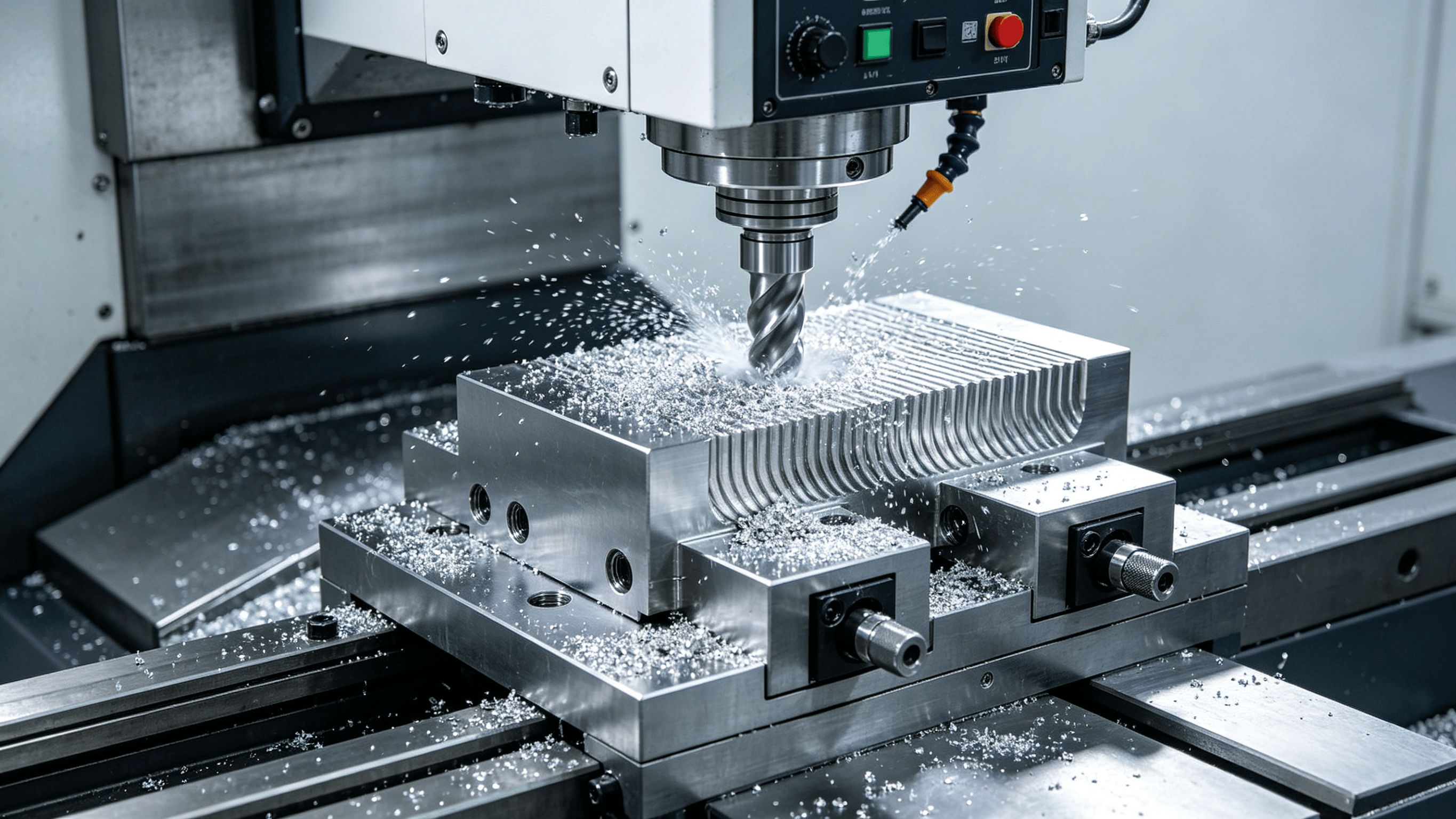
| 4. Precision Milling | Roughing → Semi‑finishing → Finishing | CNC milling machine / machining center, fixtures, precision cutters | Achieve required shape and dimensional accuracy |
| 5. Cooling & Chip Removal | Continuous coolant, automatic chip evacuation | Cooling system, chip conveyor | Reduce temperature, extend tool life, prevent buildup |
| 6. Post‑Processing | Heat treatment, coating, surface finishing | Vacuum furnace, PVD coater | Improve hardness, wear resistance, corrosion resistance |
| 7. Inspection & Acceptance | Dimensional, roughness, hardness testing | CMM, roughness meter, hardness tester | Ensure compliance with drawing requirements |
Core Technical Points
1. Material Selection
- Standard parts: Low‑carbon steel, aluminum alloy — easy to machine, cost‑effective.
- High‑precision / wear parts: Tool steel, HSS — with heat treatment.
- Corrosion / high‑temperature parts: Stainless steel, high‑temperature alloy — use cobalt‑containing cutters.
2. CNC Programming
CNC programming is the “brain” of milling. Our engineers generate 3D models, set spindle speed, feed rate, depth of cut, and toolpaths, then simulate to avoid errors.
Typical parameters:
- Aluminum: 1500–3000 rpm, feed 0.1–0.3 mm/r
- Stainless steel: 800–1500 rpm, feed 0.05–0.2 mm/r
3. Tool Selection
- Face milling: Face mill — stable cutting for large planes.
- Grooves / steps: End mill — sharp, accurate profiling.
- Complex surfaces: Ball nose mill — smooth contouring.
- Hard materials: Coated carbide with cobalt — high heat resistance.
Coatings such as TiN and TiAlN reduce friction and extend tool life by 3–5 times.
4. Cooling & Chip Removal
High‑pressure coolant directly targets the cutting zone to control heat and clear chips. Deep grooves and blind holes rely on automatic chip removal to maintain precision.
5. Inspection
- Dimensional accuracy: ±0.01mm via CMM
- Surface roughness: Ra ≤1.6μm (high‑precision Ra ≤0.8μm)
- Hardness verified for heat‑treated parts
4. Practical Case: Solving Stainless Steel Complex Profile Milling
Customer Challenge
A medical device company needed 8mm thick stainless steel special‑shaped brackets with complex surfaces, steps, and oblong holes. Requirements:
- Dimensional precision: ±0.02mm
- Surface roughness: Ra ≤1.6μm
Previous suppliers failed due to:
- Chipping and built‑up edge on stainless steel
- Poor surface quality and dimensional deviation
- Unstable fixturing and insufficient cooling
Liqin’s Solution
- Tool: TiAlN‑coated carbide ball nose mill
- Parameters: 1200 rpm, feed 0.1mm/r, depth 0.2mm; rough → semi‑finish → finish
- Fixture: Custom multi‑point fixture to eliminate movement
- Cooling: High‑pressure dedicated stainless steel cutting oil
- In‑process inspection to control quality
Result
All parts passed inspection:
- Dimensional error within ±0.015mm
- Smooth, scratch‑free surfaces
- Perfect contour matching and assembly
The customer avoided scrap, shortened lead times, and reduced costs. Professional milling is not just cutting — it is solving problems.
5. FAQ: Common Milling Questions Answered
1. How to prevent workpiece deformation?
- Anneal blanks to remove internal stress
- Use light, multi‑pass cutting
- Firm fixturing with balanced clamping force
- Continuous cooling to control heat
2. How do parameters differ for different materials?
Hard materials: slower speed, smaller feed
- Aluminum: 1500–3000 rpm, 0.1–0.3 mm/r
- Low‑carbon steel: 1000–2000 rpm, 0.08–0.25 mm/r
- Stainless steel: 800–1500 rpm, 0.05–0.2 mm/r
- Tool steel: 500–1000 rpm, 0.03–0.15 mm/r
3. Why do cutters wear quickly?
- Incorrect tool type
- Excessive speed / feed
- Insufficient cooling
- Hard spots on workpiece
Solutions: Match tool to material; optimize parameters; improve cooling; prepare workpiece.
4. Precision vs. Ordinary Milling: Key Differences
- Precision: ±0.01mm vs. ±0.1mm+
- Efficiency: 3–5× higher with CNC
- Quality: Smooth, consistent, long‑life
- Cost: Higher upfront investment, lower long‑term cost due to low scrap rate
6. Conclusion: Milling — Precision as King, Professionalism as Foundation
DIY milling serves emergencies but cannot meet industrial standards. Professional milling is the backbone of modern manufacturing, turning raw metal into high‑precision components through controlled programming, materials, tools, and processes.
Every detail determines quality. In today’s manufacturing industry, high‑precision, high‑efficiency milling is key to competitiveness.
At Liqin, we provide full‑service precision milling support: material selection, programming, machining, inspection, and engineering expertise. We solve your toughest milling challenges.
Upload your drawings today and unlock the full potential of metal processing with professional milling.
Contact Us
📞 TEL: +86 187 5714 8656
📧 Email: zhouli@chinaliqin.com
📱 WhatsApp: +86 187 5714 8656
🌐 Website: https://www.cncliq.com/