
Introduction
In the field of precision machining, turning, as one of the most basic and core processes, is a key means to achieve precise forming of rotational parts, and its machining accuracy directly determines the performance and reliability of end products. With the rapid development of high-end fields such as aerospace, electronic manufacturing, and medical equipment, the requirements for precision turning have been raised to the micron level, and customization, high efficiency, and stability have become the core needs of the industry. This article will comprehensively analyze the precision turning process from five dimensions: basic cognition, core elements, complete process, common problems, and technical trends, providing professional and practical reference guidelines for overseas purchasers, engineers, and industry practitioners, helping them quickly grasp the core logic and practical points of precision turning and accurately match their own processing needs.
Part 1: Basic Cognition of Precision Turning Process
1.1 Definition and Core Characteristics of Precision Turning
Precision turning refers to a machining process that performs precise cutting on workpieces through the relative movement of tools and workpieces on precision lathes to obtain parts with high precision, high surface quality, and high dimensional consistency. Compared with ordinary turning, the core advantages of precision turning are reflected in three aspects: first, high precision, the dimensional tolerance can be controlled at IT6-IT8 level, and the surface roughness can reach Ra0.8-0.1μm, which is much better than the machining precision of ordinary turning; second, high stability, relying on precision equipment and scientific processes, it can achieve dimensional consistency in batch processing and reduce human errors; third, high surface quality, the processed parts have a smooth surface without obvious scratches and burrs, which can meet the assembly needs of high-end products without additional polishing. Ordinary turning is more suitable for the processing of low-precision, high-volume simple parts, while precision turning focuses on the processing of complex, high-precision rotational parts in high-end fields. There are significant differences between the two in equipment requirements, process parameters, and processing costs.
1.2 Core Principle of Precision Turning
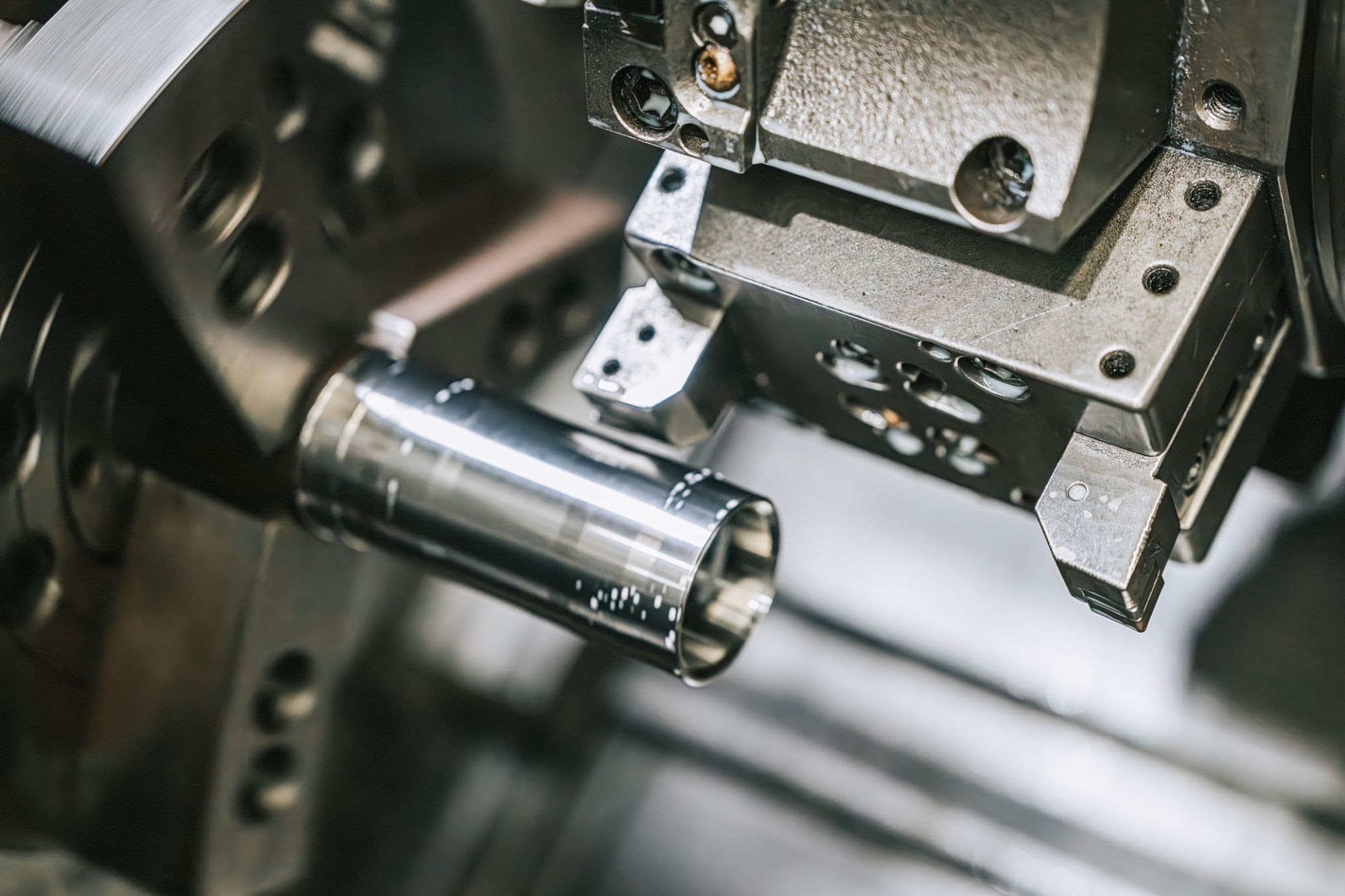
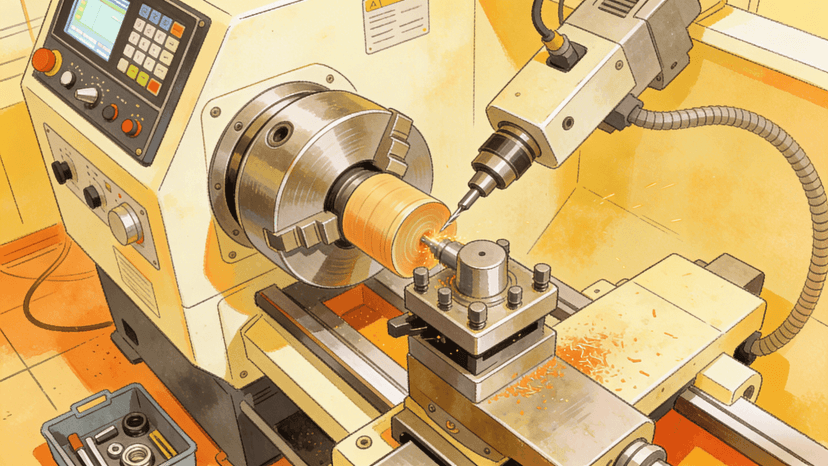
The core principle of precision turning is the compound movement of "workpiece rotation + tool feed". The spindle drives the workpiece to rotate at high speed, while the tool moves at a constant feed along the axial or radial direction of the workpiece. The cutting edge of the tool is used to remove excess material on the surface of the workpiece, and finally form the shape, size and surface quality required by the drawing. Its essence is to achieve precise material removal by controlling the relative movement trajectory of the workpiece and the tool, and the core lies in "precision control" - including the coordinated cooperation of spindle rotation accuracy, tool feed accuracy, and clamping accuracy, all of which are indispensable. For example, the rotation accuracy of the spindle directly affects the roundness of the workpiece, the tool feed accuracy determines the dimensional tolerance of the part, and the clamping accuracy avoids the workpiece from shifting during processing, ensuring the stability of processing accuracy.
1.3 Core Application Fields of Precision Turning
With its advantages of high precision and high stability, precision turning is widely used in the global high-end manufacturing field. The high-frequency foreign trade scenarios mainly include four categories: first, the aerospace field, which is used to process aircraft engine shafts, spacecraft connectors, and precision shaft parts of navigation instruments, requiring dimensional tolerance control at the micron level to ensure flight safety; second, the electronic field, which is used to process precision connectors, sensor housings, micro-motor shafts, etc., adapting to the development trend of miniaturization and high precision of electronic equipment; third, the medical equipment field, which is used to process surgical instruments and implantable medical device accessories (such as artificial joints and catheter connectors), which have extremely high requirements for surface quality and biocompatibility; fourth, the custom hardware field, providing customized precision shafts, sleeves, flanges and other parts for the automotive, hydraulic, pneumatic and other industries to meet the personalized processing needs of different customers. In addition, precision turning is also applied in fields such as optical instruments and precision instruments, becoming an indispensable core processing technology in high-end manufacturing.
Part 2: Core Equipment and Tooling System for Precision Turning
2.1 Types and Selection Points of Precision Turning Equipment
The machining accuracy of precision turning is directly related to equipment performance. At present, the mainstream precision turning equipment on the market is mainly divided into three categories, suitable for different processing scenarios and needs. First, ordinary precision lathes, mainly used for precision processing of simple rotational parts, with simple structure and convenient operation, suitable for small-batch, single-variety part processing, high cost performance, and suitable for small and medium-sized enterprises to get started; second, CNC lathes, relying on computer control systems to achieve automated and high-precision processing, can complete multi-process processing such as complex curved surfaces and threads, with high processing efficiency and good dimensional consistency, which is the current mainstream equipment for precision turning, widely used in medium and large batch, complex part processing, especially suitable for batch delivery of foreign trade orders; third, turn-mill centers, integrating multiple processing functions such as turning, milling, and drilling, can realize one-stop processing, reduce the number of clamping times, avoid clamping errors, and greatly improve processing accuracy and efficiency, suitable for high-end, complex, multi-process precision part processing, such as core components in the aerospace field. When selecting, it is necessary to combine the processing precision requirements, part complexity, batch size and cost budget. For example, ordinary precision lathes can be selected for small-batch simple parts, CNC lathes are preferred for large-batch complex parts, and turn-mill centers can be selected for high-end customized parts.
2.2 Selection and Maintenance of Precision Turning Tools
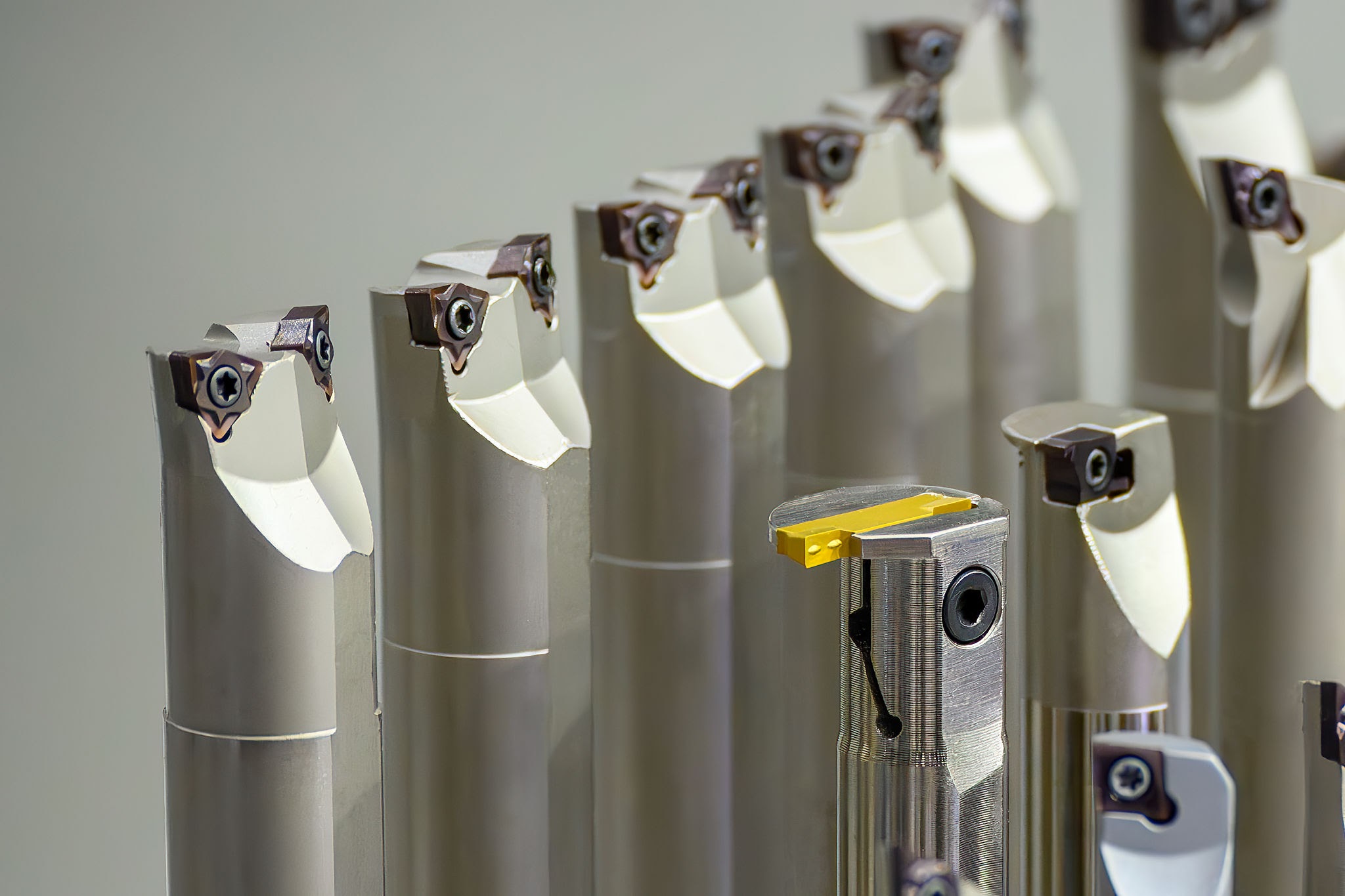
Tools are the core consumables of precision turning, and their material and type selection directly affect processing accuracy, surface quality and processing efficiency. Common precision turning tools are mainly divided into five categories: external turning tools are used to process the outer circle and end face of workpieces, which are the most commonly used tool type; internal hole tools are used to process the internal hole and boring of workpieces, and the appropriate tool shank length should be selected according to the internal hole size; threading tools are used to process various threads (metric, imperial, trapezoidal, etc.), which need to match the thread specification and processing accuracy; parting tools are used for part cutting and grooving, requiring good tool rigidity and sharp cutting edge; form tools are used to process special-shaped curved surfaces and special contours, which can be customized according to part drawings. In terms of tool materials, high-speed steel tools can be used for ordinary precision turning, with high cost performance and good toughness; cemented carbide tools can be used for high-precision and high-speed processing, with high hardness and strong wear resistance; cubic boron nitride (CBN) or diamond tools can be used for processing difficult-to-cut materials (such as titanium alloy, stainless steel), which are high temperature resistant and wear resistant. In terms of daily maintenance, it is necessary to regularly check the wear of the tool edge, grind or replace it in time to avoid the decline of processing accuracy and burrs on the surface caused by edge wear; tools should be stored in classification to avoid collision and damage to the edge; when installing tools, it is necessary to ensure firm clamping and qualified coaxiality, reducing the impact of tool vibration on processing.
2.3 Fixture Solutions and Clamping Skills
Clamping accuracy is the key to ensuring precision turning accuracy. Reasonably selecting fixture solutions and mastering correct clamping skills can effectively avoid workpiece offset and vibration, and ensure processing stability. Common precision turning fixtures are mainly divided into four categories: 3-jaw chuck, automatic centering, convenient operation, suitable for clamping circular and cylindrical workpieces, high clamping efficiency, suitable for mass processing; 4-jaw chuck, which can manually adjust the position of four jaws, suitable for clamping irregular and eccentric workpieces, high clamping accuracy but relatively cumbersome operation; collet, high clamping accuracy and stable clamping, suitable for clamping small and slender shaft parts, which can reduce workpiece deformation; special fixtures, customized according to specific parts, suitable for clamping complex and special-shaped parts, further improving clamping accuracy and efficiency, suitable for batch customized orders. In terms of clamping skills, first, it is necessary to clean the debris and oil on the fixture jaws and the workpiece clamping surface to avoid affecting the clamping accuracy; second, select the appropriate clamping force according to the workpiece material and shape. Excessive force is likely to cause workpiece deformation, while insufficient force will cause workpiece sliding and vibration; for slender shaft parts, the center support method can be adopted to reduce workpiece deformation during processing; after clamping, it is necessary to check the coaxiality of the workpiece to ensure it meets the processing requirements, avoiding unqualified processing dimensions due to clamping deviation.
2.4 Configuration of Cooling and Lubrication System
The cooling and lubrication system is an indispensable part of precision turning processing. Its core functions are to reduce cutting temperature, reduce tool wear, improve processing surface quality, and extend tool service life. During the cutting process, the high-speed friction between the tool and the workpiece will generate a lot of heat. If not cooled in time, it will accelerate the wear of the tool edge, cause thermal deformation of the workpiece, and then affect the processing accuracy and surface quality. The configuration of the cooling and lubrication system should be combined with the processing material, tool type and processing conditions: when processing ordinary steel and aluminum, emulsion can be used as the cooling lubricant, which has both cooling and lubricating effects and high cost performance; when processing difficult-to-cut materials such as stainless steel and titanium alloy, special cutting oil should be used, which has stronger lubricating performance, can reduce the friction between the tool and the workpiece, and prevent the generation of built-up edge; during high-speed precision turning, a high-pressure cooling system can be adopted to accurately spray the cooling lubricant to the cutting area, improve the cooling and lubrication effect, and avoid the accumulation of cutting heat. In addition, it is necessary to regularly check the liquid level and cleanliness of the cooling and lubrication system, and timely supplement or replace the cooling lubricant to avoid pipeline blockage and reduced cooling and lubrication effect due to excessive impurities.
Part 3: Typical Turning Operations
3.1 Basic Turning Operations
Basic turning operations are the core links of precision turning, mainly including external turning and facing, which are the basis for the processing of all rotational parts. External turning is mainly used to process the outer cylindrical surface and outer conical surface of the workpiece. By feeding the tool along the axial direction of the workpiece, the excess material on the outer surface of the workpiece is removed to ensure that the outer diameter, roundness and cylindricity meet the requirements. It is the core process for the processing of shaft parts. Facing is mainly used to process the end face of the workpiece to ensure that the end face is perpendicular to the workpiece axis, laying the foundation for subsequent processing. During facing, the flatness of the end face should be controlled to avoid inclination and unevenness, otherwise it will affect the subsequent clamping and processing accuracy.
3.2 Internal Hole and Boring Processing
Internal hole and boring processing are mainly used to process internal holes, internal steps, internal grooves and other structures of workpieces, which are the core processes for the processing of sleeve parts. Internal hole processing can be directly turned by internal hole tools or realized by boring. For internal holes with large diameter and high precision requirements, boring is preferred, which can better control the dimensional tolerance, roundness and cylindricity of the internal hole. During boring, it is necessary to select the appropriate boring bar according to the internal hole size to ensure the rigidity of the boring bar, avoid vibration during processing, and cause chatter marks and dimensional deviation on the internal hole surface. For deep hole processing, an extended boring bar should be selected, and a high-pressure cooling system should be used to discharge chips in time to avoid chip blocking the internal hole and affecting processing accuracy and surface quality.
3.3 Taper, Radius and Profile Turning
Taper, radius and profile turning are mainly used to process precision parts with special contours, such as conical shafts, arc connectors, and special-shaped surface accessories, which have extremely high requirements for processing accuracy and surface quality. Taper turning can realize precise processing of conical surfaces by adjusting the tool angle or the lathe slide angle. The taper error should be controlled to ensure that the taper fit meets the requirements. Radius turning can realize the processing of arcs with different radii through the circular interpolation function of CNC lathes. During processing, the tool path should be optimized to avoid unsmooth arc transition and surface scratches. Profile turning mainly relies on CNC lathes or turn-mill centers to realize precise processing of complex special-shaped surfaces by programming to control the relative movement trajectory of the tool and the workpiece, which is suitable for high-end part processing in aerospace, medical equipment and other fields.
3.4 Thread Turning
Thread turning is one of the important processes of precision turning, mainly used to process various threads, including metric threads, imperial threads, trapezoidal threads, multi-start threads, etc., which are widely used in the processing of connectors, fasteners, transmission parts and other parts. For thread turning, it is necessary to select the appropriate threading tool according to the thread specification (pitch, tooth profile, diameter), adjust the lathe speed and feed rate to ensure clear thread tooth profile, uniform pitch and precise size. For multi-start threads, it is necessary to accurately control the starting position of the thread to ensure uniform spacing between each thread and avoid thread disorder and poor engagement. After thread turning, it is necessary to check the pitch diameter, pitch, tooth profile angle and other parameters of the thread to ensure it meets the drawing requirements, avoiding difficulty in part assembly due to insufficient thread precision.
3.5 Grooving, Parting and Knurling
Grooving, parting and knurling are auxiliary processes of precision turning, used to realize special structure processing and surface treatment of parts. Grooving is mainly used to process annular grooves, axial grooves, etc. on the workpiece surface. A special parting tool should be selected to control the dimensional accuracy of groove width and groove depth, avoiding groove wall inclination and dimensional deviation. Parting is mainly used to cut the processed parts from the blank. It is necessary to ensure that the parting surface is flat and free of burrs, avoiding workpiece deformation and inclined parting surface. Knurling is mainly used to improve the friction force of the part surface, facilitating gripping or assembly. During knurling, the appropriate knurling wheel should be selected to control the knurling depth and density, ensuring that the knurled surface is uniform and free of damage, and avoiding workpiece deformation during knurling.
Part 4: Precision Turning Workflow
4.1 Drawing Analysis and Process Planning
Drawing analysis and process planning are the premise of precision turning processing, which directly determine the processing efficiency and processing accuracy. First, it is necessary to carefully analyze the part drawing, clarify the dimensional tolerance, surface roughness, material type, structural characteristics and other requirements of the part, and identify the processing difficulties and key processes; second, combine the part batch, processing equipment, tooling and other conditions to formulate a reasonable process plan, including processing sequence, process division, tool selection, parameter setting, etc. For example, for complex parts, it is necessary to divide roughing, semi-finishing and finishing processes to avoid workpiece deformation caused by unreasonable processing sequence; for high-precision parts, it is necessary to plan on-machine measurement and dimensional compensation links to ensure that the processing accuracy meets the standards. Process planning should balance processing efficiency and cost, optimize the processing process, reduce processing procedures, and improve production efficiency on the premise of ensuring accuracy.
4.2 Blank Preparation and Pre-treatment
Blank preparation and pre-treatment are the basis for the smooth progress of precision turning processing, and the quality of the blank directly affects the processing accuracy and processing efficiency. Blank preparation should select the appropriate blank form according to the part size and material type, including round bar stock, forging, casting, etc., to ensure that the blank size allowance is reasonable, avoiding low processing efficiency due to excessive allowance or failure to ensure processing accuracy due to insufficient allowance. The pre-treatment link mainly includes heat treatment processes such as blank annealing and normalizing, which aim to eliminate internal stress of the blank, reduce material hardness, improve cutting performance, and avoid workpiece deformation during processing. In addition, the surface of the blank should be cleaned to remove oxide scale, rust, oil and other debris to ensure clamping accuracy and processing surface quality.
4.3 Stratified Strategy: Roughing → Semi-finishing → Finishing
Precision turning adopts a stratified strategy of "roughing → semi-finishing → finishing". The core purpose is to gradually remove excess material, control part deformation, and ensure processing accuracy and surface quality. The core task of the roughing stage is to quickly remove most of the excess material, laying the foundation for subsequent processing. During roughing, a larger depth of cut and feed rate can be used to improve processing efficiency, but the cutting force should be controlled to avoid excessive workpiece deformation; the semi-finishing stage is mainly used to remove the processing allowance left by roughing, correct the shape and dimensional deviation of the part, and prepare for finishing. The cutting parameters of semi-finishing should be between roughing and finishing, taking into account efficiency and accuracy; the finishing stage is the key to ensuring part accuracy and surface quality. A smaller depth of cut, feed rate and higher speed should be used to accurately control the dimensional tolerance and surface roughness of the part, ensuring it meets the drawing requirements. During stratified processing, chips should be cleaned in time to avoid chips affecting processing accuracy and surface quality.
4.4 CNC Programming and Tool Path Optimization
For CNC lathes and turn-mill centers, CNC programming and tool path optimization are the keys to improving processing efficiency and accuracy. CNC programming needs to write a reasonable processing program according to the process plan and part drawing, clarifying the tool path, cutting parameters, clamping method, etc., to ensure that the program is accurate and error-free, avoiding processing failures caused by programming errors. The core of path optimization is to reduce tool idle travel, optimize the cutting path, avoid frequent tool start-stop and commutation, and improve processing efficiency; at the same time, it is necessary to avoid collision between the tool and the workpiece, fixture, ensuring processing safety. For complex parts, simulation software can be used to simulate and verify the processing program, check the rationality and accuracy of the tool path, and modify and optimize it in time to avoid problems in actual processing. In addition, tool wear and dimensional compensation should be considered during programming, and a reasonable compensation amount should be reserved to ensure the stability of processing accuracy.
4.5 On-machine Measurement and Dimensional Compensation
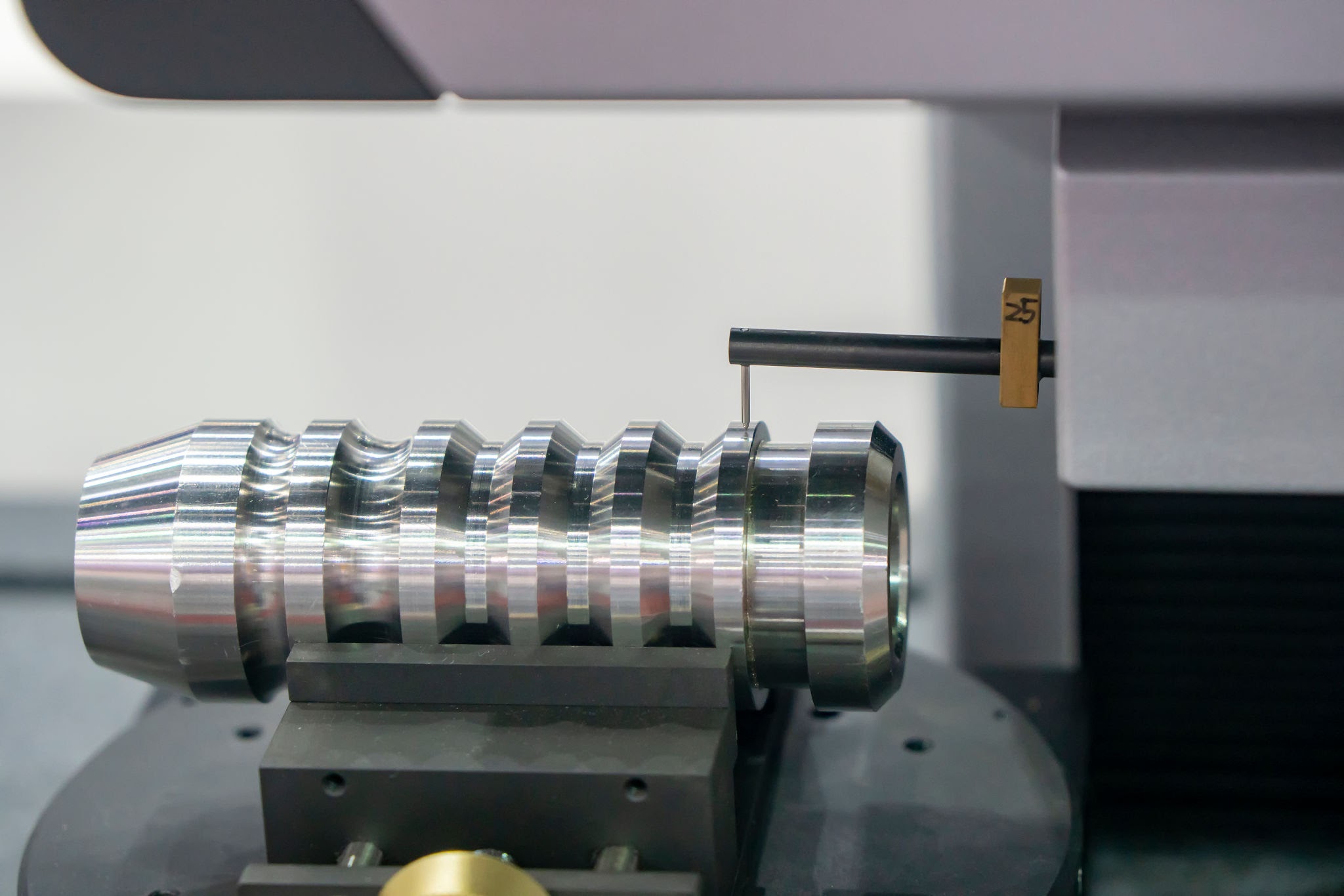
On-machine measurement and dimensional compensation are key links to ensure accuracy in precision turning processing, especially suitable for mass processing of high-precision parts. On-machine measurement refers to real-time measurement of the size and shape of parts through measuring equipment (such as probes, micrometers) during processing, timely finding dimensional deviations, and providing a basis for dimensional compensation; dimensional compensation refers to adjusting the tool position, cutting parameters, etc. according to the results of on-machine measurement to correct dimensional deviations and ensure that the part accuracy meets the standards. On-machine measurement and dimensional compensation can effectively avoid unqualified processing caused by tool wear, workpiece deformation, equipment errors and other factors, and improve the dimensional consistency of batch processing. For example, in the finishing stage, after processing a certain number of parts, an on-machine measurement should be performed. If the dimensional deviation is found to exceed the tolerance range, the tool compensation value should be adjusted in time to ensure that the processing accuracy of subsequent parts meets the requirements.
Part 5: Key Parameters and Precision Control
5.1 Reasonable Setting of Three Cutting Factors
The three cutting factors (spindle speed, feed rate, depth of cut) are the core parameters affecting the processing accuracy, efficiency and surface quality of precision turning, and should be reasonably set according to the part material, tool type and processing accuracy requirements. Spindle speed refers to the rotation speed of the lathe spindle. Excessively high speed will accelerate tool wear and workpiece vibration, affecting processing accuracy; excessively low speed will reduce processing efficiency and lead to poor surface roughness. Feed rate refers to the feed speed of the tool along the axial or radial direction of the workpiece. Excessively large feed rate is likely to cause poor surface roughness and burrs; excessively small feed rate will reduce processing efficiency and increase processing costs. Depth of cut refers to the depth of the tool cutting into the workpiece. Excessively large depth of cut is likely to cause workpiece deformation and tool damage; excessively small depth of cut requires multiple cuts, reducing processing efficiency. For example, when processing steel, a higher speed, moderate feed rate and depth of cut can be used; when processing aluminum, a higher speed and smaller depth of cut can be used to avoid tool sticking.
5.2 Parameter Matching for Different Materials
In precision turning processing, different materials have great differences in cutting performance. It is necessary to adapt corresponding cutting parameters and tools according to material characteristics to ensure the smooth progress of processing. Common processing materials include aluminum, steel, stainless steel, copper alloy, titanium alloy, etc.: aluminum has good cutting performance, low hardness and good toughness, and high speed, small depth of cut and large feed rate can be used. Tools can be cemented carbide or high-speed steel, and emulsion can be used for cooling and lubrication; steel has moderate hardness and good cutting performance, and moderate speed, feed rate and depth of cut can be used. Tools are cemented carbide, and emulsion or cutting oil is used for cooling and lubrication; stainless steel has high hardness, strong toughness, and is prone to built-up edge, which is difficult to cut. A lower feed rate, moderate speed and depth of cut should be used. Tools are cubic boron nitride (CBN) or diamond tools, and special cutting oil is used for cooling and lubrication; copper alloy has good cutting performance, and high speed and large feed rate can be used. Tools are cemented carbide, and emulsion is used for cooling and lubrication; titanium alloy has high hardness, high temperature resistance and high cutting difficulty. A lower speed, small feed rate and depth of cut should be used. Tools are diamond or CBN tools, and special high-temperature cutting oil is used for cooling and lubrication.
5.3 Tolerance and Surface Roughness Control
Tolerance and surface roughness are the core quality indicators of precision turning processing, which directly determine the assembly performance and service life of parts. In terms of tolerance control, the dimensional tolerance of precision turning is usually controlled at IT6-IT8 level, and for high-end parts, it can be controlled above IT5 level. It is necessary to optimize processing equipment, tools, parameters and clamping methods to ensure that the dimensional deviation is within the tolerance range. In terms of surface roughness, the surface roughness of precision turning is usually controlled at Ra0.8-3.2μm, and high-end parts can be controlled at Ra0.1-0.8μm. It is necessary to reduce surface scratches, burrs, chatter marks and other defects by selecting appropriate tools, optimizing cutting parameters, and strengthening cooling and lubrication to improve surface quality. In addition, it is necessary to regularly calibrate processing equipment and measuring tools to ensure equipment accuracy and measurement accuracy, avoiding unqualified tolerance and surface roughness due to equipment errors.
5.4 Common Defects and Solutions
In precision turning processing, common defects include chatter marks, taper, burrs, deformation, etc. These defects will affect the accuracy and surface quality of parts, and need to be identified in time and corresponding solutions taken. Chatter marks refer to periodic ripples on the part surface, mainly caused by tool vibration, workpiece vibration or insufficient equipment accuracy. Solutions include: optimizing cutting parameters (reducing feed rate, adjusting speed), enhancing tool rigidity, strengthening workpiece clamping, and calibrating equipment accuracy; taper refers to the phenomenon that the outer circle or inner hole of the part is large at one end and small at the other, mainly caused by lathe guide rail inclination, tool wear or clamping deviation. Solutions include: calibrating lathe guide rail, replacing worn tools, adjusting clamping position, and correcting tool angle; burrs refer to excess metal thorns on the part surface, mainly caused by tool edge wear and unreasonable cutting parameters. Solutions include: replacing sharp tools, optimizing cutting parameters (reducing feed rate, increasing cutting speed), and adding deburring process; deformation refers to the shape deviation of parts after processing, mainly caused by excessive cutting force, uneliminated internal stress of the workpiece or improper clamping force. Solutions include: adopting stratified processing strategy, preprocessing the blank (eliminating stress), adjusting clamping force, and optimizing cutting parameters (reducing depth of cut).
Part 6: Application Industries and Typical Parts
6.1 Core Application Industries
With its advantages of high precision and high stability, precision turning is widely used in the global high-end manufacturing field, covering aerospace, electronic communication, medical equipment, automotive manufacturing, hydraulics and pneumatics and other industries. Aerospace field: used to process aircraft engine shafts, spacecraft connectors, precision shaft parts of navigation instruments, landing gear accessories, etc., requiring dimensional tolerance control at the micron level to ensure flight safety and equipment reliability; electronic communication field: used to process precision connectors, sensor housings, micro-motor shafts, mobile phone components, etc., adapting to the development trend of miniaturization and high precision of electronic equipment; medical equipment field: used to process surgical instruments and implantable medical device accessories (such as artificial joints, catheter connectors, pacemaker accessories), which have extremely high requirements for surface quality, biocompatibility and accuracy; automotive manufacturing field: used to process precision parts such as engine shafts, gearbox gears, and steering system accessories, improving the performance and reliability of automobiles; hydraulics and pneumatics field: used to process hydraulic valves, cylinders, pistons and other accessories, ensuring the sealing and stability of hydraulic and pneumatic systems.
6.2 Typical Parts Display
The typical parts of precision turning are mainly rotational parts, including shafts, sleeves, flanges, pins, connectors, fasteners, etc. Different parts have different processing requirements and processes. Shaft parts: the most common type of parts in precision turning, including optical shafts, stepped shafts, conical shafts, threaded shafts, etc., widely used in various mechanical equipment. The key processing points are to control the roundness, cylindricity, dimensional tolerance and surface roughness of the shaft; sleeve parts: including bearing sleeves, bushings, sleeves, etc. The core processing requirements are to control the coaxiality, dimensional tolerance and surface roughness of the inner hole and outer circle to ensure assembly accuracy; flange parts: used for part connection. The key processing points are to control the flatness of the flange end face, the position accuracy of the bolt holes and the dimensional accuracy of the flange outer diameter; pin parts: used for hinge connection. The key processing points are to control the diameter tolerance, length tolerance and surface roughness of the pin to ensure the flexibility of the connection; connector parts: used for pipeline and cable connection. The key processing points are to control the inner hole size, thread accuracy and connector shape size to ensure the sealing of the connection; fasteners: including precision screws, nuts, etc. The key processing points are to control thread accuracy, dimensional tolerance and surface quality to ensure the reliability of the connection.
6.3 High-precision Case Sharing
Case 1: Processing of precision shaft parts in the aerospace field, material is titanium alloy, dimensional tolerance controlled at IT6 level, surface roughness Ra0.4μm, processed by CNC lathe, diamond tools selected, cutting parameters optimized (speed 800r/min, feed rate 0.1mm/r, depth of cut 0.2mm), combined with high-pressure cooling system, through on-machine measurement and dimensional compensation, the dimensional consistency of batch processing is achieved, and the qualification rate is 99.8%. Case 2: Processing of artificial joint accessories in the medical equipment field, material is medical stainless steel, requiring surface roughness Ra0.2μm, no burrs and no scratches, processed by turn-mill center, through stratified processing strategy, optimized tool path, combined with special cutting oil, ensuring the surface quality and biocompatibility of parts, meeting the use requirements of medical equipment. Case 3: Processing of micro-motor shafts in the electronic field, material is aluminum, dimensional tolerance IT7 level, surface roughness Ra0.8μm, batch processing using CNC lathe, optimized programming path, reduced tool idle travel, improved processing efficiency, and reduced workpiece deformation through collet clamping, ensuring batch processing accuracy.
Part 7: Development Trends of Turning
7.1 Development of High-speed and High-precision
High-speed and high-precision is the core development trend of precision turning processing. With the progress of processing equipment and tool technology, high-speed and high-precision turning technology has continuously made breakthroughs. High-speed turning can greatly improve processing efficiency, reduce processing time, and at the same time reduce cutting force, reduce workpiece deformation, and improve processing accuracy; high-precision turning can achieve micron-level and sub-micron-level processing accuracy, meeting the extreme requirements of high-end fields for part accuracy.

TEL: +86 187 5714 8656
Email: zhouli@chinaliqin.com
WhatsApp:+86 187 5714 8656
Website:https://www.cncliq.com/
Email: zhouli@chinaliqin.com
WhatsApp:+86 187 5714 8656
Website:https://www.cncliq.com/