NingboLiqin Industry&Trade Co., LtdWhatsAPP:+86 18757148656zhouli@chinaliqin.com
empty image
No data

Custom Precision Gearbox Output Shaft | Non-Standard Machining Factory

Get Latest Price >

LabelValue
Materialcustomized
Drawing format2D (PDF/CAD/DWG) and 3D (STEP/IGES/GLB)
Specification[]
Processing Precision0.01mm
Production Capacity1000000/year
Process Usage
Surface FinishCustomized Finishing

Find Similar Products

Description
Additional Information

Product Description

thing describe
Design/Size According to customer's drawings or samples
Material

Aluminum: 6061, 6063, 6082, 7075, 5052, A380, etc.

Stainless steel: SS201, SS301, SS303, SS304, (SS304 food grade), SS316, SS316L, SUS430, SS416

Steel: low carbon steel, carbon steel, 4140, 4340, Q235, Q345B, 20#, 45#, etc.

Alloy steel (15Cr, 20Cr, 42CrMo), etc.

Brass: HPb63, HPb62, HPb61, HPb59, H59, H68, H80, H90, etc.

Copper, bronze, copper, etc.

Titanium: TC4 (TiAl6v4, Grade f5)

Plastic: ABS, PC, PE, POM, Delrin, Nylon, Plastic, PP, PEI, Peek, etc.

process CNC machining, turning, milling, stamping, turning, cutting, etc.
Delivery time Samples usually take 3-7 working days, and mass production will be carried out according to the detailed quantity after sample approval.
Surface treatment Transparent anodizing, color anodizing, chemical coating, brushing, passivation, polishing, chrome plating, sandblasting, laser engraving, zinc plating, black oxide, nickel plating, chrome plating, carburizing, heat treatment, painting
Test equipment Coordinate measuring machine (CMM), 2D measuring instrument, projector, altimeter, micrometer, thread gauge, hardness tester, caliper, pin gauge, salt spray tester, concentricity measuring instrument, spectrometer.
Quality Management System

ISO 9001:2015
IATF 16949:2016

ISO 13485:2016

application Auto parts, machinery parts, computer parts, medical parts, home appliance parts, electrical parts, electronic product parts, electronic parts, generator parts, alternator parts, generator parts, stationery, power switches, micro switches, construction, merchandise and A/V equipment.
File Format Solidworks, Pro/Engineer, CAD, PDF, JPG, DXF, IGS
Package Inner plastic bag, outer standard carton, or as per customer's requirements
Shipping Sea freight, air freight, international express (DHL, FedEx, TNT, UPS).
Serve The professional foreign trade team provides enthusiastic and fast response services.
Dimensional inspection report/Raw material certificate/Surface treatment report/Engineering drawing
RoHS report/Salt spray test report/Hardness test report

Machining Introduction of Output Shaft for Motor Gearbox

This custom precision output shaft for the motor gearbox is a core component tailored for the torque transmission and precise positioning of the gearbox's power output end. As a custom non-standard precision machined part, its machining accuracy, material performance and structural manufacturability directly determine the transmission efficiency, operational stability and service life of the gearbox, making it a key supporting part with both strength and precision in the gearbox assembly.

I. Core Product Characteristics & Basic Requirements

  1. Material Selection
    302 stainless steel is adopted as the base material, which features excellent corrosion resistance, toughness and mechanical strength to meet the working condition requirements of transmission components. It also complies with stringent environmental test standards, ensuring the product's durability in various application scenarios.
  2. Performance Indicators
    The product must meet the specified Rockwell hardness standard, with hardness testing conducted at specific structural positions to ensure the strength of key stress-bearing surfaces. It shall pass a 96-hour salt spray test to verify corrosion resistance, and material compliance certification is required to guarantee product quality from the raw material stage.
  3. Basic Process Requirements
    The product surface shall be free of scratches, burrs, nicks and other defects, and the straightness must meet high-precision standards. When inspected on special V-blocks, the straightness deviation per inch of length is controlled within an extremely small range to ensure coaxiality and smooth transmission after assembly.
  4. Structural Features
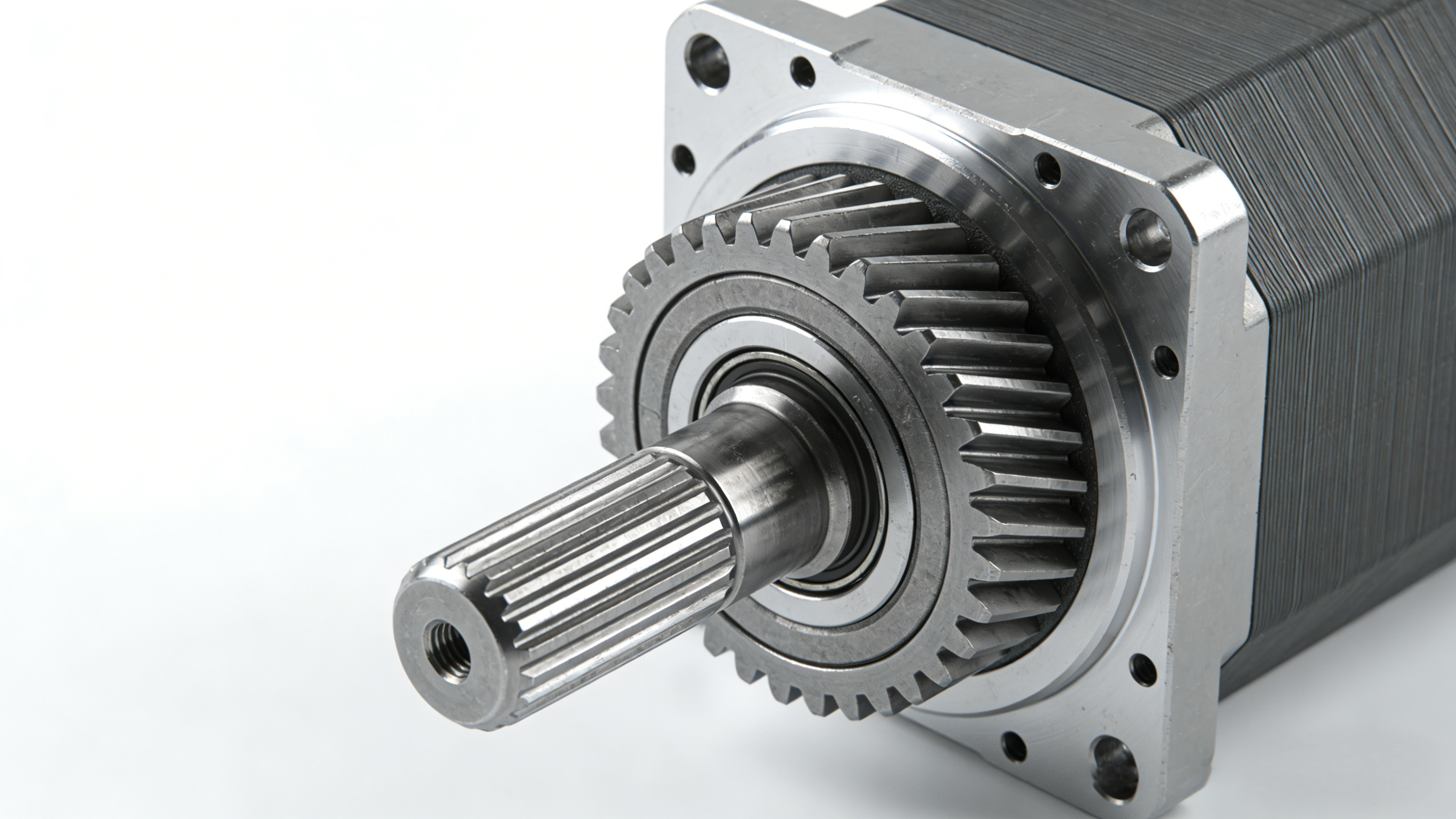
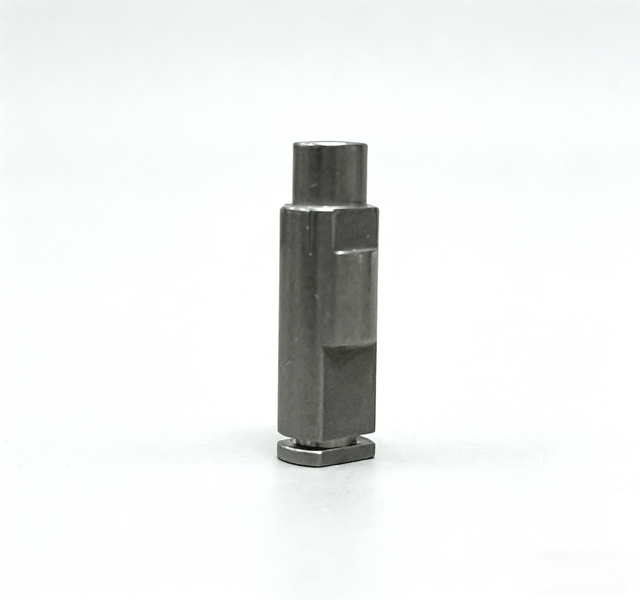
    The shaft body is designed with precision spline structures, groove structures and planar structures. The splines are multi-tooth uniformly distributed, serving as the core structure for power transmission. Meanwhile, the shaft body includes multiple precision steps and chamfers, with strict requirements for the positional and geometric accuracy between various structures.

II. Overall Machining Process

Combined with the product's structural characteristics and precision requirements, a full-process custom non-standard machining solution of Rough Machining - Semi-Finishing - Heat Treatment - Finishing - Surface Treatment - Precision Inspection is adopted. The core processes are as follows:
  1. Raw Material Preprocessing
    Qualified 302 stainless steel bar stock is selected for straightening and flaw detection to eliminate raw material defects. The bar stock is then cut and rough-turned with finishing allowances reserved to ensure the stability of subsequent machining.
  2. Semi-Finishing
    CNC turning is used to machine the basic structures such as shaft steps, grooves and outer circles, initially forming each characteristic surface. CNC milling is adopted for the rough machining of spline basic contours with precision grinding allowances reserved.
  3. Heat Treatment
    Custom heat treatment is performed according to the product's hardness requirements, with precise control of heating temperature, holding time and cooling rate to ensure the hardness of specified positions meets the standard. Meanwhile, deformation and cracking of the shaft body are avoided, and stress relief treatment is conducted after heat treatment to eliminate internal stress.
  4. Precision Finishing
    As the core link of product machining, CNC cylindrical grinding machines are used for precision grinding of outer circles and steps to ensure dimensional accuracy and straightness. Precision spline grinding is completed by spline grinders to guarantee the accuracy of spline tooth profile, tooth orientation and uniformity. Precision machining is applied to chamfers, planes and other structures to ensure the positional accuracy of each structure.
  5. Surface Treatment & Deburring
    Special processes are used for full-surface deburring and rounding of the product to remove micro-burrs generated during machining and ensure surface finish. Surface optimization treatment is conducted according to corrosion resistance requirements to improve the pass rate of the salt spray test.
  6. Full-Process Inspection & Certification
    100% inspection is implemented from raw materials to finished products, including material compliance certification, hardness testing, dimensional and geometric accuracy testing, salt spray testing, straightness testing, etc. All test data is retained to provide customers with complete compliance certification documents.

III. Core Machining Challenges

As a core precision output shaft of the gearbox, it features high structural complexity and precision requirements, with several core challenges in the machining process, mainly focusing on the following aspects:
  1. Difficulty in Controlling High-Precision Geometric Tolerances
    The shaft body has extremely high requirements for straightness and coaxiality. The long machining process, heat treatment and multiple clamping are prone to micro-deformation of the shaft body. Improper deformation control will directly affect assembly accuracy and transmission performance.
  2. Difficulty in Precision Spline Machining
    Splines are the core structure for power transmission, with strict requirements for the accuracy of tooth profile, tooth orientation, pitch uniformity and span measurement. The multi-tooth uniform design places high demands on the positioning accuracy and tool accuracy of machining equipment. Meanwhile, tooth surface scratches and dimensional deviations are likely to occur during machining.
  3. Difficulty in Balancing Hardness and Deformation
    The specified positions of the product need to meet precise hardness requirements. Due to the material characteristics of 302 stainless steel, thermal deformation of the shaft body is prone to occur during heat treatment. The key challenge is to control the deformation within the finishing allowance while ensuring the hardness meets the standard.
  4. Difficulty in Surface Quality and Defect Control
    The product requires a surface free of any nicks, burrs and scratches. However, the shaft structure includes complex structures such as grooves, splines and small chamfers where burrs are easily generated, and micro-burrs are difficult to remove. In addition, tool wear and improper cutting parameters during finishing are prone to surface scratches, affecting product quality.
  5. Difficulty in Clamping and Positioning for Multi-Process Machining
    The product undergoes multiple processes such as turning, milling, grinding and heat treatment. Multiple clamping is prone to positioning errors, and the accumulated errors will affect the final product accuracy. Ensuring the consistency and positioning accuracy of clamping in each process is the key to controlling the overall accuracy.

IV. Solutions to Overcome Challenges

In response to the above machining challenges, relying on the technical accumulation and equipment advantages of custom non-standard precision machining, we have formulated targeted solutions to ensure machining accuracy and product quality from multiple dimensions of equipment, process, inspection and personnel:
  1. High-Precision Geometric Tolerance Control Solution
  • Adopt the process concept of multi-process machining with one-time clamping to reduce the number of clamping times and positioning errors. In the finishing stage, use high-precision CNC grinding machines combined with CNC straightening equipment. The shaft body is precision-straightened after heat treatment before finishing to eliminate thermal deformation.
  • In the inspection link, use high-precision testing tools such as special V-blocks, dial indicators and laser diameter gauges for 100% dimensional inspection of straightness and coaxiality. Adjust machining parameters in a timely manner when deviations are found to ensure compliance with geometric accuracy standards.
  1. Precision Spline Machining Solution
  • Select imported high-precision spline grinders and special spline machining tools. Tools are regularly inspected and replaced to ensure tooth profile machining accuracy. Precisely calibrate the equipment before machining and optimize the CNC machining program to ensure spline pitch uniformity.
  • After spline machining, conduct 100% inspection with special spline gauges and tooth profile measuring instruments to accurately detect tooth surface roughness and tooth profile deviation. Non-conforming items are reworked immediately to ensure the accuracy and smoothness of spline transmission.
  1. Hardness and Deformation Balancing Solution
  • Custom heat treatment process: According to the material characteristics of 302 stainless steel, adopt the heat treatment method of step heating and isothermal cooling, and fix the shaft body with tooling to reduce deformation during heat treatment. Low-temperature stress relief tempering is conducted after heat treatment to eliminate internal stress and stabilize product dimensions.
  • Reserve reasonable finishing allowances: Based on the heat treatment deformation law, reserve targeted grinding allowances in the rough and semi-finishing stages to ensure that deformation can be completely eliminated after finishing and the accuracy of hardness testing positions is guaranteed.
  1. Surface Quality and Defect Control Solution
  • Adopt a combined method of mechanical deburring + manual fine grinding for deburring. For complex structures such as grooves and splines, use special deburring tools (e.g., rotary files, ultrasonic deburring equipment), followed by manual fine grinding by senior technicians to ensure no residual burrs.
  • Optimize cutting parameters in the finishing stage and select high-quality cutting fluid to reduce tool wear and cutting heat, avoiding surface scratches. Implement a dust-free machining environment during processing to prevent iron chips and impurities from scratching the product surface. Meanwhile, adopt anti-static and anti-collision packaging for machined products to avoid surface damage during transportation.
  1. Multi-Process Clamping and Positioning Solution
  • Design special tooling and fixtures: Customize a unified positioning fixture for the product, which is used for clamping in all processes to ensure the consistency of the clamping datum and reduce the accumulation of positioning errors.
  • Establish an inter-process precision inspection mechanism: Inspect key positioning datums and dimensions after the completion of each process to ensure that the previous process meets the precision standards before entering the next process, avoiding error transmission. Regularly calibrate and maintain tooling and fixtures to ensure fixture accuracy.

V. Quality Assurance & Customer Service

  1. Raw Material Assurance
    All base materials are 302 stainless steel supplied through formal channels, with complete material certificates and compliance certifications provided to guarantee product quality from the source and meet customers' material certification requirements.
  2. Full-Process Inspection
    Implement a four-level inspection system of First Article Inspection + In-Process Inspection + Last Article Inspection + 100% Finished Product Inspection. All test data is recorded and retained in real time, and complete inspection reports and compliance certification documents can be provided to customers.
  3. Customized Services
    As a custom non-standard precision machining factory, we can optimize product processes according to customers' working condition and assembly requirements, and provide real-time feedback on product machining progress to meet customers' customization and delivery needs.
  4. After-Sales Support
    Comprehensive after-sales technical support is provided after product delivery. In case of assembly or precision problems, we will respond immediately and provide solutions to ensure the progress of customers' production and assembly.
The machining of this output shaft fully embodies the trinity requirements of material, process and inspection in precision mechanical machining. Relying on mature custom non-standard precision machining technology, high-precision machining equipment and strict quality control system, we can perfectly meet all technical requirements of this product and provide customers with highly reliable and high-precision custom output shaft components.
Gearbox Output Shaft ,servo motor casing

Tel: +86 187 5714 8656
Email: zhouli@chinaliqin.com
WhatsApp: +86 187 5714 8656
Website: https://www.cncliq.com/

Contact Us

Ready to start your next project with Liqin Manufacturing?

Contact us today to learn more about our services and how we can help you achieve your goals.

Phone

Click or drag file to this area to upload

If there are any files, you can also transfer them to us. If there are multiple files, you need to select them all and click 'Upload'.

File size: ≤15MB

Support format: jpg, pdf, png, bmp, doc, zip, rar, dwg, xlsx, excel, x_t, igs, step, stl, glb, gltf
longshengmfg-logoNingbo Liqin Industry&Trade Co., Ltd.
  • Rapid engineering feedback within just 2 business days.

  • ISO 9001 and IATF 16949 Certification.

  • Materials including aluminum, stainless steel, steel, and brass available, with surface finish options such as electrophoresis, anodic oxidation, electroplating, and powder coating.

  • Cost-effective mass production with advanced equipment.

  • Custom orders accepted, starting from prototypes.