 English



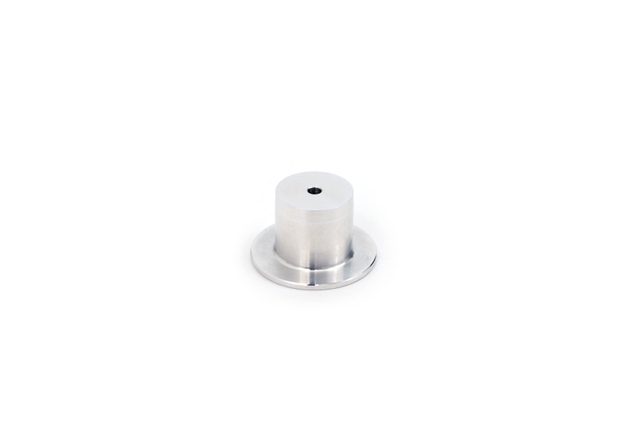
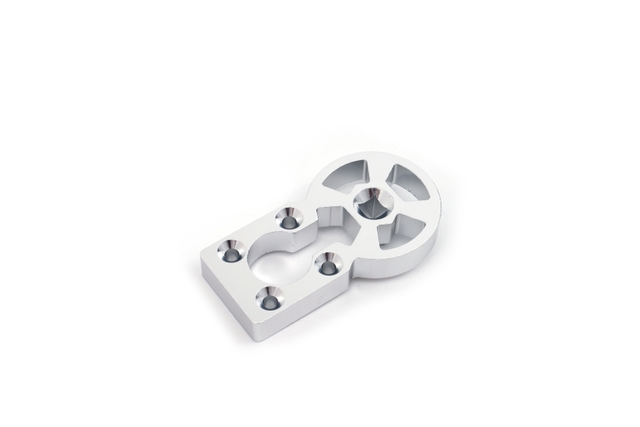
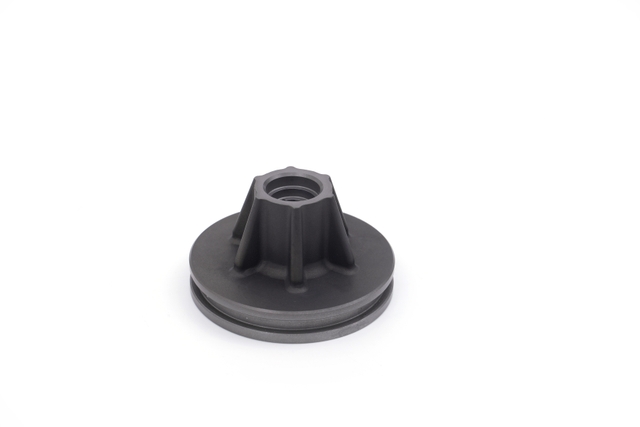
Product Description
| thing | describe |
|---|---|
| Design/Size | According to customer's drawings or samples |
| Material | Aluminum: 6061, 6063, 6082, 7075, 5052, A380, etc.
|
| process | CNC machining, turning, milling, stamping, turning, cutting, etc. |
| Delivery time | Samples usually take 3-7 working days, and mass production will be carried out according to the detailed quantity after sample approval. |
| Surface treatment | Transparent anodizing, color anodizing, chemical coating, brushing, passivation, polishing, chrome plating, sandblasting, laser engraving, zinc plating, black oxide, nickel plating, chrome plating, carburizing, heat treatment, painting |
| Test equipment | Coordinate measuring machine (CMM), 2D measuring instrument, projector, altimeter, micrometer, thread gauge, hardness tester, caliper, pin gauge, salt spray tester, concentricity measuring instrument, spectrometer. |
| Quality Management System | ISO 9001:2015
|
| application | Auto parts, machinery parts, computer parts, medical parts, home appliance parts, electrical parts, electronic product parts, electronic parts, generator parts, alternator parts, generator parts, stationery, power switches, micro switches, construction, merchandise and A/V equipment. |
| File Format | Solidworks, Pro/Engineer, CAD, PDF, JPG, DXF, IGS |
| Package | Inner plastic bag, outer standard carton, or as per customer's requirements |
| Shipping | Sea freight, air freight, international express (DHL, FedEx, TNT, UPS). |
| Serve | The professional foreign trade team provides enthusiastic and fast response services.
|
A Compact Current-Carrying Interface for Demanding Protection Systems
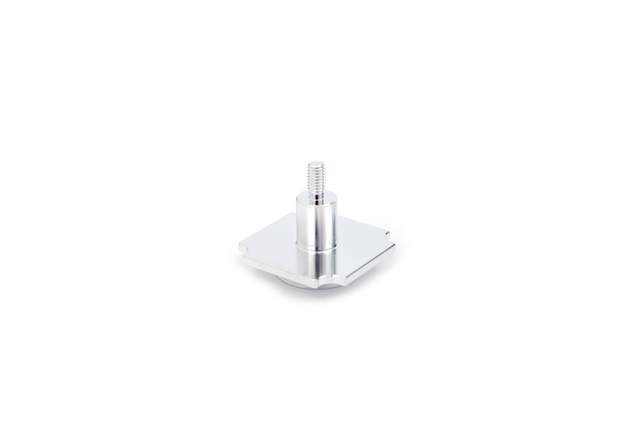
This precision aluminum surge protection electrode is designed for compact surge protective device assemblies used around 5G base stations, telecom shelters, renewable-energy equipment, industrial controls, and other installations exposed to lightning-induced or switching surges. Its form is intentionally simple and functional: a square locating flange with four edge reliefs, a coaxial cylindrical boss, a controlled seating face, and an external threaded connection. Inside a protection module, those features help locate the current path, hold the internal stack in alignment, and transfer clamping force to the metal-oxide varistor or other protection element.
The component is not presented as a complete surge protective device. It is a precision mechanical and electrical interface whose value appears when it is assembled with the housing, insulating parts, protection element, fasteners, and verified contact system. A comparable application can be seen in Liqin's 6061-T6 aluminum electrode for 5G surge protection.
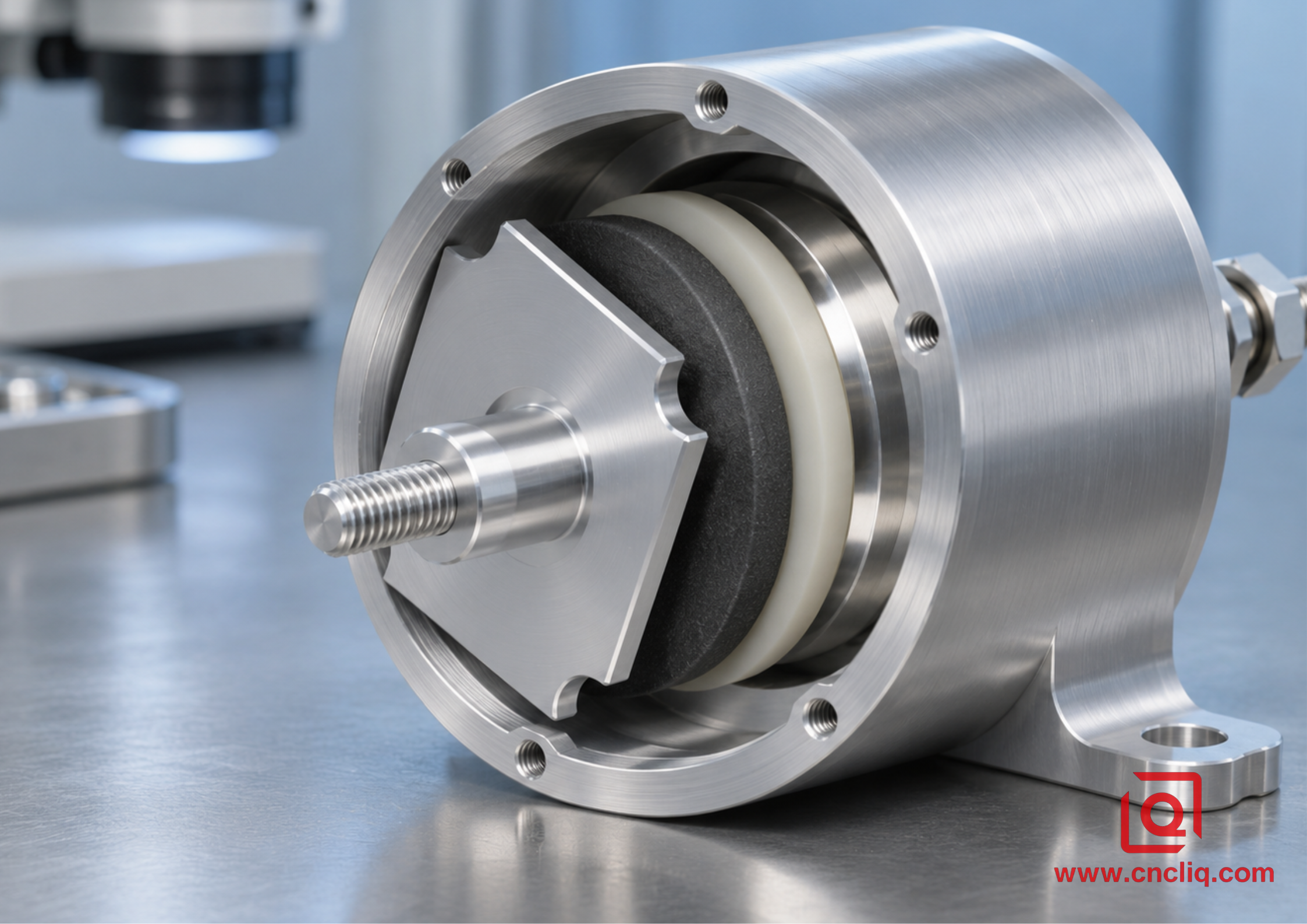
Application concept: the machined aluminum electrode is shown as part of a sealed industrial surge-protection assembly.
Why This Geometry Fits Surge-Protection Equipment
An electrode in a compact protection module must do several jobs at once. The round boss and seating surfaces establish a stable axial load path. The square flange prevents unwanted rotation and gives the surrounding housing a repeatable locating feature. The edge reliefs provide assembly clearance, while the threaded stud creates a direct, serviceable connection to the next conductive or structural element. Because the critical round features share a centerline but the flange is prismatic, the part naturally benefits from a controlled turning-and-milling route. Liqin's guide to CNC turning versus CNC milling for cylindrical aluminum parts explains the same process logic for mixed round and flat geometry.
The compact envelope, approximately 29 mm square, is well suited to densely packaged protection modules. It leaves room for insulation, sealing, and housing features without adding unnecessary mass. Just as importantly, the machined faces provide predictable contact and clamping behavior. In a surge-protection assembly, reliable geometry supports uniform pressure across the protection element, consistent current distribution, and repeatable final assembly.
6061-T6 Aluminum: Balanced for Strength, Machining, and Heat Flow
The specified material is 6061-T6 aluminum, a widely used alloy for precision electrical and industrial hardware. It combines good corrosion resistance with stable machinability and a useful strength-to-weight ratio. Typical reference values include a density of about 2.70 g/cm³ and yield strength near 276 MPa, although the approved material certificate and governing specification always control the delivered lot.
For this application, the alloy provides several practical benefits. It is light enough for telecom and outdoor equipment, where every component contributes to enclosure mass. It machines cleanly into coaxial shoulders, threads, and flat locating features. It also conducts heat away from the contact region more effectively than many structural metals, helping the complete module manage short-duration thermal loading. The alloy is electrically conductive, but the finished assembly's resistance depends on the full interface: contact area, flatness, surface condition, clamping pressure, finish, hardware, and cleanliness all matter.
The released requirement calls for a fine machined finish with surface roughness in the Ra 1.5-3.5 µm range. This is a sensible balance for a functional electrode: smooth enough to support a controlled interface, yet achievable without unnecessary polishing. Surfaces are required to be consistent and free from scratches, nicks, and other blemishes that could affect fit, contact, or appearance.
Controlled CNC Manufacturing Process
Production begins with verified 6061-T6 stock. Incoming material is checked against the purchase specification and traceability documents before it reaches the machine. The manufacturing route then combines rotational and prismatic operations:
1. The blank is faced and the coaxial boss, shoulders, and seating surfaces are turned from a common axis.
2. The threaded connection is produced with controlled tool geometry and inspected for clean starts, complete form, and functional fit.
3. The square flange and its four relief notches are milled from stable datums so their position remains consistent with the central axis.
4. Burrs are removed, sharp edges are broken, and the contact-related geometry is protected from over-rounding.
5. The part is washed, visually inspected, dimensionally verified, and packed in a clean protective container.
The thread may be produced by the method best suited to the drawing, volume, and gauge requirement. For buyer and engineer reference, Liqin's article on thread milling in aluminum discusses tool selection, pitch-diameter control, gauging, and the effect of later finishing. More broadly, the aluminum machining process guide explains how stock condition, chip control, datum planning, and surface preparation affect finished quality.
Quality Built Around Assembly Function
Quality control is focused on what the electrode must do in the final module. Incoming checks confirm alloy and temper. In-process inspection protects the boss diameter, flange position, total height, thread condition, seating-face relationship, and any critical datum controls. Final inspection combines calibrated dimensional equipment, functional thread gauging, surface review, and cleanliness verification.
The production requirement targets process capability greater than Cpk 1.33 for controlled characteristics. This gives the supplier a measurable expectation for repeat production rather than relying on isolated sample results. General tolerances follow ISO 2768-mK unless a controlled feature is specified more tightly. Burr removal and edge condition are treated as functional requirements because a loose chip, raised edge, or damaged thread can disturb contact pressure or stop assembly.
Material and process selection also supports RoHS and REACH requirements stated for the finished part. Compliance must be backed by the documents requested in the purchase order and the current applicable regulations. If additional corrosion protection is required, a thin chemical conversion coating may be appropriate because it has minimal dimensional impact and can preserve a more conductive interface than thick anodizing. The coating class, chemistry, masked zones, contact resistance method, and post-finish dimensions must be specified rather than assumed. Liqin's practical guide to MIL-DTL-5541 chemical conversion coatings provides a useful starting point.
Application Scenarios
The most likely use is as an aluminum surge protection electrode in a compact module that clamps a protection element inside a metal housing. Typical deployment environments include:
· 5G and cellular base-station power systems, including outdoor radio and shelter equipment;
· AC or DC surge-protection modules for control cabinets, data centers, and industrial automation;
· photovoltaic inverters, wind-power controls, charging infrastructure, and energy-storage equipment;
· transportation signaling, communications cabinets, and other mission-critical electronics exposed to transient events;
· custom high-current assemblies that need a light, corrosion-resistant, accurately located contact and clamping component.
Final suitability depends on the complete device design. Electrical rating, impulse current, insulation coordination, sealing, temperature rise, creepage, clearance, and certification belong to the finished surge-protection assembly, not to the electrode alone.
Product Advantages and Business Value
The principal advantage of this aluminum surge protection electrode is integration. One compact machined part combines a locating flange, axial boss, seating face, anti-rotation geometry, and threaded connection. Fewer separate pieces reduce stack-up variation, assembly time, and the number of interfaces that can loosen or corrode.
Its turned and milled features can be produced from repeatable datums, which supports consistent loading of the protection element. The fine machined finish helps maintain predictable contact behavior without adding a thick decorative coating. 6061-T6 keeps the component light, durable, and economical to machine at both prototype and recurring production volumes.
For OEM buyers, the larger value is controlled manufacturability. Clear material traceability, Cpk-based process expectations, functional thread inspection, cosmetic protection, and clean packaging reduce receiving risk. A well-controlled aluminum surge protection electrode arrives ready for the assembly line, minimizing rework, fit problems, and hidden variation. That reliability helps protect production schedules and, after validation in the complete device, supports long service life in telecom and industrial power systems.
FAQs
1. What does this component do inside a surge-protection module?
It provides an accurately located conductive and mechanical interface. The flange and central boss position the component, the seating face transfers clamping pressure to the protection element, and the threaded feature connects the electrode to the surrounding hardware. The exact electrical role is defined by the complete assembly.
2. Why use 6061-T6 aluminum instead of steel or copper?
6061-T6 offers a practical balance of low mass, corrosion resistance, strength, thermal performance, electrical conductivity, and machinability. Copper can provide higher conductivity but adds weight and cost; steel is stronger in some conditions but is heavier and less conductive. The final choice should be confirmed by current, temperature, contact-resistance, mechanical-load, and environmental testing.
3. Can the electrode be anodized or conversion coated?
Yes, but the finish must follow the interface function. Anodizing creates an electrically insulating oxide and may be unsuitable on a contact zone unless that area is masked. A specified chemical conversion coating can add corrosion protection with less dimensional change and may better suit conductive mating surfaces. Always define the standard, coating areas, masking, final gauges, and electrical acceptance method on the drawing and purchase order.
TEL: +86 187 5714 8656
Email: zhouli@chinaliqin.com
WhatsApp:+86 187 5714 8656
Website:https://www.cncliq.com/