 English



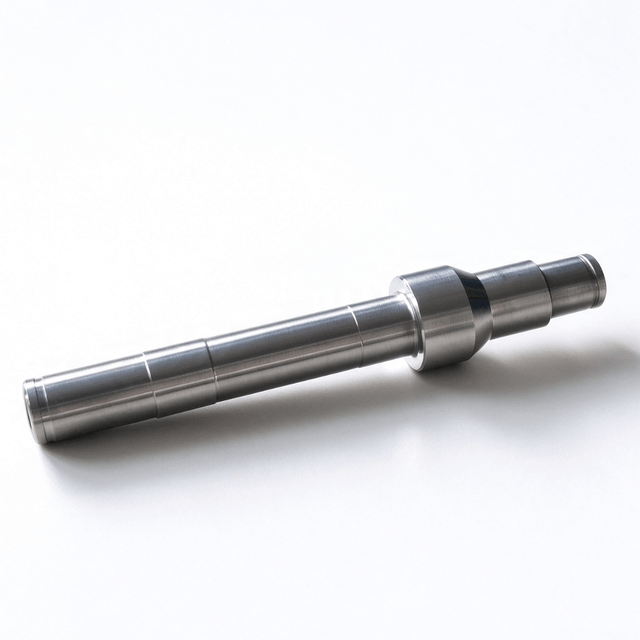
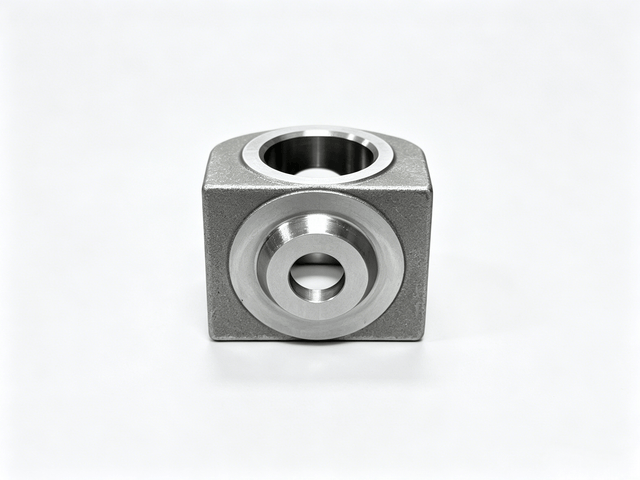
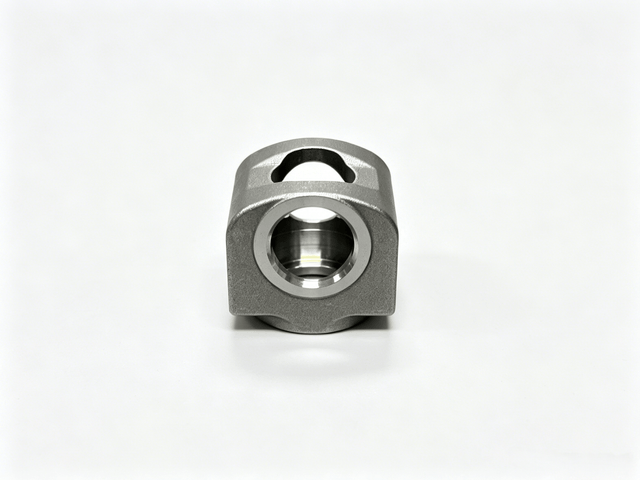
Product Description
| thing | describe |
|---|---|
| Design/Size | According to customer's drawings or samples |
| Material | Aluminum: 6061, 6063, 6082, 7075, 5052, A380, etc.
|
| process | CNC machining, turning, milling, stamping, turning, cutting, etc. |
| Delivery time | Samples usually take 3-7 working days, and mass production will be carried out according to the detailed quantity after sample approval. |
| Surface treatment | Transparent anodizing, color anodizing, chemical coating, brushing, passivation, polishing, chrome plating, sandblasting, laser engraving, zinc plating, black oxide, nickel plating, chrome plating, carburizing, heat treatment, painting |
| Test equipment | Coordinate measuring machine (CMM), 2D measuring instrument, projector, altimeter, micrometer, thread gauge, hardness tester, caliper, pin gauge, salt spray tester, concentricity measuring instrument, spectrometer. |
| Quality Management System | ISO 9001:2015
|
| application | Auto parts, machinery parts, computer parts, medical parts, home appliance parts, electrical parts, electronic product parts, electronic parts, generator parts, alternator parts, generator parts, stationery, power switches, micro switches, construction, merchandise and A/V equipment. |
| File Format | Solidworks, Pro/Engineer, CAD, PDF, JPG, DXF, IGS |
| Package | Inner plastic bag, outer standard carton, or as per customer's requirements |
| Shipping | Sea freight, air freight, international express (DHL, FedEx, TNT, UPS). |
| Serve | The professional foreign trade team provides enthusiastic and fast response services.
|
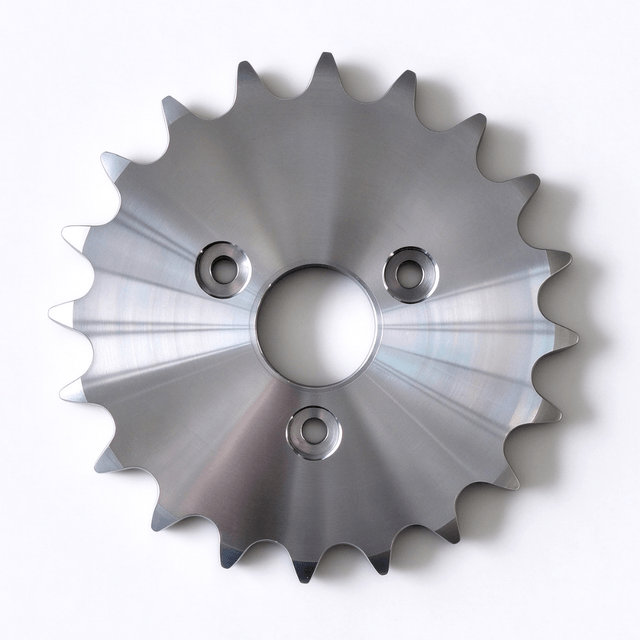
In modern food, beverage, pharmaceutical packaging, and clean-process automation, a small transmission component can have a large influence on uptime. This precision stainless steel conveyor sprocket is designed for compact roller-chain drives where corrosion resistance, repeatable engagement, cleanability, and stable mounting are more important than excessive mass. Its geometry combines a 20-tooth profile with a 12.7 mm chain pitch, a machined central bore, and a 3-hole mounting pattern. The result is a practical drive component for conveyor modules, indexing mechanisms, product-handling stations, and packaging equipment operating in damp or frequently cleaned environments.
Material: 304 Stainless Steel for Clean, Corrosion-Resistant Service
The sprocket is manufactured from 304 stainless steel, one of the most widely used austenitic stainless steels in processing and packaging machinery. Its chromium-rich passive surface provides strong resistance to ordinary atmospheric corrosion and many mild cleaning solutions. Compared with uncoated carbon steel, it is less likely to produce red rust, flaking scale, or coating debris after repeated washdown and condensation cycles.
304 stainless steel also offers a useful combination of toughness, formability, weldability, and machinability. These characteristics allow the blank to be cut and formed efficiently while supporting accurate finishing of the bore, faces, mounting holes, and tooth geometry. Because the corrosion resistance comes from the alloy itself rather than a painted or plated layer, normal surface wear does not immediately expose a different base material.
For food and beverage machinery, this material choice supports cleaner equipment architecture and simpler maintenance. The sprocket is appropriate for conveyor areas near filling, capping, labeling, carton handling, and secondary packaging. It may also serve in pharmaceutical packaging, cosmetic production, laboratory automation, and other clean industrial systems. It should not automatically be treated as certified for direct food contact, and 316 stainless steel may be preferable in severe chloride, marine, or highly aggressive chemical environments.
Geometry Engineered for Predictable Chain Engagement
The sprocket has 20 teeth and a nominal pitch of 12.7 mm, a common size for compact industrial roller-chain transmission. This combination provides a useful balance between package size, chain articulation, speed smoothness, and transmitted load. A 20-tooth layout generally produces smoother engagement and less polygonal speed variation than a very small sprocket, helping reduce vibration and noise in indexing and conveying applications.
Inspection data identify a nominal pitch-circle diameter of 81.2 mm, a tooth-tip diameter of 87.88 mm, and a root diameter of 73.4 mm. The specified tooth angle is 60 degrees. These dimensions work together to guide the roller into and out of each tooth space without unnecessary impact or binding. Controlled root geometry supports consistent seating, while a stable tooth-tip diameter helps maintain clearance and prevents interference with the chain plates.
The nominal central bore is 35.56 mm. Around it, 3 equally spaced mounting holes provide a balanced interface for fastening the sprocket to a hub, flange, or driven module. The visible stepped-hole geometry allows the fastener heads to sit neatly within the component envelope. This arrangement can simplify replacement because the transmission element may be separated from its hub or assembly without redesigning the complete drive shaft.
Controlled Manufacturing Process
Production begins with incoming-material verification to confirm the required stainless steel grade and stock condition. The initial profile is prepared by precision laser cutting, which establishes a repeatable blank while limiting unnecessary material removal. A controlled stamping operation follows where required by the design and production route.
The critical interfaces are then finished through combined turning and milling, using the same fixture, tooling, cooling, and inspection principles discussed in Liqin's precision milling guide. Turning controls the central bore, concentric circular features, and functional faces. Milling produces the mounting-hole pattern and any local features that cannot be generated efficiently in a turning setup. A separate face-turning operation improves flatness, thickness consistency, and the relationship between the face and bore. Careful deburring removes sharp edges and residual burrs from the tooth spaces and holes, while cleaning removes machining residue before inspection and packing.
This process sequence is valuable because it separates high-productivity blank creation from precision finishing. Laser cutting and forming handle the broad geometry efficiently; machining then establishes the datums and tolerances that determine assembly quality. By controlling the bore, tooth profile, mounting pattern, and faces from defined references, the manufacturer can reduce eccentric running and variation between batches.
Quality Assurance Based on Functional Features
Quality control focuses on the dimensions that directly affect chain engagement and installation. The inspection plan uses several complementary methods rather than relying on a single measuring tool. Coordinate measuring equipment verifies positional and geometric relationships. A profile projector evaluates the tooth form, radii, chamfers, and angular features. Calipers, pin-based checks, and other gauges confirm accessible diameters and thicknesses. These methods align with Liqin's published quality assurance and inspection capabilities.
The recorded sample results demonstrate consistent control across the inspected batch. The 20-tooth count was confirmed on every measured sample. The 12.7 mm nominal pitch was checked through profile measurement, while the pitch-circle, tooth-tip, and root dimensions were verified separately. Bore size, mounting-hole geometry, face dimensions, and geometric tolerances were also included in the report. This layered inspection strategy helps identify not only whether a sprocket fits, but whether it will run concentrically and engage the chain predictably.
For the buyer, documented dimensional control reduces commissioning risk. A replacement part that fits the hub but has inaccurate tooth geometry can still generate noise, accelerated wear, and chain tension fluctuation. Conversely, accurate teeth with a poorly controlled bore can create runout. Inspecting both groups of features protects the complete drive system.
Likely Application Scenarios
The primary application is a stainless roller-chain conveyor used in food, beverage, and packaging automation. The sprocket may drive a short belt or chain conveyor, a star-wheel transfer module, an indexing table, a container-handling station, or a compact synchronized mechanism. Its corrosion resistance is especially useful near rinsing, filling, cooling, labeling, and end-of-line packaging processes, where humidity and routine cleaning are common.
The same design logic also suits pharmaceutical and cosmetic packaging, commercial-kitchen equipment, light chemical processing, and automated inspection systems. In these environments, a stainless steel conveyor sprocket offers a cleaner and more durable alternative to painted steel. The detachable 3-hole connection is useful for modular machinery, where maintenance teams may need to replace a wear component without removing a complete shaft or gearbox assembly. Buyers developing adjacent automation hardware can also review Liqin's custom CNC machined parts portfolio for related component types.
This component is best matched to controlled light- and medium-duty service. Correct chain selection, alignment, lubrication policy, shaft support, and guarding remain essential. The sprocket should be installed with the chain line accurately aligned and with tension appropriate to the machine design. Excessive shock loading, severe abrasive contamination, or highly corrosive chloride exposure should be evaluated separately.
Product Advantages
The first advantage is corrosion resistance without dependence on a sacrificial coating. That supports longer appearance retention, lower contamination risk, and easier cleaning. The second is accurate roller-chain engagement. The 20-tooth geometry and controlled pitch help the chain enter and leave the sprocket smoothly, reducing impact and uneven loading.
The third advantage is stable installation. The machined bore and symmetrical 3-hole pattern create a repeatable mounting reference. The fourth is maintainability: a plate-style sprocket attached to a separate hub can often be replaced more economically than an integrated shaft-and-sprocket assembly. The fifth is traceable quality, supported by dimensional inspection of both tooth geometry and mounting interfaces.
Together, these characteristics make the stainless steel conveyor sprocket a strong choice for machine builders that need a compact, clean, and dependable transmission element. It can help reduce premature chain wear, vibration-related adjustments, and unplanned replacement work. Its value is not limited to the purchase price of one component; it lies in protecting production continuity and the surrounding drive system.
Product Value for OEMs and Equipment Operators
For an original equipment manufacturer, a repeatable sprocket simplifies machine assembly and reduces the time spent correcting alignment problems during commissioning. Standard 12.7 mm chain compatibility makes sourcing and maintenance easier, while the machined mounting pattern supports modular designs. For the equipment operator, 304 stainless steel lowers the burden of corrosion management and makes visual inspection more straightforward.
Over the service life of a conveyor, consistent tooth form can improve chain tracking and distribute load more evenly across successive rollers. This helps protect the chain, bearings, hub, and motor from the secondary effects of poor engagement. When replacement is eventually required, the separate mounting pattern can shorten maintenance time. In production environments where one stopped conveyor can interrupt several upstream and downstream processes, that reduction in service time has meaningful operational value.
Frequently Asked Questions
1. What type of chain is this sprocket designed to work with?
It is designed around a 12.7 mm roller-chain pitch and has 20 teeth. Final chain selection should also confirm roller diameter, inner width, plate clearance, load rating, and the applicable chain standard before installation.
2. Why is 304 stainless steel suitable for conveyor machinery?
304 stainless steel provides good corrosion resistance in humid production areas and during routine exposure to water and mild cleaning agents. It is durable, cleanable, and does not rely on paint or plating for basic corrosion protection. For strong chlorides or aggressive chemicals, the operating environment should be reviewed before specifying the material.
3. How is consistent quality verified?
The inspection plan checks tooth count, pitch, pitch-circle diameter, tooth-tip diameter, root diameter, bore size, mounting features, and geometric relationships. Coordinate measurement, profile projection, calipers, and pin-based methods are selected according to the feature being inspected.
TEL: +86 187 5714 8656
Email: zhouli@chinaliqin.com
WhatsApp:+86 187 5714 8656
Website:https://www.cncliq.com/