中文 (简体)




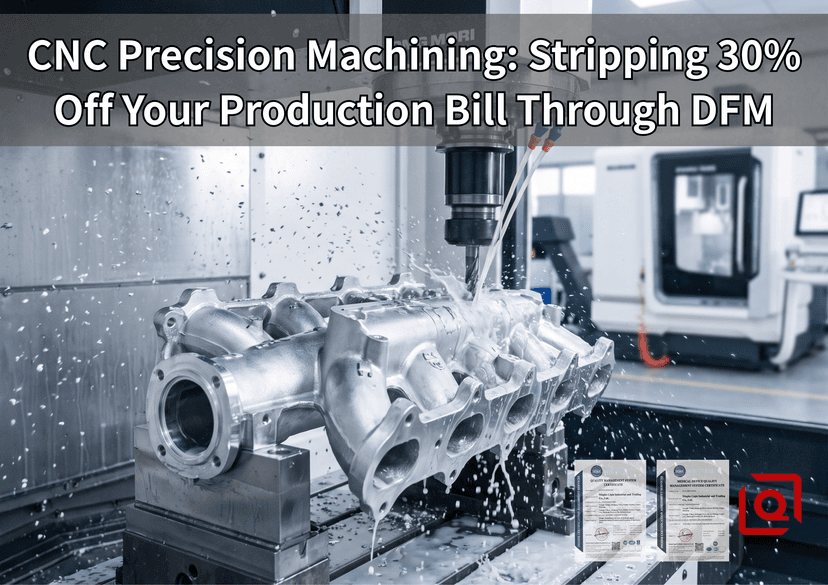
每周在宁波力勤工贸有限公司,我们的工程团队都会打开数百个 STEP 文件
通过调整这些功能以匹配旋转切削刀具的物理限制,您可以轻松节省 30% 的加工发票
1.内部半径惩罚:为什么你的 R 角要付出财富
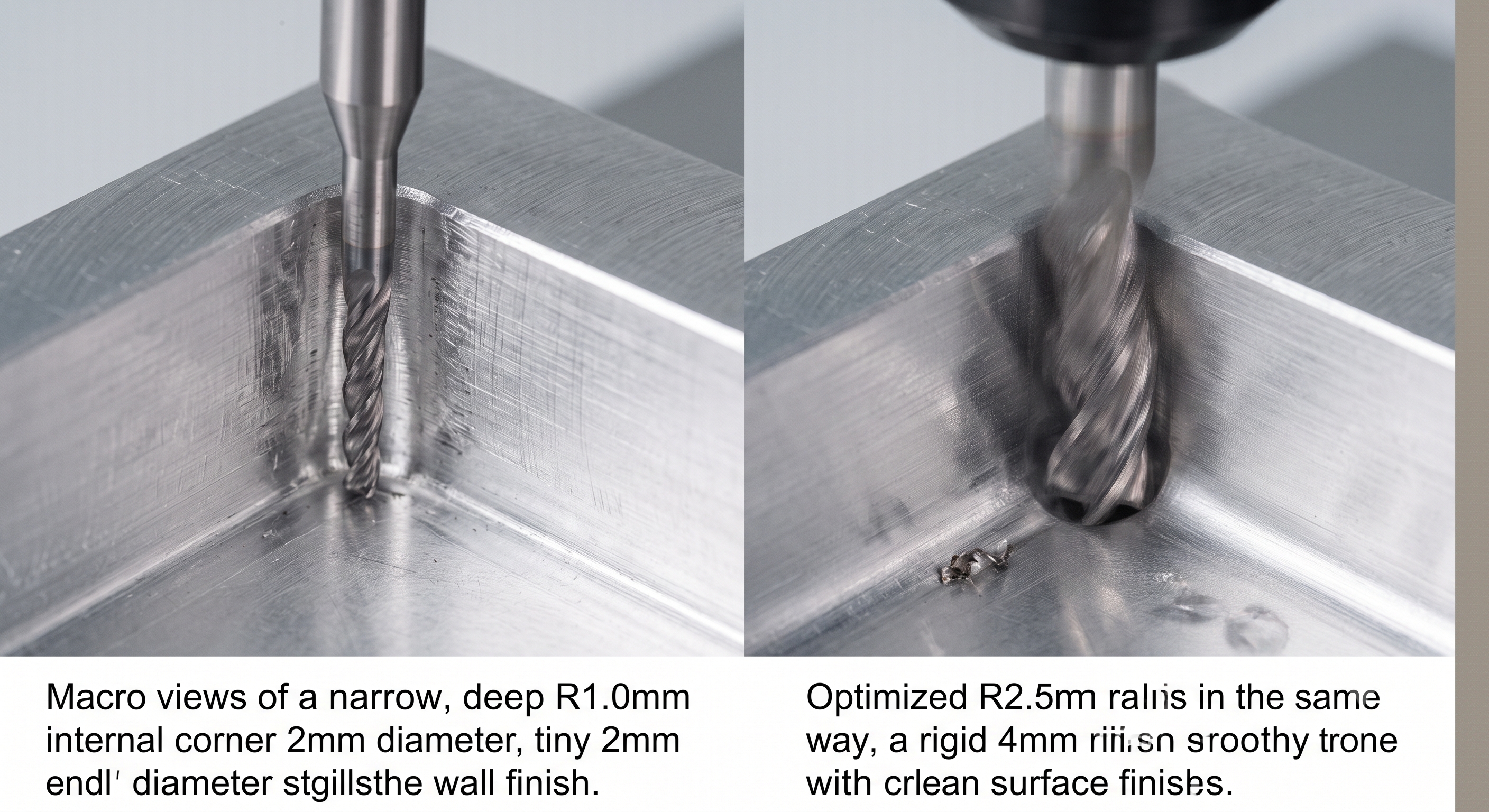
用紧的粘贴30mm深的口袋印刷品上的 class="math-inline" data-math="\text{R}1.0\text{mm}" data-index-in-node="45">R1.0mm 角落,迫使我们从刚性的 10mm 下降到脆弱的 2mm长距离微端磨坊
刚度下降 = (10)^4 / (2)^4 = 10000 / 16 = 625x 刚性降低
为了防止工具像牙签一样折断,我们的操作员必须将进给速度降低到缓慢150mm/min。如果您让我们将该角打开到 R2.5mm(允许 4mm 铣床),我们可以运行更快的刀具路径,保存周期时间缩短 55%,并消除破坏墙面饰面的工具偏转 .
-
经验法则: 保留 R≥1.1×Rtool。这为刀具在拐角处提供了喘息空间,防止刀具啮合突然从 90 度变为 180 度,从而导致剧烈振动和微崩刃。
2.型腔、长宽比和薄壁共振
又深又窄的槽会带来麻烦。当型腔深度与直径之比超过 L/D>4 时,标准硬质合金刀具根据经典悬臂梁方程在横向切削力作用下发生偏转:
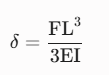
应对这种偏转(> 0.012mm),我们必须放慢机器操作速度或使用昂贵的长距离锥形颈部工具
振动也会困扰薄壁。 在 0.8mm 以下加工铝(如 AL6061-T6)会释放内部应力,并使金属从刀具上推开。这会留下波浪形表面或使材料破裂。
为了在不增加流程成本的情况下绕过这个问题,我们在地板上使用了渐进式降压方法。我们在两侧交替切割,每次下降 1.5mm,让未加工的块体充当支撑。我们使用锋利的单槽铝铣刀,转速超过 20,000 rpm,以保持轻切削力。
3.设置陷阱:为什么零件轮换会耗尽预算
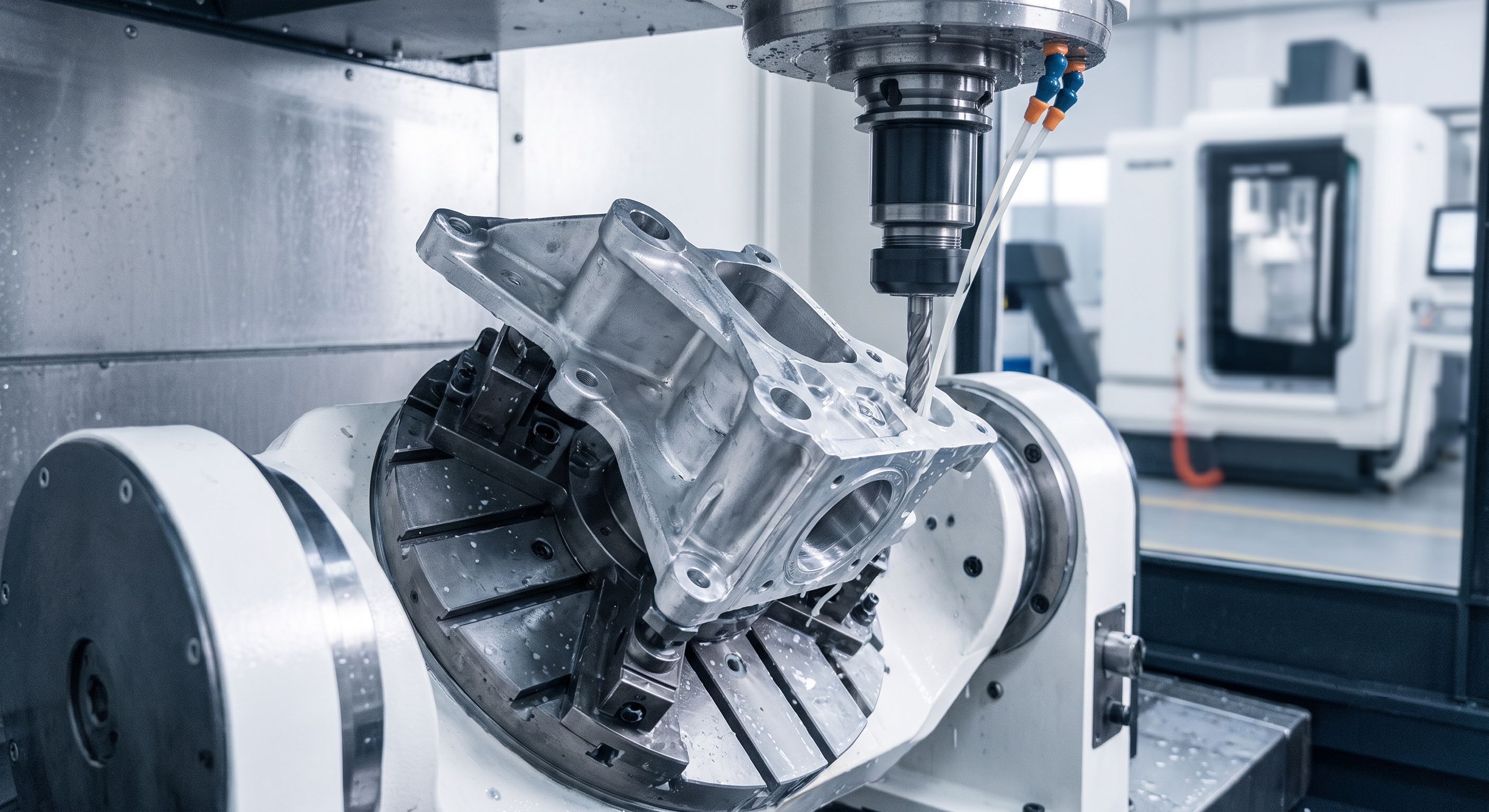
许多设计师认为成本纯粹与材料数量有关。他们忽视了夹具设置和指示器对准的手工劳动。每个需要旋转的面都迫使机器操作员停止、松开、翻转、重新夹紧和重新探测工件坐标系。在小批量生产中,设置和对准占总工时的 70% 以上。
此外,每次重新夹紧都会引入微观对准误差,从而威胁垂直度和同轴度等交叉面几何尺寸。
可操作的 DFM: 在同一轴向平面上设计关键配合特征(定位销孔、轴承座)。
替代方案:让我们在 5 轴加工中心上运行零件,在一次设置中完成 5 面加工,为您节省 30% 的人工成本。
4.盲孔和浅螺纹
我们经常在汽车外壳上看到这种情况:指定深度为 12mm 位于仅 14mm 深
最小钻孔深度 = 可用螺纹长度 + (3 x 间距)
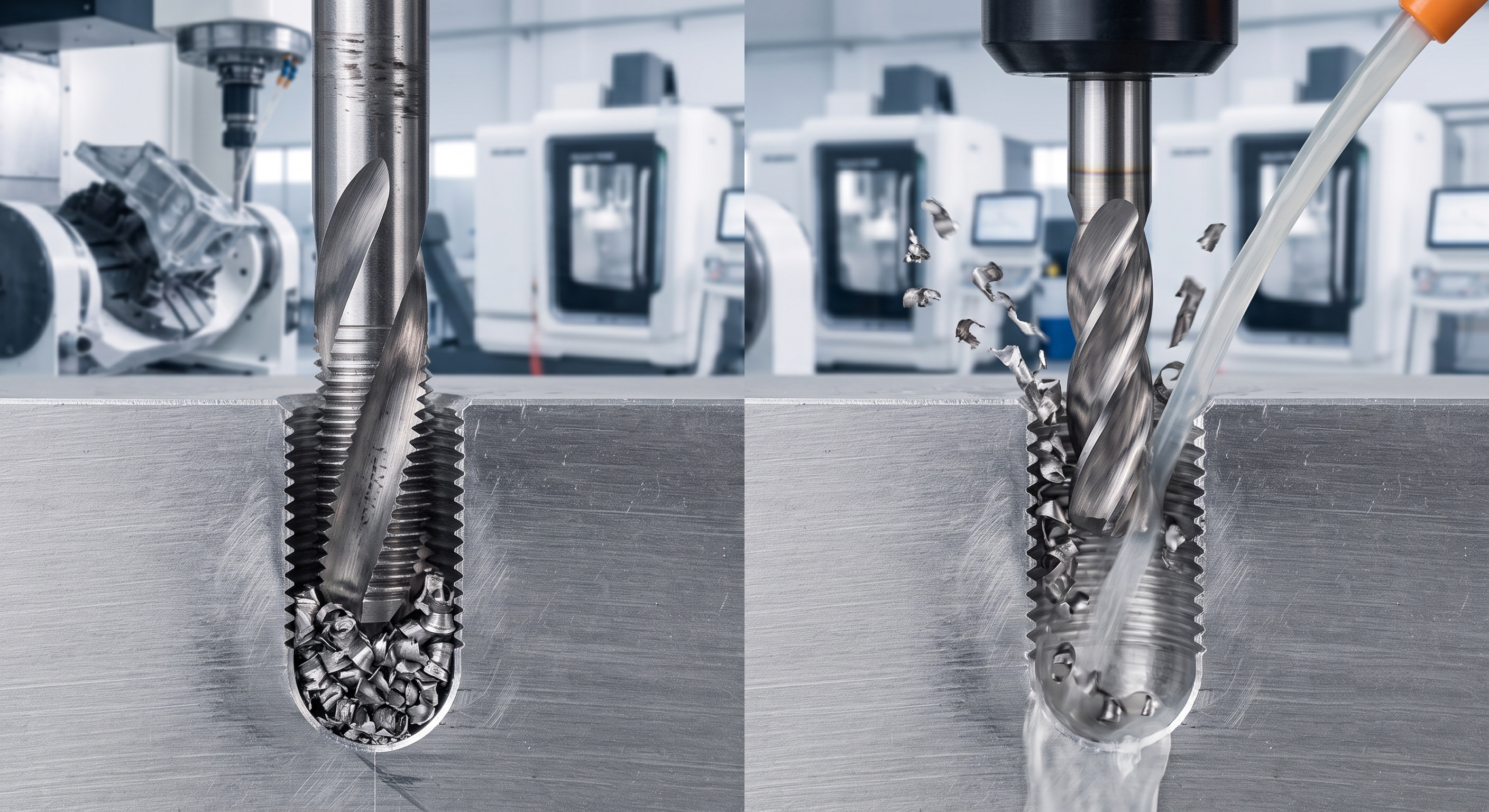
始终保证钻孔深度裕度至少为 3×螺距超出可用螺纹长度
5. ±0.005mm 公差的实际成本
过度指定非配合面至 ±0.005mm 当标准 ±0.02mm 或 DIN ISO 2768-m(中)非常精细时,会强制执行不必要的制造步骤 .
位于 ±0.005mm,简单铣削不起作用。我们必须引入微精加工、连续刀具偏置探测或二次外圆磨削
车间几何影响矩阵
以下是我们生产车间的真实指标,将未优化的设计与在我们的高速生产线上处理的符合 DFM 标准的变体进行了比较 .
R 1.0mm(深度:25mm)< !---->
R 2.5mm(使用 4mm 铣刀)< !---->
减少 55%< !---->
从 6.2% 到 0.1%< !---->
34.5%
L/D = 6:1(深槽)< !---->
L/D = 3.5:1(阶梯式口袋)< !---->
减少 40%< !---->
From 4.5% to 0.0%< !---->
28.0%
±0.005mm (Linear)< !---->
±0.020mm (ISO 2768-m)< !---->
Reduced by 65%< !---->
From 8.8% to 0.3%< !---->
42.0%
M5 Thread to Bottom< !---->
M5 + 2.5mm Drill Clearance< !---->
Reduced by 15%< !---->
From 3.1% to 0.0%< !---->
12.5%
FAQs
Q1: Why not just use a smaller tool to clear tight corners?
A: Because tool rigidity drops exponentially (d^4) . Forcing a tiny 2mm cutter into a deep corner means it will flex, drift, and rub against the wall instead of shearing the metal, which ruins the surface finish and triggers premature tool breakage.ol paths, save 55% in cycle time, and completely eliminate tool deflection that ruins wall finishes.
Q2: What if our design absolutely requires thin walls under 0.8mm?
A: We must implement "step-down" support. We never mill one side to final thickness first; instead, we machine both sides in shallow 1.5mm steps, letting the thicker unmachined metal below absorb the cutting forces and vibrations.
Q3: How do setup orientations impact the final part's geometric tolerance?
A: Every time we flip a part, micro-level alignment errors creep in. If critical matching features are on different planes, achieving tight perpendicularity or coaxiality becomes highly risky and expensive due to these cumulative stacking errors.
Design critical mating features (locating pinholes, bearing seats) on the same axial plane. Alternatively, let us run the part on our 5-axis machining centers to finish 5-sided machining in a single setup, saving you 30% in manual labor costs.
Q4: Can we use thread milling for all blind holes instead of tapping?
A: Yes, and we prefer it for shallow holes. A thread mill is smaller than the pre-drilled hole and cuts helically, letting pressurized coolant easily blast chips out of the cavity, eliminating the risk of a broken tap ruining the part.
Q5: How does material choice affect these DFM rules?
A: Harder metals like 316 stainless steel or titanium amplify every DFM error. A tight corner or deep pocket that is merely slow to machine in aluminum becomes a tool-shattering, high-scrap-rate nightmare in titanium due to work hardening.
Summary
In short, shaving 30% off your CNC machining invoice does not mean compromising on your product's functional performance; it simply means aligning your CAD geometry with the physical limits of our cutting tools. By making minor adjustments to corner radii, keeping cavity depths within practical aspect ratios, minimizing setup rotations, and using realistic tolerances like DIN ISO 2768-m, you directly eliminate tool deflection, broken taps, and wasted machine setups. DFM is not about lowering your standards—it is about designing out the manufacturing friction that unnecessarily inflates your production bill.
Before releasing your next RFQ to Ningbo Liqin Industrial & Trading Co., Ltd., open up those internal radii, check your linear tolerances against ISO 2768-m, and verify your blind hole clearance. Send us the updated CAD files, and watch your machining invoices drop while your parts arrive faster and ready for assembly .
Contact Information
Disclaimer
The technical advice, machining parameters, and cost-reduction data presented in this article are based on standard industry practices and typical shop-floor outcomes at Ningbo Liqin Industrial & Trading Co., Ltd. Because every custom project involves unique geometric constraints, operating environments, and material behaviors, this content is intended for informational and design-reference purposes only. It does not constitute a formal engineering guarantee or contractual technical binding. All active designs should undergo a formal DFM review by our engineering team prior to production.