English




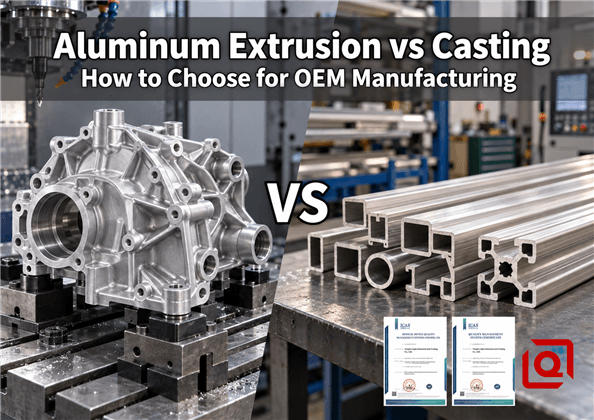
Put the drawing on the bench before comparing quotations. We have seen almost identical aluminum housings priced around two entirely different production plans. One shop wants to extrude a long blank, saw it into pieces, and machine the details. The other wants to inject molten alloy into a steel die, trim the shot, and finish a few surfaces. Both routes may work. What matters is where the cost and risk are hiding: in the shape, the tool, the yearly call-off, the finish, the inspection plan, or the next drawing revision.
The shop-floor shortcut: Turn the model so you are looking through its length. Does the same section run all the way through? Put extrusion on the shortlist. Does the body change shape in several directions and carry cast-in ribs, bosses, pockets, or lettering? Price die casting. When the body is easy to form but a bore, gasket land, thread, or datum must be accurate, form first and machine that feature afterward.
Real parts quickly muddy that neat rule. A long control enclosure can be a fine extrusion until three deep connector windows add another setup. A compact transmission cover can suit HPDC until the seal leaks after a machined pore opens, or marketing asks for a bright clear anodize. We will work through those awkward calls the same way a manufacturing engineer does during a DFM review.
One Word, Two Processes: Clarify “Extrusion” on the RFQ
Here, aluminum extrusion means profile extrusion. The press takes a heated billet and drives it through a shaped opening. Out comes a long piece whose section repeats from front to back—the sort of stock used for rails, heat-sink bodies, machine frames, channels, and tubular housings. Impact extrusion and cold extrusion are different jobs. They start with a slug inside a closed tool and push the metal into a cup, shell, or mostly symmetric blank.
The distinction matters during RFQ review. A drawing labeled simply “extruded aluminum” can send suppliers down different process paths. State whether the requirement is a continuous profile, a cold-extruded blank, or merely an aluminum alloy that may have been supplied as extruded stock. Liqin’s OEM guide to aluminum cold extrusion explains the separate cold-forming process. The rest of this article compares profile extrusion with aluminum die casting, chiefly high-pressure die casting (HPDC).
What the Two Processes Actually Do
Inside the extrusion shop: one section, many metres
Think of the extrusion die as the master cross-section. As the profile leaves the press, the crew cools it, stretches or straightens it, applies the required ageing cycle, and cuts it to a manageable length. Fins, hollow passages, screw channels, and mounting tracks can come straight through the die when they continue in the press direction. A side hole cannot. Neither can a pocket that stops halfway down the part. Those details move to the saw, mill, drill, punch, or tapping station.
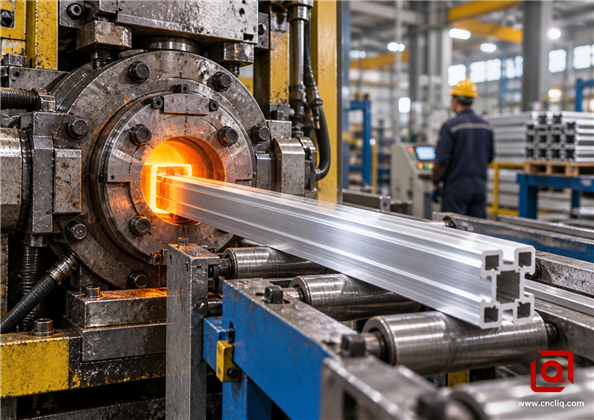
Figure 1. Profile extrusion forms a continuous constant cross-section; local precision features are added afterward.
The best extrusion designs cooperate with metal flow. Balanced wall thickness, sensible radii, supported tongues, and a reasonably symmetric profile make the die easier to tune and the profile easier to straighten. The Aluminum Extruders Council’s design guidance highlights overall cross-section size, symmetry, wall balance, tongue ratio, and tolerances as early design considerations. In plain terms: a small CAD change can turn a difficult profile into a stable, lower-cost one.
Inside the casting cell: shape the whole body at once
At the casting cell, molten alloy enters a hardened steel cavity at speed. That cavity can carry detail on several faces, so a shot may leave the machine with ribs, bosses, recessed marks, connector openings, and curved walls already present. The operator or robot removes the casting; the cell then cuts away gates and flash. From there it may go to deburring, blasting, coating, leak testing, or a CNC fixture.
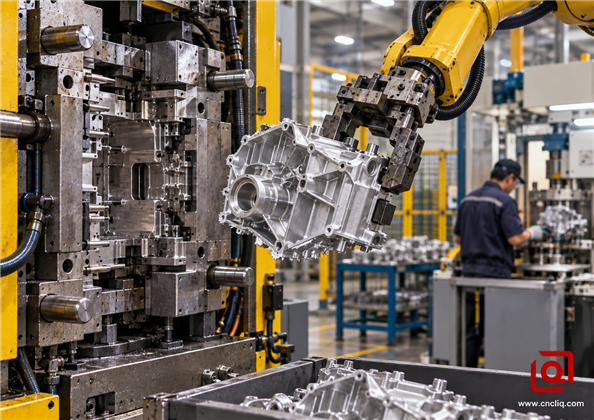
Figure 2. HPDC earns its keep when a stable, complex 3D body can be formed repeatedly and secondary work is controlled.
A die cannot rescue careless geometry. Metal must fill the far corners before a thin area freezes. Air needs somewhere to escape. Thick islands cool differently from nearby thin walls, and the part still has to come off its cores and ejector pins. On actual tool reviews, abrupt wall changes and unsupported bosses attract more concern than a decorative outside curve. The North American Die Casting Association comparison draws the basic boundary clearly: an extrusion repeats one section, whereas a casting can change section and place local features in the cavity. The Liqin die casting guide for OEM buyers takes that discussion into tooling and production checks.
Aluminum Extrusion vs Die Casting: Practical Decision Table
|
Decision factor |
Aluminum extrusion |
Aluminum die casting |
What the OEM team should ask |
|
Core geometry |
Constant cross-section along one axis |
Complex 3D shape with local features |
Can the largest part of the geometry be swept in one direction without changing? |
|
Tooling commitment |
Usually simpler, with fewer moving elements |
Higher commitment; may include slides, cores, cooling, runners, vents, and trim tooling |
Is the design mature enough to freeze the tool-forming surfaces? |
|
Part length |
Excellent for long members and families of cut lengths |
Limited by die and machine envelope |
Can several SKUs share one profile and differ only in length or machining? |
|
Feature freedom |
Local holes, pockets, and interrupted geometry require secondary work |
Many ribs, bosses, markings, and contours can be formed |
Which features truly need to be machined, and which are only cosmetic? |
|
Material structure |
Wrought profile alloys are often selected for strength, ductility, and finish response |
Casting alloys favor fill behavior and castability; porosity risk must be managed |
Are fatigue, welding, pressure integrity, or thread strength critical? |
|
Surface finish |
Often a strong choice for decorative anodizing, subject to alloy and die-line control |
Usually specified with powder, paint, conversion treatment, or an agreed cast texture |
Which surface does the assembly actually need, and which one does the customer see? |
|
Dimensional strategy |
Commercial profile tolerances for the body; CNC for critical interfaces |
As-cast tolerances for noncritical geometry; CNC for critical interfaces |
Which dimensions drive assembly and must be verified after final finishing? |
|
Volume economics |
Often attractive for medium or high use of a repeated linear shape |
Often attractive for stable high-volume complex parts |
What are annual volume, batch size, program life, and revision probability? |
|
Main quality risks |
Twist, bow, wall variation, die lines, residual-stress movement |
Trapped gas, shrinkage voids, incomplete fill, movement, flash, and tool witness marks |
How will the supplier catch the defect that could stop your line? |
Capability values should be agreed against the actual alloy, profile or casting envelope, die layout, heat treatment, finish, and approved drawing. A general comparison table is a screening tool, not a binding tolerance specification.
The Seven Questions That Usually Decide the Process
1. Is the useful geometry constant along one axis?
This is the strongest first filter. If a section can be drawn on a sheet and pushed straight through the part length, extrusion deserves a serious look. Heat-sink fins, T-slots, cable paths, hollow chambers, rails, and screw channels can all ride through the die. If the part instead has changing wall height, offset bosses, closed local pockets, or a sculpted exterior on several faces, casting starts with the better geometric fit.
Do not judge from the outside silhouette alone. Split the model into “continuous body” and “local details.” A part that is 80 percent continuous may still be an excellent extrusion plus CNC machining candidate. Liqin’s machining-versus-extrusion DFM guide shows how datum selection and targeted post-machining change the economics.
2. How stable is the design?
The invoice for the tool tells only part of the story. A hole made in a later CNC operation is usually easy to move when revision B arrives. A boss formed in the casting is another matter: the toolmaker may have to weld and re-cut steel, change an insert, or alter a slide. Extrusion dies also need correction from time to time, yet cut length, end machining, and side windows often remain outside the profile die. Ask where each likely revision lives before signing the tooling order.
3. What does the volume forecast really look like?
“High volume” is not a complete business case. Ask for annual demand, order cadence, expected program life, scrap allowance, spare-parts demand, and the probability of an engineering change. Then compare total landed cost—not only piece price. Include the die, trim tool, fixtures, first-article inspection, sample rounds, secondary machining, finish, inspection, packaging, freight, maintenance, and replacement inserts.
4. Which properties must survive in service?
“Aluminum” is not a usable material callout. Profile work commonly starts with wrought 6xxx alloys, including 6061 and 6063. HPDC shops choose casting alloys for how the liquid metal fills and how the shot behaves after solidification. Compare the certified data for the named alloy and condition on your drawing. A generic aluminum data sheet is no basis for a fatigue, thread, weld, or pressure decision.
5. What finish does the customer see and touch?
Extruded 6xxx-series profiles are widely chosen for anodized housings and visible industrial products because a suitable alloy and controlled profile can produce a clean, consistent appearance. Even then, die lines, handling marks, rack points, alloy lot, pretreatment, and gloss range need agreement on a boundary sample.
Cast aluminum can look excellent with the right finishing route, but decorative anodizing is not automatically equivalent to anodized wrought material. Casting-alloy chemistry and local surface condition can reveal color variation. Powder coating, painting, conversion coating, blasting, or a defined as-cast texture may be the more controllable solution. Put cosmetic zones, hidden zones, allowable marks, color standard, gloss, coating thickness, and masking areas on the drawing or appearance specification. Liqin’s OEM aluminum surface-treatment guide is a useful internal reference when preparing those notes.
6. Which dimensions truly need machining?
A common RFQ mistake is applying one tight general tolerance to every feature. That pushes both processes toward unnecessary machining and inspection. Separate the drawing into three groups: formed body dimensions, functional interfaces, and appearance-only geometry. Bearing seats, sealing lands, dowel locations, precision threads, and mating datums may deserve CNC finishing. A rib hidden inside a cover probably does not.
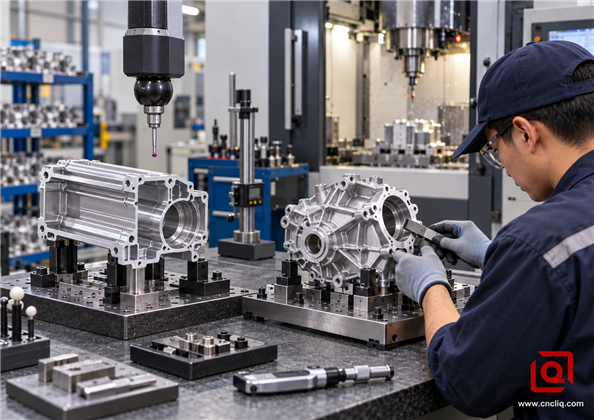
Figure 3. A sensible hybrid plan machines and inspects the critical interfaces, rather than forcing every surface to carry precision cost.
Plan inspection from the finished condition backward. If a coating changes a bore or masking affects a datum, define whether the measurement is before or after finishing. If leak performance matters, state the medium, pressure, dwell time, acceptance criterion, and test frequency. If an extruded rail is long, define how straightness and hole position are evaluated in the free state and in the assembled state. This is where a supplier with forming, multi-axis CNC machining, and inspection under one roof can simplify datum transfer and corrective action.
7. What failure would stop your assembly line?
Make the process decision against the expensive failure, not the average dimension. For a sealed electronics enclosure, it may be a leak at the gasket land. For a long motion rail, it may be bow after machining. For a motor housing, it may be bore position to the mounting face. For a visible control panel, it may be color mismatch from lot to lot.
Now follow the risky feature through the factory. Who checks the incoming alloy? What is approved at the first shot or first press run? Where does the operator record a bore, a leak result, or coating thickness? Which gauge has a current study behind it? A useful control plan names the check, the frequency, the reaction, and the record. When those answers are missing, a beautifully formatted quotation is still only a price.
Where the Hybrid Route Wins
The best answer is often not “extrusion or casting.” It is “form the economical body, then machine only what matters.” With extrusion, the die creates the long profile, chamber, fins, or rails; saw cutting and CNC add ends, ports, grooves, and hole patterns. With casting, the die creates the complex shell, ribs, bosses, and external form; CNC finishes bearing bores, seal faces, tapped holes, and reference pads.
Verified Anonymized Case: A Linear Sensor Housing
A previously published Liqin case describes an anonymized outdoor optical-sensor enclosure with external cooling fins, an internal chamber, a perimeter sealing requirement, and a precision lens bore. The original route machined the housing from solid aluminum. The published record reports more than 40 minutes of machining per part and a quoted unit cost of US$58.50 at 3,000 pieces. Liqin’s team redesigned the constant body as a custom 6063-T6 hollow extrusion, then saw-cut the profile and machined the end faces, lens bore, and O-ring groove on a 4-axis setup.
The same published case reports a US$2,400 extrusion die, roughly three weeks for the die, secondary machining reduced to about 6.5 minutes, and a finished unit price of US$27.80. It also reports that the housing passed the specified IP67 test and accepted a uniform black anodized finish. These figures are not universal promises; they are project-specific results recorded in Liqin’s Aluminum OEM Manufacturing Guide. The transferable lesson is the decision logic: the repeated linear geometry moved into the extrusion die, while the seal and optical interfaces stayed in CNC machining.
Related Live Product Example: Cold Extrusion Is a Third Route
Liqin’s live product page for a 6061-T6 lightning-arrester housing documents a cold-extruded blank followed by precision machining, threaded-hole work, deburring, cleaning, and dimensional inspection. It is relevant because it shows why the word “extrusion” must be qualified. This part is not a continuous profile and should not be used as proof of profile-extrusion capability.Instead, it demonstrates a different near-net-shape option for compact, substantially symmetric parts where material can be displaced from a slug and critical details finished afterward.
DFM Checklist Before You Request a Quote
1. Send native 3D and controlled 2D files. Include STEP or another agreed solid model, a revision-controlled drawing, units, and a list of critical dimensions.
2. State annual demand and order pattern. Include prototype quantity, first production lot, annual usage, program life, and the likely upside and downside volumes.
3. Identify the functional risk. Mark sealing, bearing, grounding, heat-transfer, load-path, cosmetic, and assembly features.
4. Define material properly. Specify alloy, temper, applicable standard, required certificates, restricted substances, and any special mechanical or conductivity requirement.
5. Describe the finish as a measurable requirement. Add color or gloss references, coating thickness, masking, appearance zones, and corrosion test requirements where they truly apply.
6. Ask for a process split. The quotation should show formed blank, CNC operations, finish, testing, packaging, and each tooling item.
7. Request the supplier’s DFM mark-up. Ask what can be formed, what must be machined, which tolerances are cost drivers, where draft or radii are needed, and how the part will be ejected or straightened.
8. Agree tool ownership and change rules. Record storage, maintenance, expected life, replacement responsibility, modification charges, and what happens if demand pauses.
9. Approve evidence, not assurances. Define first-article reports, material certificates, capability evidence for key dimensions, leak or load tests, appearance samples, and the control plan before production release.
Need a process comparison for a live part? Send Liqin your 3D model, 2D drawing, alloy or performance requirement, finish, annual forecast, and target launch date. Ask for two costed routes where both are technically sensible: extrusion plus CNC and die casting plus CNC. The engineering team can then flag tooling risk, likely secondary operations, and the inspection plan before you commit capital. Request a DFM review and quotation.
Main B2B Keywords and Search Intent
|
Keyword cluster |
Buyer intent |
Natural use in this article |
|
aluminum extrusion vs casting; extruded aluminum vs cast aluminum |
Process comparison |
Core decision framework and matrix |
|
custom aluminum extrusion manufacturer; OEM aluminum extrusion parts |
Supplier and RFQ |
Profile design, tooling, secondary machining |
|
aluminum die casting manufacturer; custom die cast aluminum parts |
Supplier and RFQ |
Complex 3D geometry, tooling, finish, quality risks |
|
aluminum extrusion CNC machining; die casting secondary machining |
Technical sourcing |
Hybrid process, datums, critical interfaces |
|
OEM aluminum manufacturing; aluminum parts supplier China |
Commercial investigation |
Program economics, quality planning, inquiry CTA |
|
aluminum enclosure manufacturing; heat sink extrusion; die cast housing |
Application-specific |
Examples and anonymized housing case |
FAQ
1. Is aluminum extrusion cheaper than die casting?
Extrusion commonly requires a lower tooling commitment, but it is not always cheaper per finished part. A simple constant profile with limited drilling can be very economical, while an extrusion that needs several CNC setups may lose its advantage. Die casting carries higher tool and qualification cost, yet it can form many 3D features in one cycle at stable volume. Compare lifetime cost using your real quantity, machining content, finish, inspection, scrap, and revision risk.
2. For an enclosure, where should I start?
Look down the length of the enclosure. If the chamber, rails, or cooling fins repeat and the family uses several cut lengths, ask for an extrusion route. If the body wraps around bosses, curved walls, isolated pockets, and connector details on several faces, ask for a casting route. Whichever blank wins, keep gasket lands, locating bores, and other close interfaces on the CNC and inspection plan.
3. Will an anodized casting look like an anodized extrusion?
Do not assume so from a color chip. A casting may be anodized, but its alloy chemistry and local skin condition can make the tone less even than the finish on a suitable wrought profile. Put the real alloy through the proposed pretreatment and approve physical samples under agreed lighting. If consistent appearance matters more than the word “anodized,” compare powder coating, paint, conversion coating, and other qualified finishes as well.
4. If the part is near-net shape, why is CNC still on the quote?
Because “near net” is not the same as “ready to assemble.” Let the die or profile carry the broad, economical shape. Put only the interfaces that earn precision—bearing seats, gasket faces, true-position holes, threads, datums, and ports—onto the machining route. On the print, separate formed dimensions from cut dimensions and say whether final acceptance occurs before or after coating.
5. What should I send for an accurate OEM quotation?
Give the supplier the controlled 2D print and the matching solid model. Add the first lot, annual call-off, likely batch size, alloy or service requirement, finish, launch date, and the few features that can reject an assembly. Include the test method when leakage, load, or appearance is critical. If you are open to another process, write that plainly on the RFQ so the quotation does not quietly trade away a requirement.
Summary
Aluminum extrusion wins when a part’s value is concentrated in a repeated cross-section, adaptable lengths, strong finish response, and moderate tooling commitment; die casting wins when stable volume and true 3D complexity justify a more involved mold. The safest OEM choice comes from separating formed geometry from machined interfaces, modeling total program cost, and tying every critical requirement to a measurable quality control. Send the drawing early, compare complete process routes, and freeze tooling only after the functional risks are understood.
Contact Information
Company: Ningbo Liqin Industry Co., Ltd.
Daily customer maintenance & after-sales support:service@shturl. zhuwanying@cncliq.com
New inquiry, quotation & order discussion:business@shturl. zhouli@chinaliqin.com
Hotline: +86 18757148656
Disclaimer
All technical articles, material specifications, machining recommendations, and surface treatment details published on this blog are for informational and reference purposes only. Please note that general blog insights do not replace signed technical agreements. Because custom parts vary by material heat numbers, machine calibrations, and specific tolerances, binding quality specs are governed solely by your approved CAD drawings, signed contracts, and formal quality plans.
All customer case studies featured on this blog have been thoroughly anonymized and sanitized. The performance metrics, manufacturing workflows, and imagery displayed serve solely to demonstrate our custom machining capabilities and do not represent a single universal standard for all orders.
Liqin Manufacturing Team
Built on 18 years of precision engineering experience, Ningbo Liqin Industry manufactures high-tolerance metal components for demanding global markets. We operate out of a 6,500 m² production hub equipped with over 150 machines, running 4-axis and 5-axis CNC machining, mill-turn machining, cold extrusion, and pressure die casting under one roof. This setup allows us to manage projects seamlessly, taking parts from initial CAD concepts directly to finalized shipments.
We handle quality control with zero compromise. We treat tight tolerances with the engineering discipline they require. Backed by ISO 9001, ISO 13485, and IATF 16949 certifications, our QA engineers run strict IPQC, FQC, and OQC checks on every single production batch. From CMM dimensional mapping and optical profiling to hardness and salt-spray testing, we validate your critical specs upfront—so you receive drop-in ready components with zero assembly headaches or costly line stoppages. On top of manufacturing, you can rely on us for two-hour response times on new RFQs, direct support for prototype sampling, and smooth export shipping across Europe, North America, Asia, and Oceania.
Welcome your inquiries and samples. Visit our website or contact us directly for a competitive quote!