English




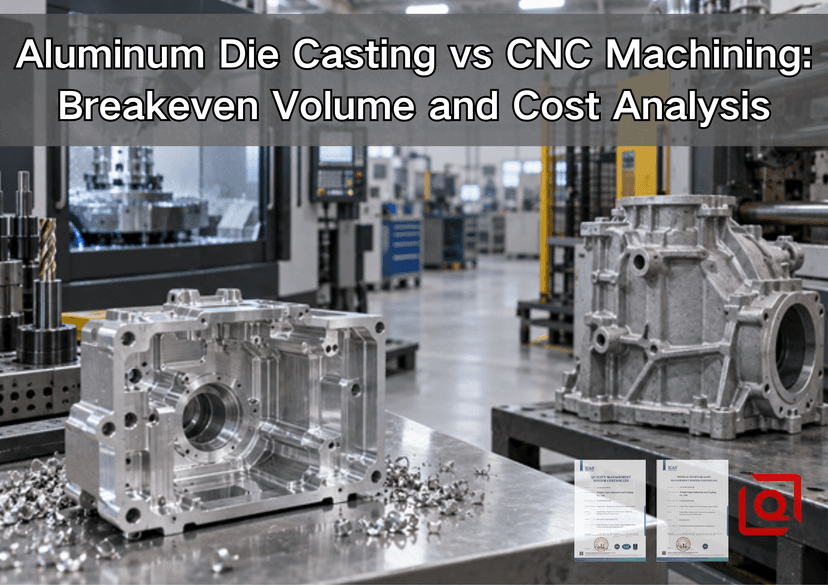
Are you still torn between machining an aluminum housing from billet and paying for a die? A low CNC quote can become expensive after thousands of cycles, while an attractive die-cast piece price can hide tooling, qualification, secondary machining, rejects, and design-change risk. This guide shows how a production engineer compares the 2 routes on the same cost basis, calculates a realistic breakeven volume, and decides what should stay cast and what should still be machined. If you are preparing an RFQ, use the tables below before you release the drawing. They can prevent a cheap-looking process from becoming the costly one.
Quick Answer: When Does Each Process Usually Win?
CNC machining normally carries the lower commitment for prototypes, bridge production, frequently changing designs, and parts whose critical geometry occupies most of the component. Aluminum high-pressure die casting (HPDC) becomes attractive when the geometry is cast-friendly, demand is repeatable, the design is stable, and the saving per accepted part can repay the die and qualification package. There is no responsible universal crossover such as “500 parts” or “5,000 parts.” The correct breakeven volume comes from your 2 quotes:
Breakeven quantity = (die-casting fixed cost − CNC fixed cost) ÷ (CNC variable cost per accepted part − die-casting variable cost per accepted part)
The words accepted part matter. Put finished parts beside finished parts. Both prices should cover the same drawing revision, inspection plan, finish, pack, and delivery point. A trimmed casting on one side and an assembly-ready machined part on the other will only produce a tidy but useless spreadsheet.
|
Program condition |
CNC machining usually leads |
HPDC plus secondary CNC usually leads |
|
Demand |
Prototype, low or uncertain volume |
Stable repeat orders with credible lifetime volume |
|
Design maturity |
Revisions still likely |
Interfaces and wall structure frozen |
|
Geometry |
Deep precision pockets, accessible tool paths, many tight features |
Thin shells, ribs, bosses, fins, and repeated near-net form |
|
Materials |
Broad wrought-alloy choice, including 6061 and 7075 |
Casting alloy selected for fill, strength, finish, and service conditions |
|
Upfront cash |
Low programming and fixture commitment |
Production die, trials, gauges, and qualification required |
|
Per-part behavior |
Machine time and stock remain in every unit |
Lower forming cost at scale, but trimming and machining may remain |
|
Engineering changes |
Program and fixture can often be revised |
Steel changes may be slow, limited, or require a new die |
|
Best buying question |
How can we reduce cycle time without relaxing CTQs? |
How many accepted parts will repay the complete tool package? |
For a broader process-selection view, Liqin’s aluminum OEM manufacturing guide also compares CNC machining, die casting, and extrusion. For a lifecycle-cost overview, see the earlier die casting vs CNC machining cost and volume guide. This article goes deeper into the breakeven equation, risk correction, and RFQ evidence.
1. Build Both Quotes on the Same Cost Boundary
Most bad comparisons begin in a spreadsheet, not on a machine. The CNC column often contains a finished, inspected part. The die-casting column may contain only a trimmed blank. Before calculating anything, define the boundary as a packaged component ready for the buyer’s incoming inspection.
CNC total cost
For a billet-machined route, fixed costs may include DFM review, CAM programming, soft jaws or a dedicated fixture, first-article inspection, and any non-recurring gauge work. Variable costs normally include cut stock, machine cycle, operator attendance, cutting tools, coolant and consumables, deburring, cleaning, finishing, inspection, reject allowance, packaging, and logistics.
Die-casting total cost
For HPDC, fixed cost may include tool design, die steel and manufacture, slides or inserts, trim tooling, sampling, mold-flow work when included, gauge development, first-article approval, and qualification runs. Variable cost can include alloy, melting loss, casting-cell time, die release, trimming, shot blasting, secondary CNC machining, leak testing, surface treatment, inspection, rejects, packaging, and freight. Tool maintenance, insert replacement, and ownership terms also need a named payer.
|
Cost line |
CNC from billet |
HPDC plus finishing |
RFQ question |
|
Programming and setup |
Fixed |
Secondary-CNC fixed cost |
Is it charged once or by batch? |
|
Production tooling |
Usually low |
Major fixed investment |
Who owns, stores, maintains, and insures the die? |
|
Raw material |
Stock size and buy-to-fly matter |
Shot weight, runners, returns, and melt loss matter |
Is the quote based on gross or net metal? |
|
Machine or cell time |
Repeats on every part |
Shorter forming cycle, then any machining |
What cycle and cavity count support the quote? |
|
Finishing |
Often direct after machining |
Blasting, coating, impregnation, or polishing may be needed |
Is the specified finish included? |
|
Quality |
FAI, in-process checks, CMM |
FAI, casting controls, CTQ machining, leak or X-ray testing as required |
What is the inspection frequency and acceptance plan? |
|
Yield |
Stock defects and machining scrap |
Startup scrap, porosity, trim damage, machining exposure |
Is price quoted per produced part or accepted part? |
|
Logistics |
Finished-part mass and packaging |
Finished-part mass plus any off-site operations |
Are Incoterms and destination identical? |
The strongest currently surfaced comparison articles make the fixed-versus-variable split visible, put production volume at the center, and give the reader a decision model rather than a list of process definitions. This guide keeps that useful structure but does not treat a published volume band as a universal rule.
2. A Worked Aluminum Die Casting vs CNC Machining Breakeven Calculation
The following numbers are an illustrative model, not a Liqin quotation or a market benchmark. Replace every figure with supplier data for your drawing.
Assume a sealed electronics housing can be made by either route. The CNC route needs USD 1,200 for programming, jaws, and first-article work. Its variable cost is USD 31.80 per accepted part. The proposed HPDC route needs USD 32,000 for the die, trim tool, trials, and qualification. Casting, trimming, secondary machining, coating, inspection, and the quoted reject allowance total USD 14.50 per accepted part.
Breakeven quantity = (32,000 − 1,200) ÷ (31.80 − 14.50) = 1,780.35
Round up. The mathematical crossover is 1,781 accepted parts. Below that point, CNC has the lower modeled total cost. Above it, HPDC has the lower modeled total cost, provided the assumptions remain true.
|
Accepted lifetime quantity |
CNC total: USD 1,200 + USD 31.80 × Q |
HPDC total: USD 32,000 + USD 14.50 × Q |
Lower modeled total |
|
100 |
USD 4,380 |
USD 33,450 |
CNC |
|
500 |
USD 17,100 |
USD 39,250 |
CNC |
|
1,000 |
USD 33,000 |
USD 46,500 |
CNC |
|
1,781 |
USD 57,836 |
USD 57,825 |
Approximately equal |
|
3,000 |
USD 96,600 |
USD 75,500 |
HPDC |
|
10,000 |
USD 319,200 |
USD 177,000 |
HPDC |
The arithmetic takes a minute. Auditing the quote takes longer. Open the tooling line and look for slides, trim hardware, samples, dimensional reports, a sensible modification allowance, and export packing. Next, trace the casting price all the way through its CNC cuts, coating, pressure test, and yield assumption. Do the same to the billet route: was it priced around a repeat fixture and a workable batch, or around slow prototype handling that would never survive production?
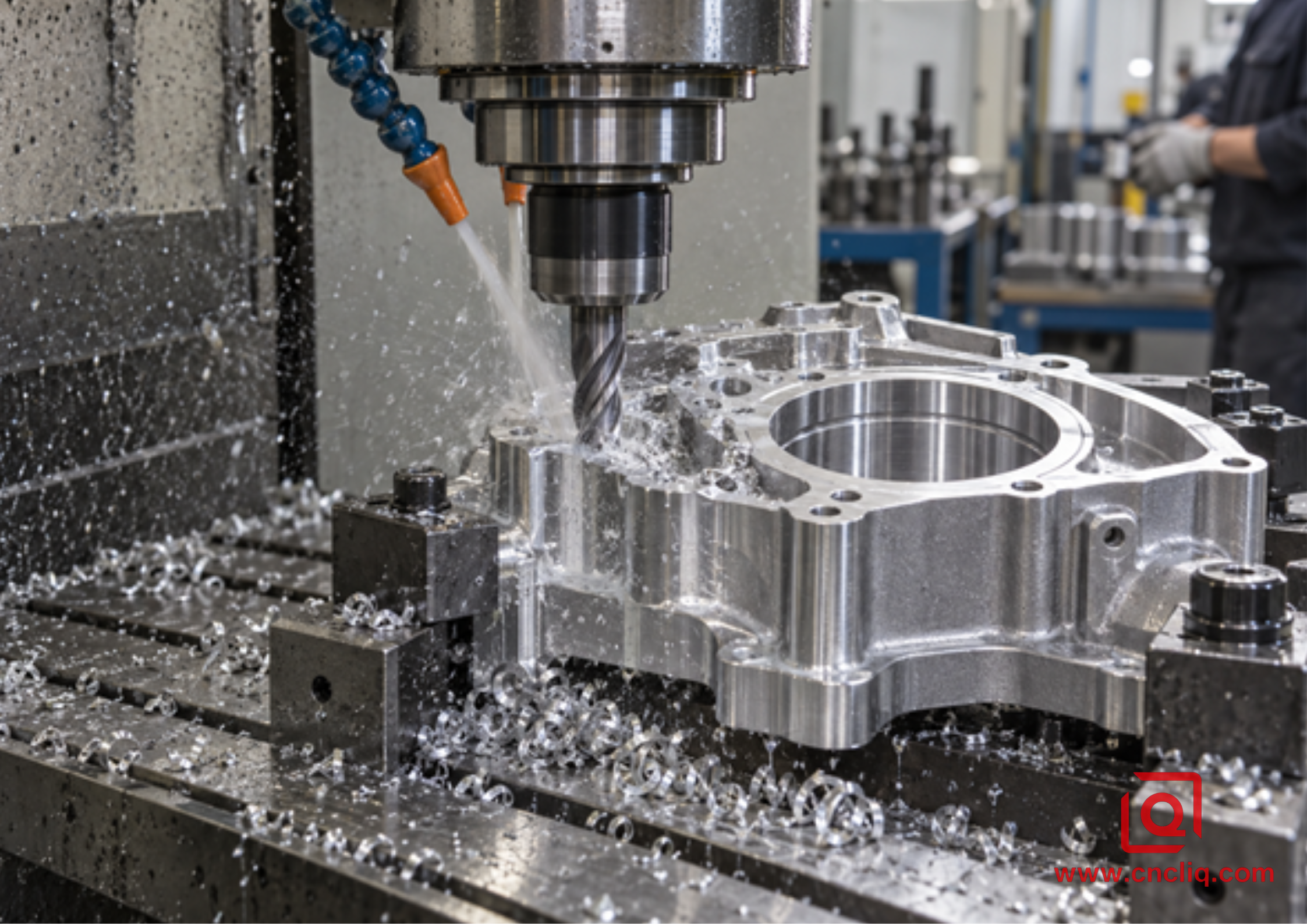
Image 1. CNC keeps the initial commitment low, but stock, spindle time, tools, and inspection remain in every unit.
3. Run Sensitivity Tests Before You Approve the Die
A single breakeven number gives false confidence. Purchasing should test at least 3 cases: confirmed demand, expected demand, and upside demand. Engineering should also test what happens if the die needs rework, the casting yield falls, or secondary machining takes longer than planned.
Using the illustrative model above, a USD 2.00 increase in HPDC variable cost changes the crossover to 2,013 parts. If the full HPDC fixed package rises to USD 40,000, the crossover becomes 2,243 parts. If DFM work cuts the CNC variable cost from USD 31.80 to USD 27.00, breakeven moves to 2,464 parts. Small quote changes can therefore move the decision by hundreds of parts.
Also calculate payback against credible lifetime volume, not a sales forecast with no purchase commitment. A program expecting 5,000 units over 5 years is not economically identical to 5,000 units in 1 stable release. Slow consumption ties up cash in tooling, introduces storage and corrosion concerns, and increases the chance of an engineering change before payback.
Expected HPDC cost = fixed cost + expected quantity × variable cost + probability-weighted change cost + probability-weighted quality loss
You do not need a complicated financial model. A clear low, base, and high case is usually enough to expose whether the result is robust or balanced on 1 optimistic assumption. If the result flips under a modest change in yield or volume, keep bridge production flexible until the design and demand are firmer.
4. Material Choice Can Overrule the Spreadsheet
“Aluminum” leaves a purchasing team with too much guesswork. A prototype milled from wrought 6061-T6 does not become an A380.0 production casting merely because both are light metals. Their chemistry, solidification history, properties, and finishing response are not interchangeable. When the route changes, reopen the material decision and change the drawing deliberately.
ASTM International’s B85/B85M-25 Standard Specification for Aluminum-Alloy Die Castings covers aluminum-alloy die castings, while wrought bar, plate, and extruded products use other specifications. The North American Die Casting Association’s Product Specification Standards also covers alloy properties, tooling, standard and precision tolerances, GD&T, quality assurance, and commercial practices. Your drawing should state the actual alloy, applicable standard, temper where relevant, and required certificates.
From the shop floor, the most important distinction is that HPDC creates a rapidly solidified skin and a different internal structure from wrought billet. NADCA’s structural criteria guidance states that the denser die-cast surface skin typically extends approximately 0.38 mm to 0.50 mm inward, while porosity tends to move toward the center of the section. Heavy cleanup cuts can remove useful surface material and open subsurface pores. Keep machining stock purposeful. Put sealing faces, bearing bores, threads, and datum pads where they can be supported and reached without cutting deeply into thick thermal centers.
If the program needs a wrought alloy for fatigue, corrosion, anodized appearance, conductivity, weldability, or a customer specification, HPDC may not be a valid substitute. If a suitable casting alloy is accepted and the geometry benefits from near-net forming, the cost model can proceed. Validate the selected alloy on production-intent parts rather than relying only on handbook values.
5. Geometry Decides How Much of the HPDC Saving Survives
HPDC earns its advantage by forming repeated complexity quickly. Ribs, bosses, fins, a thin enclosure wall, and a contoured outer shape can arrive in 1 near-net blank. CNC earns its advantage through direct access, tight feature control, material flexibility, and revision speed.
For a cast-friendly design, keep wall thickness as uniform as function allows, blend necessary changes gradually, use radii instead of sharp internal corners, provide draft, and core holes when practical. NADCA’s uniform-wall design guidance emphasizes consistent walls and gradual transitions; it does not set 1 universal minimum wall because alloy, flow length, die size, process capability, and performance interact.
For a machine-friendly design, reduce unnecessary setups, avoid deep narrow pockets, open tool access, use standard cutters and threads, and apply tight tolerances only to true critical-to-quality (CTQ) features. Liqin’s guide to 3-axis, 5-axis, and mill-turn selection explains how datum transfers and access affect cost. The buyer’s guide to cost-effective aluminum OEM machining is also useful before accepting a high machining baseline as unavoidable.
Watch for a common trap: converting a billet design directly into a die. Thick intersections, zero-draft walls, sharp corners, and deep post-machined cavities can produce a costly tool and leave most of the CNC cycle intact. A process conversion should redesign the blank around casting, not merely pour the old machined geometry.
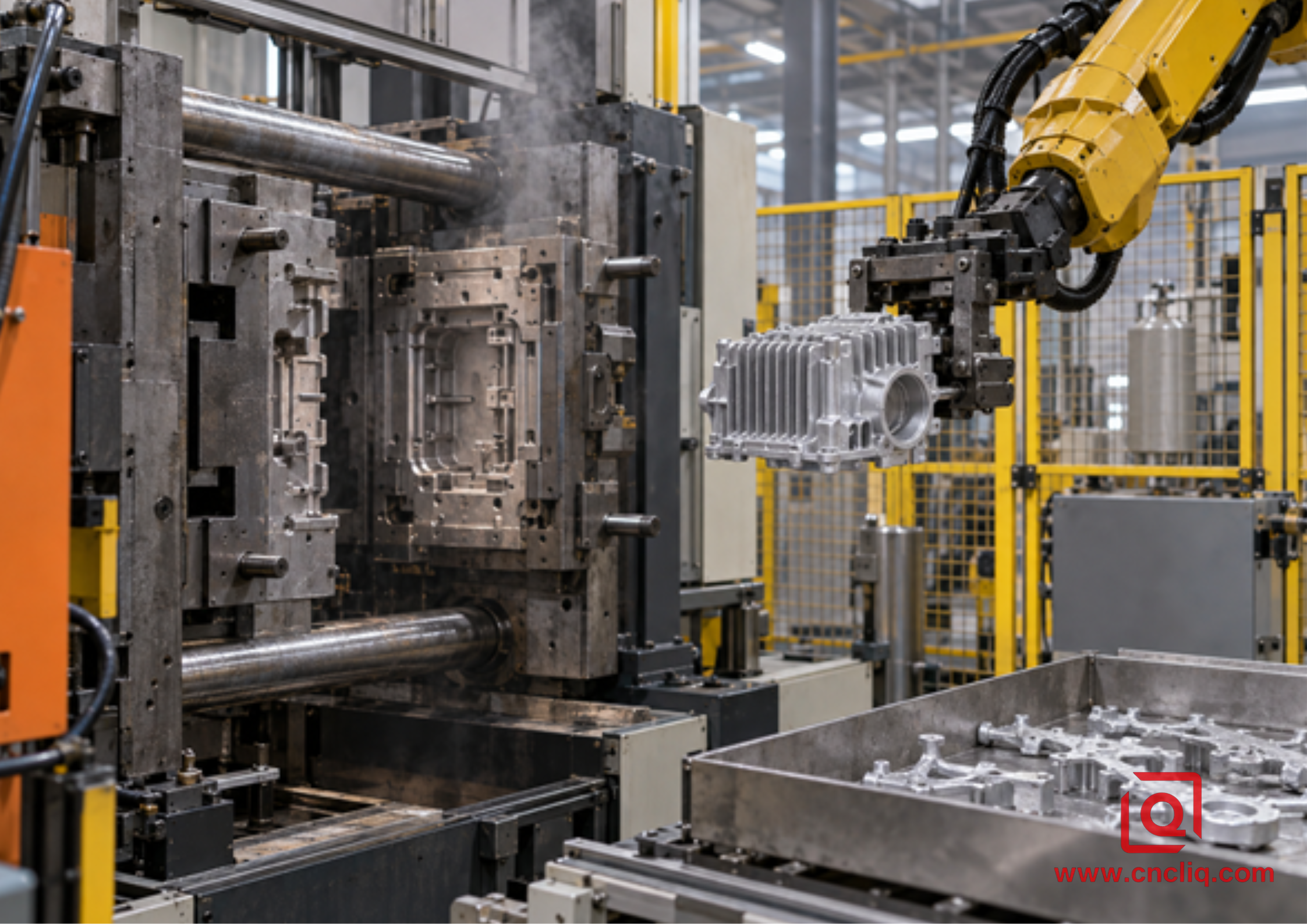
Image 2. HPDC spreads die cost across repeat production and forms ribs, bosses, fins, and shells close to final shape.
6. Precision: Use a Hybrid Route Instead of Forcing 1 Process to Do Everything
Many production housings are neither “all cast” nor “all CNC.” The economical route is often HPDC plus secondary CNC machining. Cast the envelope, ribs, heat-dissipation fins, bosses, and noncritical cavities. Machine the bearing seats, gasket faces, reference datums, O-ring grooves, tapped holes, connector ports, and other CTQs.
This division of labor protects the casting cycle from unrealistic tolerances and protects the CNC cycle from removing material that the die can form faster. It also makes inspection clearer: casting controls manage fill, porosity, flash, wall condition, and as-cast dimensions; machining controls manage CTQ size, position, flatness, finish, and thread acceptance.
Do not apply a blanket tight tolerance to the whole drawing. General tolerances and individual CTQ tolerances serve different purposes. Identify the datum structure, fit class, sealing requirement, measurement method, and inspection frequency. If leak integrity matters, define the test medium, pressure, hold time, allowable leakage, and sample rate. “Leak-free” is not an executable specification.
Surface finish needs the same discipline. A machined 6061 face, a shot-blasted A380 casting, and a coated casting will not look the same. Specify functional roughness only where it affects sealing, friction, bonding, or appearance. For cast-alloy machining details, see Liqin’s A380 aluminum die casting and machinability guide. For process fundamentals and tooling considerations, the site’s custom aluminum die casting OEM playbook adds useful context.
7. Verified Anonymous Case: A Die-Cast Aluminum Light Housing
The following case is anonymized at the customer level and limited to information already published on Liqin’s Precision Aluminum Light Housing product page. No confidential order volume, price, or unverified saving is added.
The housing combines a large enclosure, dense external cooling fins, mounting bosses, a perimeter sealing interface, threaded ports, and many internal blind holes. The published route starts with an HPDC body. It does not stop there. The sealing faces, gasket track, and threads return to CNC equipment. That split makes shop-floor sense: the die repeats the shell and cooling geometry quickly, while the cutter finishes the few interfaces that decide whether the assembly locates and seals.
The product page identifies a nominal 4.6 mm wall, an overall size in the 656 mm × 245 mm class, and 104 micro blind holes with listed depths of 2.75 mm and 2.30 mm. It describes mold-flow work for the runner system, multi-point pneumatic support during machining, 2-stage face milling, first-article CMM verification, in-process checks, and 100% thread-gauge inspection.These are product-specific published details, not default capabilities promised for every program.
The cost lesson is transferable. Machining the fins, cavity, bosses, and exterior from a large billet would consume stock and spindle capacity. Leaving the sealing face and hole matrix entirely as cast would shift too much functional risk into the forming process. The hybrid plan concentrates tool investment on repeat geometry and machining expense on CTQs. To calculate its actual breakeven against billet CNC, a buyer would still need the confidential die package, finished casting price, CNC cycle, yield basis, coating, inspection, and lifetime demand.
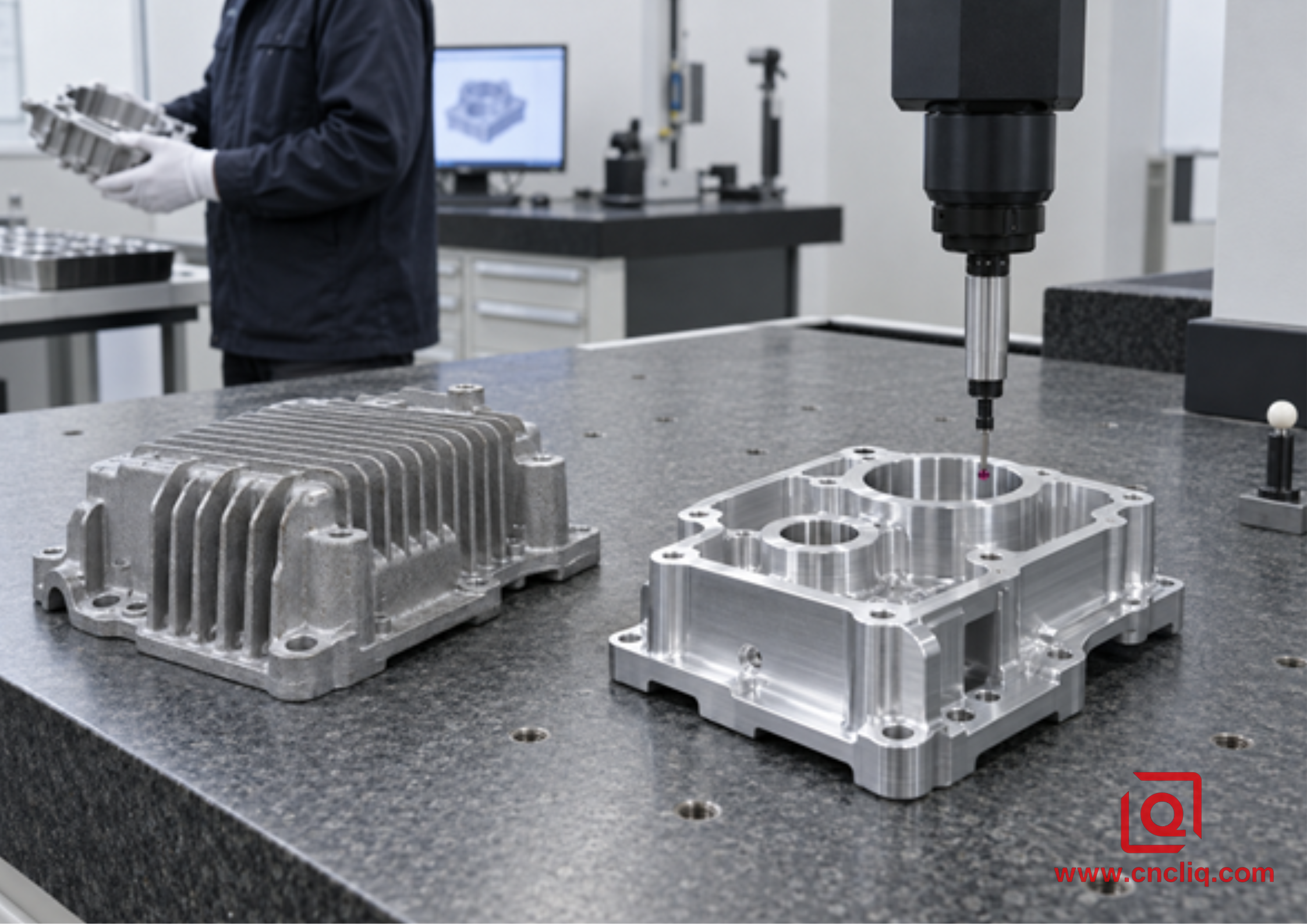
Image 3. Compare both routes at the same acceptance boundary: inspected, finished, and ready for assembly.
8. Quality and Supply Risks That Belong in the Cost Model
A price spreadsheet misses the cost of disruption. Add the risks that are material to your program:
· Design change exposure: CAM edits and soft-jaw changes are usually more flexible than welding and re-cutting hardened die steel. A large interface change can require a replacement insert or die.
· Yield definition: Confirm whether startup pieces, porosity rejects, coating rejects, and defects exposed by machining are already absorbed in the finished unit price.
· Capacity: CNC depends on available spindle hours and fixture throughput. HPDC depends on cell tonnage, cavity count, trim capacity, die uptime, and downstream machining capacity.
· Tool life and maintenance: State expected tool life, preventive maintenance, insert strategy, storage, ownership, and what happens at end of life. Avoid a low launch price with undefined future tooling liability.
· Changeover and batch policy: Small releases can carry setup and material-handling penalties even when lifetime volume is high.
· Qualification: PPAP, FAI, CMM reports, capability studies, material certificates, coating reports, and functional tests consume engineering time. Include what the application needs, then price it openly.
· Supply continuity: Decide whether bridge stock or a CNC fallback is required during die build, repair, or revision.
Liqin’s published manufacturing scope places die casting and 4-axis/5-axis CNC machining under 1 roof, which can simplify handoff between near-net forming and CTQ finishing. Even in an integrated shop, write down who owns each handoff. Otherwise a missed test or coating step tends to surface only when the first batch is waiting.
9. A Practical RFQ Checklist for a Defensible Decision
Send the same technical package to every supplier. At minimum, include:
1. Native 3D model and controlled 2D drawing with revision level.
2. Exact material specification and acceptable alternatives, if any.
3. Annual demand, order quantity, confirmed lifetime quantity, and upside case.
4. CTQ list with datums, tolerances, surface roughness, and inspection method.
5. Cosmetic zones, coating specification, color or texture standard, and masked areas.
6. Leak, pressure, thermal, corrosion, cleanliness, or functional test requirements.
7. Required documentation, including FAI, PPAP level, certificates, and capability data.
8. Packaging, Incoterm, destination, and delivery schedule.
9. Tool ownership, storage, maintenance, change, and end-of-life expectations.
10. A request for 2 alternatives: CNC bridge production and HPDC plus secondary CNC at stated volumes.
Then ask each supplier to return fixed cost, variable cost per accepted part, assumed batch size, lead time, yield basis, excluded operations, and validity period. If a quote omits those assumptions, its breakeven number is not auditable.
Ready for a route comparison? Send Liqin a STEP file, controlled 2D drawing, annual volume, and CTQ list. Our engineering team can review both routes and identify which features should be cast, machined, or redesigned. Use our contact page to request a process comparison and quotation. A useful RFQ is not “What is your cheapest price?” It is “What is the lowest-risk delivered cost at my confirmed, expected, and upside volumes?”
Questions Buyers Usually Ask Before Tool Release
1. At what volume should an aluminum part move from CNC to die casting?
There is no universal quantity. The crossover equals the difference in fixed cost divided by the saving per accepted part. A simple housing with a modest die and a long CNC cycle can cross early, while a large multi-slide die, heavy secondary machining, uncertain yield, or a low CNC cycle cost can push the crossover much higher. Use supplier quotes for the same finished specification and test at least 3 demand scenarios.
2. Should we use the die-cast piece price in the calculation?
Only if that price already represents a finished accepted part. Otherwise add trimming, blasting, impregnation if specified, CNC finishing, deburring, cleaning, coating, inspection, testing, reject allowance, packaging, and logistics. Compare it with a CNC price at the same delivery and acceptance boundary.
3. Can we die cast the same 6061-T6 aluminum used for the CNC prototype?
No. Start a fresh material review. The 6061-T6 prototype came from wrought stock; the HPDC candidate must fill and solidify inside a steel tool. Put the proposed casting grade beside the real load case, environment, finish, and compliance notes. Then revise the print and prove the choice on production-intent castings.
4. Why does a die-cast housing still need CNC machining?
The die efficiently forms the shell, ribs, fins, bosses, and much of the cavity, but bearing seats, sealing faces, reference pads, accurate bores, threads, and tightly located ports often need machining. A hybrid route reserves CNC time for CTQs instead of asking the casting to hold every precision requirement.
5. What files and data produce the most reliable comparison quote?
Provide a native 3D model, controlled 2D drawing, alloy specification, CTQ list, annual and lifetime demand, batch sizes, revision outlook, coating and cosmetic requirements, test conditions, inspection documents, packaging, destination, and Incoterm. Ask for fixed and variable costs separately and require every exclusion and volume assumption to be stated.
Summary
Aluminum die casting wins only when its complete fixed investment is repaid by a verified saving on each finished accepted part; CNC machining wins when low commitment, material choice, precision, or design flexibility is worth more than the theoretical high-volume saving. Calculate the crossover from real quotes, stress-test volume and yield, redesign for the selected process, and use a hybrid HPDC-plus-CNC route when near-net geometry and precision interfaces belong to different operations.
Contact Information
Company: Ningbo Liqin Industry Co., Ltd.
Daily customer maintenance & after-sales support:service@shturl. zhuwanying@cncliq.com
New inquiry, quotation & order discussion:business@shturl. zhouli@chinaliqin.com
Hotline: +86 18757148656
Disclaimer
All technical articles, material specifications, machining recommendations, and surface treatment details published on this blog are for informational and reference purposes only. Please note that general blog insights do not replace signed technical agreements. Because custom parts vary by material heat numbers, machine calibrations, and specific tolerances, binding quality specs are governed solely by your approved CAD drawings, signed contracts, and formal quality plans.
All customer case studies featured on this blog have been thoroughly anonymized and sanitized. The performance metrics, manufacturing workflows, and imagery displayed serve solely to demonstrate our custom machining capabilities and do not represent a single universal standard for all orders.
Liqin Manufacturing Team
Built on 18 years of precision engineering experience, Ningbo Liqin Industry manufactures high-tolerance metal components for demanding global markets. We operate out of a 6,500 m² production hub equipped with over 150 machines, running 4-axis and 5-axis CNC machining, mill-turn machining, cold extrusion, and pressure die casting under one roof. This setup allows us to manage projects seamlessly, taking parts from initial CAD concepts directly to finalized shipments.
We handle quality control with zero compromise. We treat tight tolerances with the engineering discipline they require. Backed by ISO 9001, ISO 13485, and IATF 16949 certifications, our QA engineers run strict IPQC, FQC, and OQC checks on every single production batch. From CMM dimensional mapping and optical profiling to hardness and salt-spray testing, we validate your critical specs upfront—so you receive drop-in ready components with zero assembly headaches or costly line stoppages. On top of manufacturing, you can rely on us for two-hour response times on new RFQs, direct support for prototype sampling, and smooth export shipping across Europe, North America, Asia, and Oceania.
Welcome your inquiries and samples. Visit our website or contact us directly for a competitive quote!