English




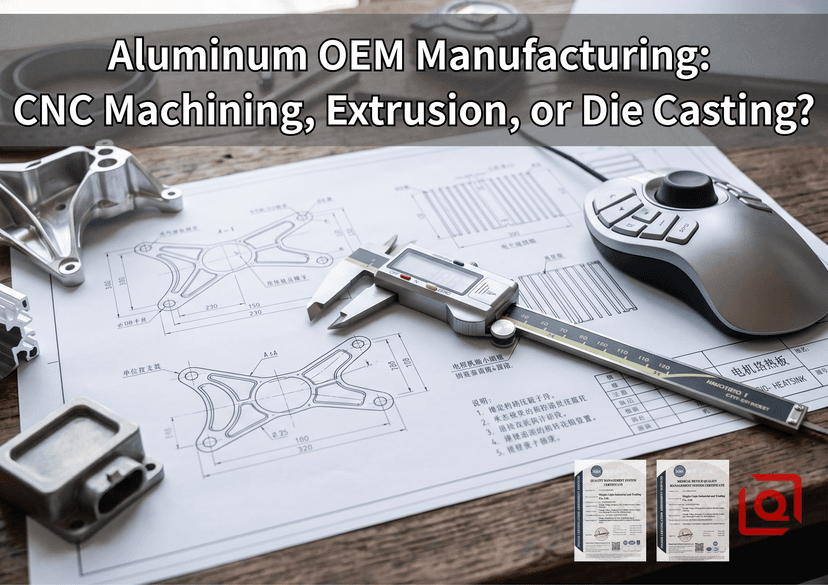
When your client drops a 3D CAD model on your desk for a custom automotive bracket or a dense telecom heatsink, picking the process isn't a theoretical exercise. It's a fight against yield loss, cycle times, and porosity. Too many buyers jump straight to "cheap per-piece unit cost" without calculating the thermal dissipation requirements or checking if the alloy’s yield strength drops off after anodizing. Let's look at what actually happens on the shop floor when you evaluate CNC machining, extrusion, and high-pressure die casting (HPDC) for OEM aluminum components.
1. High-Pressure Die Casting (HPDC): High Volume, Structural Porosity, and Thermal Realities
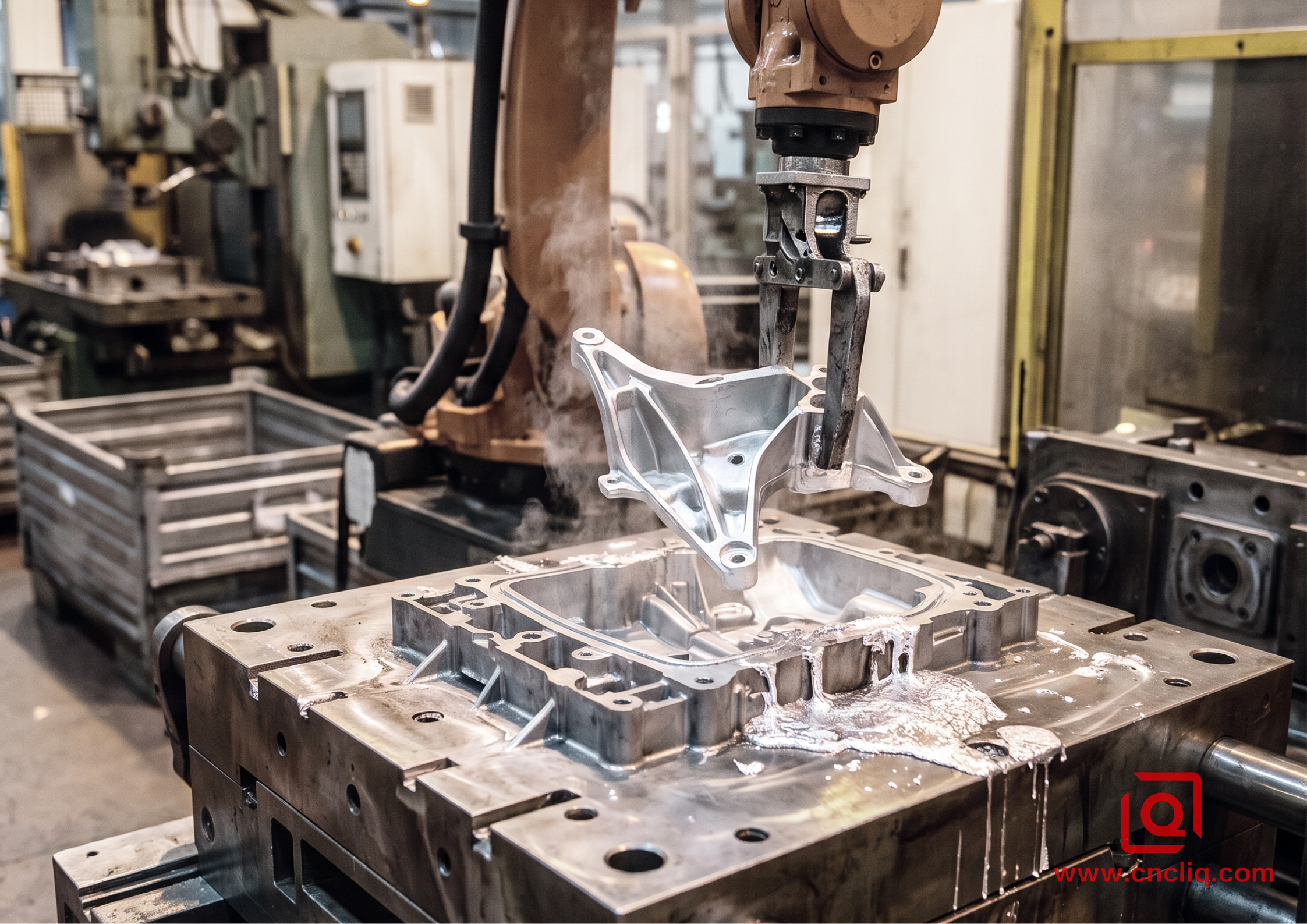
When annual volumes cross 15,000 units, HPDC with ADC12 or A380 looks enticing. But the moment you inject molten aluminum into a tool at 60 to 80 MPa with shot velocities exceeding 40 m/s, air entrapment becomes your primary enemy.
Shop Floor Reality & Porosity Control
If your melt pool sits exposed in a gas-fired holding furnace at 680°C for over 3 hours without active hexachloroethane degassing, ambient humidity pumps hydrogen straight into the liquid matrix. High hydrogen levels (>0.15 cm³/100g Al) combined with high-velocity turbulent flow generate gas porosity that ruins internal pressure tightness.
| Property / Metric | A380 (ADC10) | ADC12 (A383) | AlSi10Mg(Fe) |
| Tensile Strength (Yield) | 160 MPa | 150 MPa | 170 MPa |
| Thermal Conductivity | 96 W/m·K | 96 W/m·K | 113 W/m·K |
| As-Cast Tolerances | ISO 8062-3 CT5-CT6 | ISO 8062-3 CT5-CT6 | ISO 8062-3 CT4-CT5 |
| Mold Life Expectancy | ~100k-150k shots | ~100k-120k shots | ~80k-100k shots |
-
Vacuum-Assisted Injection: If you need leak-free components rated above 1.5 MPa hydraulic test pressure, run chill blocks with a sub-50 mbar vacuum valve timing.
-
Tooling Fatigue: Using H13 tool steel core pins hardened to 46–48 HRC works until thermal cycling causes micro-checking at 40,000 cycles. Switch to Dievar or Premium H13 hardened to 50–52 HRC when running high-wall-thickness transitions.
-
Secondary Post-Machining Hazards: Machining past a 1.2 mm depth skin layer removes the dense, chill-zone outer boundary, exposing subcutaneous micro-porosity and causing leak failures during helium bubble testing.
2. Aluminum Extrusion: Directional Grain Flow, Cross-Sectional Constraints, and Post-Operations
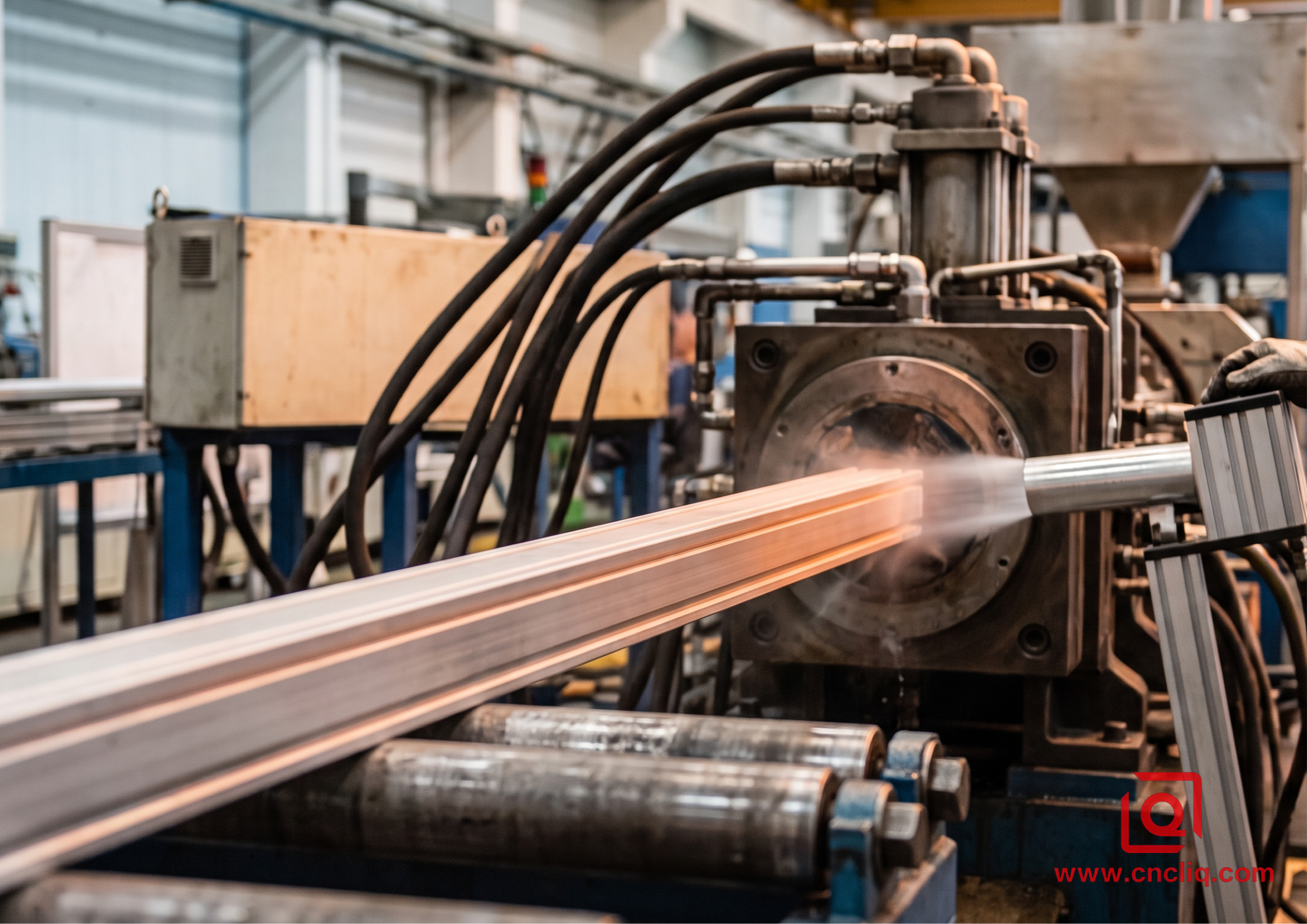
Extruding 6063-T6 or 6005A-T6 profiles through an H13 steel aperture die gives you unmatched axial strength and low tooling investment. But extrusion dies are living thermal systems. Push a 200 mm diameter billet preheated to 450°C through a multi-cavity bridge die at 12 meters per minute, and you’ll watch wall thickness swell by 0.15 mm if container temperatures drift below 420°C.
Precision Machining Extrusions (The Hidden Pitfalls)
Don't trust EN 755-9 standard tolerances if you're drop-shipping extruded stock directly onto a 5-axis CNC setup.
-
Twist and Bow Compensation: Billet anisotropy means yield strength along the extrusion axis (Rp0.2 ≈ 210 MPa for 6061-T6) exceeds transverse yield by up to 12%. When you mill off a heavy asymmetric channel section, internal residual stresses unleash—warping your 800 mm rail beyond the 0.05 mm parallelism envelope.
-
Solution Heat Treatment Timings: Quenching 6061 immediately out of the press press-exit wave with forced air at >100℃ is non-negotiable before artificial aging to T6 at 175℃ for 8 hours. Miss that cooling window by 30 seconds, and your grain boundaries precipitate coarse Mg₂Si , dropping hardness below 80 HBW.
Extrusion Billet (450°C) ---> Die Press (12 m/min) ---> Forced Air Quench (>100°C/s) ---> T6 Aging (175°C, 8h)
3. Full CNC Machining from Wrought Billet: Precision vs. Chip Volume
When structural integrity rules—aerospace, medical housings, defense electronics—wrought 6061-T651 or 7075-T651 plate milled from solid stock guarantees zero porosity and pristine isotropic mechanical behavior. T651 indicates stress relief via controlled stretching (0.5% to 3% permanent set), which prevents the plate from potato-chipping when you machine out 85% of its volume.
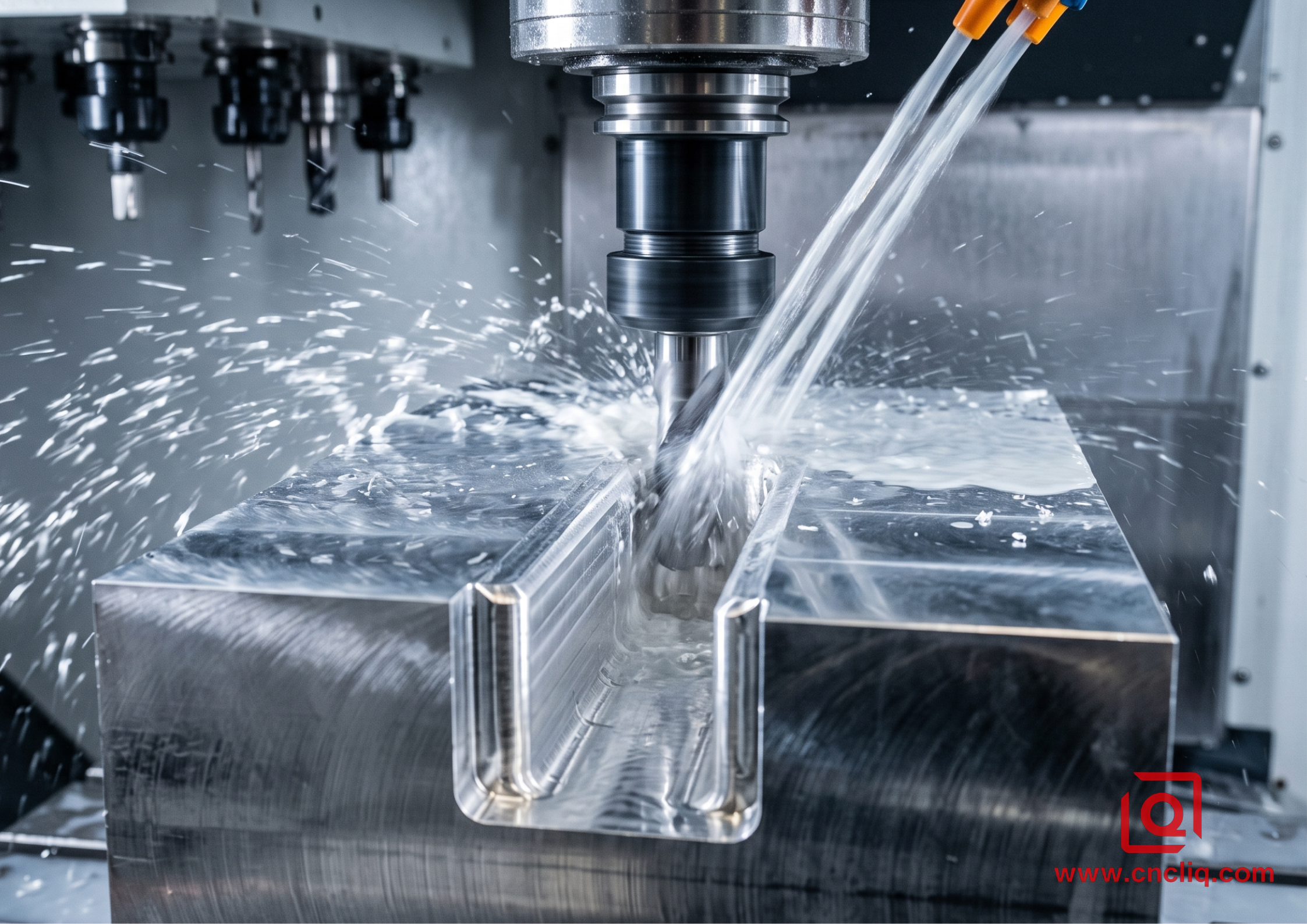
Cutting Parameters & Surface Integrity
When driving a 20 mm 3-flute carbide end mill through 7075-T651:
-
Set spindle speed to 12,000 RPM, feed per tooth fz = 0.15mm/tooth, and axial depth of cut ap = 8mm.
-
Run high-pressure coolant (HPC) through the spindle at 70 bar directly into the chip gullets.
-
Without 70 bar coolant, aluminum chip re-cutting causes friction welds inside deep pockets, snapping the end mill shank within 12 seconds.
| Attribute | CNC Machining | Profile Extrusion | HPDC |
| Initial Tooling Cost | $0 | $1,500 – $4,500 | $15,000 – $60,000 |
| Dimensional Tolerance | ISO 2768-mK (±0.01mm) | EN 755-9 (±0.20mm) | ISO 8062-3 (±0.15mm) |
| Wall Thickness Limit | Min 0.8 mm | Min 1.2 mm | Min 1.5 mm |
| Anodizing Visual Grade | Premium Optical Grade | Good (Slight lines) | Poor (Dark/Blotchy) |
4. Anodizing and Surface Finishing Realities Across Processes
You cannot anodize all aluminum alloys equally.
-
6061 / 6063 Wrought/Extruded: Type II sulfuric acid anodizing (180g/L H₂SO₄, 18℃, 1.5 A/dm²) yields a crisp 15–25 µm oxide layer perfect for clear or color dyeing. Type III Hardcoat (0℃, 3.5A/dm²) builds a 50 µm wear-resistant barrier reaching 450 HV0.05 microhardness.
-
ADC12 / A380 Die Castings: Silicon contents exceeding 9.5% present an insurmountable barrier to clean anodizing. Free silicon particles sit un-dissolved at the surface, creating a patchy, smutty gray layer. If cosmetics matter on an HPDC housing, specify an electro-deposited e-coating or a chromate conversion coating (MIL-DTL-5541F Type II) followed by architectural polyester powder coating.
5. Decision Protocol for OEM Engineering Buyers
Stop relying on single-metric decision matrices. Follow this step-by-step logic on your next revision release:
[Is Part Geometry Uniform in 2D Cross-Section?]
       │
       ├──► YES ──► Volume > 500 meters? ──► NO ──► CNC Machine from Plate
       │                  │
       │                  └──► YES ──► EXTRUSION + Post-CNC Precision Milling
       │
       └──► NO ──► Are internal voids/porosity forbidden (e.g., pressure tight)?
                          │
                          ├──► YES ──► CNC Machine from Billets (6061-T651)
                          │
                          └──► NO ──► Volume > 10,000 pcs/yr?
                                            │
                                            ├──► YES ──► HPDC (A380/ADC12 with Vacuum)
                                            └──► NO ──► 5-Axis CNC Machining
-
Check Structural Load & Thermal Requirements: If you need thermal conductivity >180 W/m·K, eliminate standard die casting; use extruded 6063-T5 or CNC 6061-T6.
-
Review Wall Thickness Tolerances: If the print calls for ±0.02 mm position on bearing bores across a 400 mm frame, tool-based casting shrinkage will drive your scrap rates to 30%. Cast it rough, then add a finish-milling CNC pass using a 3-edge PCD boring tool.
-
Audit Machine Shop Setup: Ensure your OEM partner runs 3D CMM probing with Renishaw OMP60 systems on critical datum surfaces right off the fixture before unclamping. Unclamping releases stress; measure twice while constrained, then measure relaxed.
FAQs
Q1: Why do die-cast aluminum parts often fail pressure tightness tests after secondary machining?
A: When you machine off the dense outer skin of a die casting, you break into its softer core, exposing sub-surface micro-porosity caused by trapped gas during high-velocity injection. To prevent leaks without changing the tool design, use vacuum-assisted casting to draw out air from the mold cavity, or apply an anaerobic resin vacuum impregnation treatment after post-machining to seal the internal micro-voids.
Q2: What causes extruded aluminum profiles to warp after CNC milling, and how can we prevent it?
A: Extrusion creates strong grain directionality and locks in internal residual stresses along the length of the profile. When CNC cutters carve out large amounts of material unevenly, those hidden stresses are released, causing the part to twist or bow. You can minimize distortion by opting for stress-relieved tempers, balancing machining passes evenly on both sides, or applying a stress-relieving heat treatment prior to final precision milling.
Q3: Why is it difficult to get a uniform anodized finish on die-cast aluminum components?
A: High-pressure die-casting alloys contain high concentrations of silicon to improve liquid fluidity during casting. Unlike wrought or extruded alloys, this silicon remains insoluble at the surface and interferes with the electrochemical oxidation process, resulting in a dark, blotchy, or uneven finish. For parts requiring high cosmetic visual appeal, powder coating, liquid painting, or e-coating are far more reliable surface finishing choices than standard anodizing.
Q4: When should we transition a custom aluminum part from CNC machining to profile extrusion?
A: Transitioning makes sense when your part features a consistent, two-dimensional cross-section across its entire length and your demand moves beyond low-volume prototyping. While CNC machining sculpts each piece individually from solid block material with zero upfront tooling costs, extrusion uses a custom aperture die to form long continuous shapes quickly. This drastically reduces unit production costs and machining time for mid-to-high volume runs.
Q5: How does material yield strength impact the structural performance of custom OEM aluminum parts?
A: Yield strength defines the maximum stress an aluminum alloy can handle before it permanently bends out of shape. High-load structural applications demand premium alloys with elevated yield strength to prevent unexpected mechanical failure under operational stress. Selecting a material with insufficient yield strength can lead to sagging, cracking, or catastrophic alignment failure in critical assemblies under continuous dynamic loads.
Summary
Selecting the right manufacturing path for your aluminum OEM components comes down to balancing structural density, geometric constraints, and lifetime production volume. While high-pressure die casting offers unmatched unit economics for massive production runs, it demands strict porosity management and post-casting concessions. Extrusion delivers superior axial strength for uniform profiles, provided you compensate for internal stress release during secondary CNC operations. When mechanical integrity, tight tolerances, and zero internal voids are non-negotiable, full-billet CNC machining remains the ultimate engineering benchmark. Evaluate your thermal and structural requirements early, design for your chosen process, and audit your supplier's shop-floor controls before releasing production tooling.
Ready to optimize your next manufacturing run? Send us your CAD files to receive a free DFM analysis and an actionable, cost-saving OEM quote from our engineering team within 24 hours.
Contact Information
Disclaimer
Liqin Manufacturing Team
We are Ningbo Liqin Industrial & Trading Co., Ltd.,a professional manufacturer with over 18 years of experience in high-precision custom metal parts. We specialize in CNC machining, forging, die casting, and cold extrusion processes, serving industries such as automotive, medical, aerospace, electronics, and more. Our factory covers an area of 6,500 square meters and is equipped with 150+ advanced machines, including:
- CNC machining centers (4-axis, 5-axis)
- CNC lathes and turning-milling complexes
- Cold extrusion equipment (250T–650T)
- Die casting machines
We adhere to ISO9001, ISO13485: 2016, and IATF16949: 2016 standards, implementing end-to-end quality management: In-process quality control (IPQC), final quality control (FQC), outgoing quality control (OQC). CMM, projectors, hardness testers, and salt spray test equipment. Our products are exported to North America, Europe, Asia, and Oceania. We offer:
- One-stop service from design to delivery
- Quick response within 2 hours for quotes and technical support
- Custom solutions based on your drawings or samples
Welcome your inquiries and samples. Visit our website or contact us directly for a competitive quote!