 English




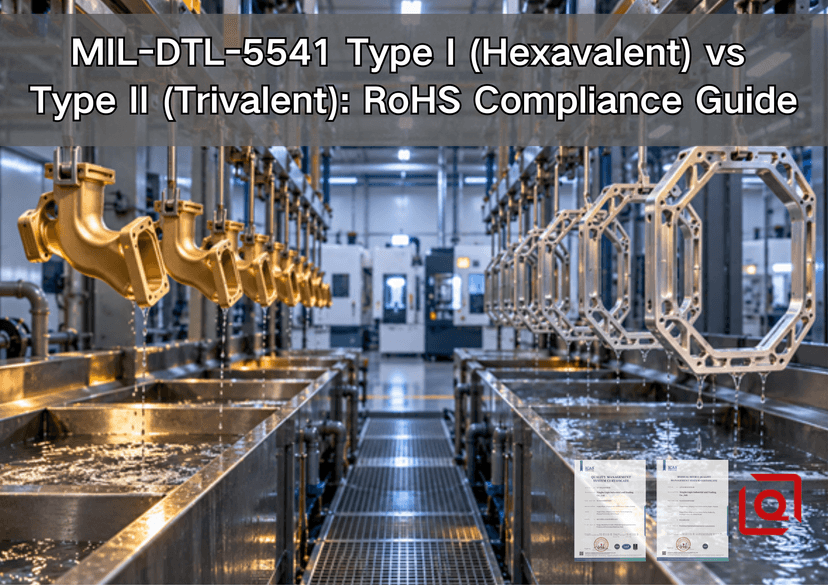
Are you still looking at “clear chem film, RoHS” on an aluminum drawing and wondering whether the coater should use MIL-DTL-5541 Type I or Type II? Keep that drawing open. We will follow it from RFQ review to the line, then back to the certificate. The trouble sits in the four words: they have not settled chemistry, function, tests, or evidence.
Type I? Cr(VI) is present. Type II? It is absent. That makes Type II the usual opening move for a Cr(VI)-free job, not a blanket RoHS verdict. The rest of the assembly—and the rest of the paperwork—still gets a vote.
1. The drawing arrives
Tuesday morning. Finish note: “clear chromate, RoHS.” No revision. No class. No test instruction.
Purchasing asks for a price. Quality asks what will appear on the certificate. The coating shop asks which tank. All sensible questions; the print answers none of them.
Start with Type. The document on the table, MIL-DTL-5541, deals with chemical conversion on aluminum and its alloys. On the floor: chem film, chromate conversion, perhaps Alodine. Since Alodine is a brand name, it should not carry a controlled note by itself.
The public DLA ASSIST record for MIL-DTL-5541 lists revision F as active. It also shows Validation Notice 2, dated February 7, 2024. Two chemistry families appear in the specification:
· Type I contains hexavalent chromium, written Cr(VI) in most compliance files.
· Type II contains no hexavalent chromium. Many Type II materials use a trivalent chromium process, or TCP. Often the words “Type II” and “trivalent” travel together. Not perfectly, though. The specification defines Type II by what is absent, not by one universal replacement bath.
Now Class. Different question.
· Class 1A puts maximum corrosion protection first, with or without paint.
· Class 3 adds the need for low electrical resistance.
A ground pad may need Type II, Class 3. A painted cover may need Type II, Class 1A. Same environmental direction; different work at the surface.
Legacy notes deserve a red pencil. The rule in MIL-DTL-5541F reads plainly in the reviewer’s notes: type omitted, Type I. One type cannot replace the other unless the contract or order permits it. “Chem film per MIL-C-5541” therefore calls for written clarification. It does not let a supplier choose whatever bath is open.
And one more trap: MIL-DTL-5541 Type I is not Type I chromic acid anodizing. The numeral is reused. The process is not. Our guide to Type I chromic acid anodizing for aerospace aluminum explains the difference.
2. Put both types on one page
The team now has enough information for a useful comparison.
|
Question |
Type I |
Type II |
|
Hex chrome? |
Yes |
No; Cr(III) is common |
|
First RoHS action |
Stop if Cr(VI) is banned |
Keep checking the complete product |
|
Frequent appearance |
Yellow, gold, tan, brown, iridescent, or sometimes clear |
Often clear, pale blue, or lightly iridescent |
|
Electrical route |
Class 3 available |
Class 3 available and often used at conductive, Cr(VI)-free interfaces |
|
Paint route |
Class 1A available |
Class 1A available for a compatible paint system |
|
Substitution |
No change without written approval |
No change without written approval |
|
Usual project fit |
A controlled legacy callout |
A new Cr(VI)-free callout |
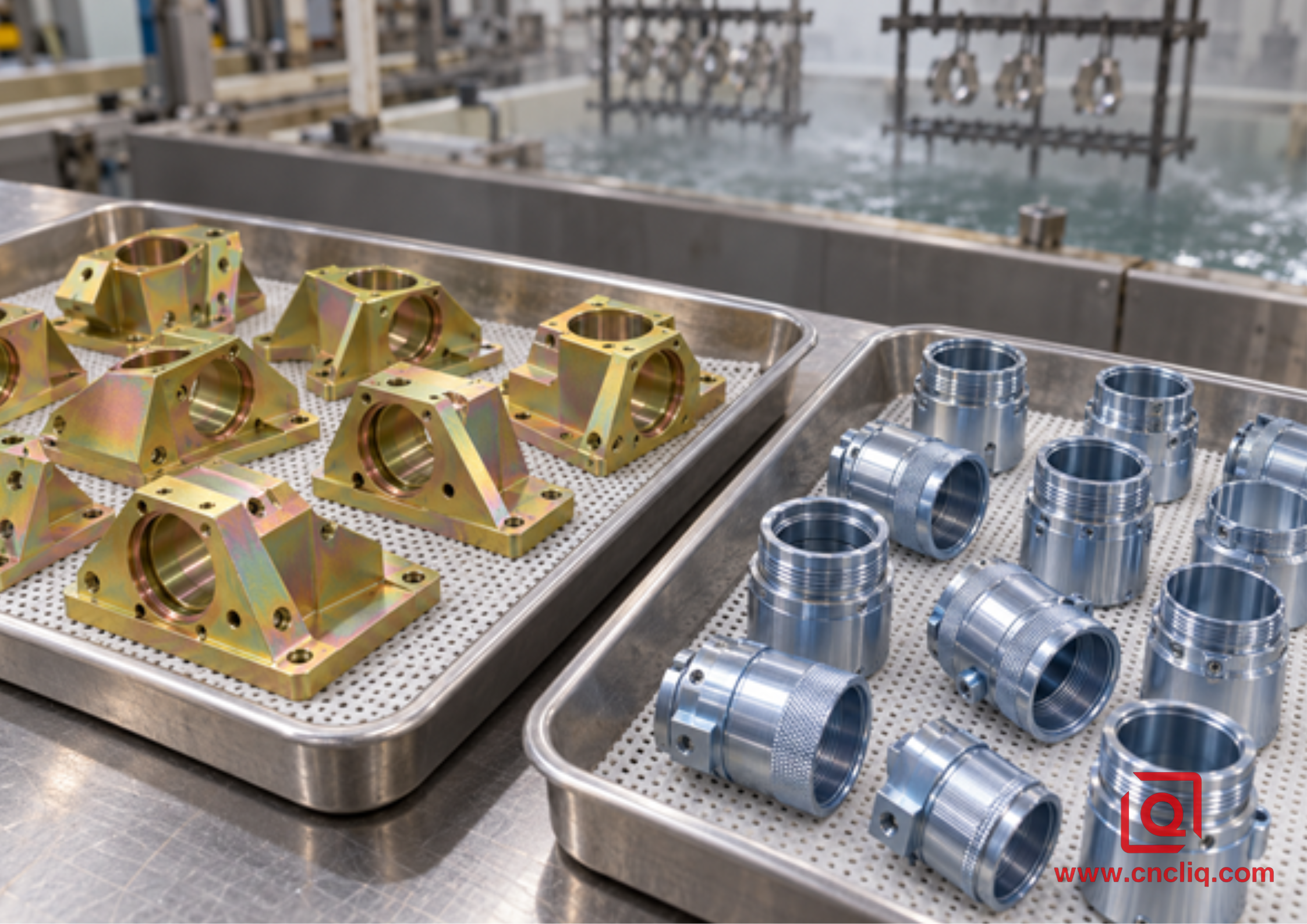
Somebody holds up a phone photo. The parts look pale gold. Proof of Type I? No.
Gold or brown? Often Type I. Clear or faint blue? Often Type II. Then alloy, pretreatment, bath choice, time, and lighting spoil the shortcut. A 7075 bracket proves the point: nearly clear in daylight, yellow in the phone photo. The team puts the photograph aside and opens the traveler.
Color still helps an inspector notice stains, bare areas, or handling damage. It simply cannot identify chromium valence. Tinted Type II products exist. Type I can look nearly clear. Two alloys can leave the same tank with different tones.
3. The RoHS question
The buyer asks: “If we specify Type II, may we mark the entire unit RoHS compliant?”
The answer in the meeting is no.
A printout of the EU RoHS Directive 2011/65/EU goes beside the drawing. In the calculation note: Cr(VI), 0.1 percent by weight, each homogeneous material. Scope first; exemptions too. The conversion layer may stand alone for that assessment, so nobody averages it into the heavy aluminum chassis.
Type II closes one box: no hexavalent chromium in the conversion chemistry. The black paint? Still open. So are label ink, adhesive, fastener finish, solder, and the rest of the equipment.
The buyer writes three checks in the margin:
1、Confirm revision, Type, Class, application form and method, qualified material, and any approved-processor rule.
2、Check every other finish and material inside the customer’s declaration scope.
3、Record the regulation and revision, any exemption, the evidence used, and the signer.
RoHS. REACH. A defense clause. A customer blacklist. Four chromium references, four files. Add the OSHA chromium(VI) standards to the safety folder. RoHS stays in the product folder. Same element. Different decision.
An RFQ note can now become measurable: “MIL-DTL-5541F, Type II, Class 3; no Cr(VI); certificate and approved chemistry identity required.” Engineering must adapt it to the real part. Still, it gives a coater far more than “clear RoHS coating.”
4. Class follows the interface
At the design review, one finger points to a painted wall. Another points to a small ground pad. Type II suits both. Class may not.
Class 1A: protect and paint
“What matters most on this wall?” Corrosion protection, followed by paint. Class 1A stays on the print. The part might be a bracket, cover, panel, or housing. Close fit? The thin film helps. Sliding face? Change the discussion.
Will the surface rub, or live outdoors with no paint? That sends the review back one step. Anodizing or powder may win. The alternatives are mapped in our finishing guide for CNC-milled aluminum. Chem film offers a useful mix—corrosion help, paint adhesion, conductivity, hardly any buildup—but hardcoat has a different job.
Class 3: carry the bond
Class 3 belongs where current crosses an interface. Connector pads. Enclosure seams. Ground-lug faces. Rack panels. Telecom fittings. Avionics housings.
Look at a machined aluminum electrode for communications surge protection. The note does not carry current by itself. Geometry, a clean face, bolt preload, and coating condition share that path.
Does Class 3 mean a resistance report will arrive automatically? Only when the contract or order invokes the test. Method? Frequency? Pass value? Put all three in the acquisition documents. A borrowed limit can make a beautiful report useless.
Type II Class 1A is not a hidden bonding callout. Nor does Class 3 promise endless outdoor life. The engineer still owns gaskets, fasteners, galvanic pairs, sealant, and clamp pressure.
5. Before the tank
Three parts reach the line. Coolant hides in the first blind hole. Polishing compound marks the second seal land. Dark smut remains on the third. “Run them darker” solves exactly none of this.
Traveler sequence—clean, rinse, alloy preparation, rinse, conversion, final rinse, dry. In the boxes beside it: concentration, pH, time, temperature, water. Their source is the qualified product instruction and the approved procedure. A web recipe stays off the line.
“Alloy and temper?” Blank. Back to purchasing. Try 2024, 7075, 6061, and a die casting on one rack; the surfaces will disagree. Different bath, same caution from our 6061 versus 7075 anodizing comparison: metal chemistry shows itself at the surface.
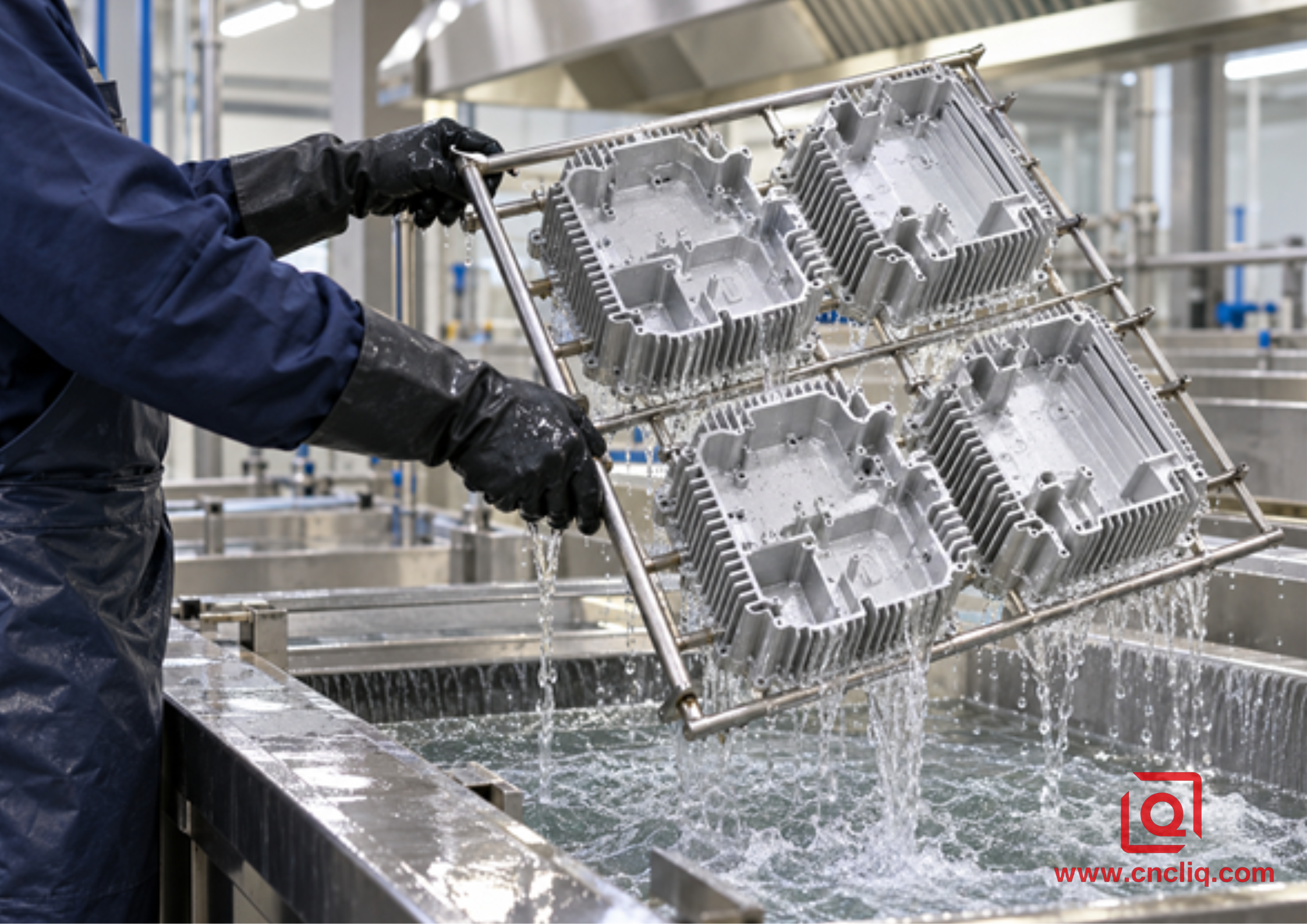
The operator turns the rack. Why? A pocket was holding solution. Next checks: rinse conductivity, dryer setting, rack contact. None sounds dramatic. Together they decide the lot.
Mark drain features where the design allows them. Show cosmetic faces, ground pads, seal lands, and holes that must stay free of trapped solution. A few drawing notes cost much less than sorting coated parts.
6. The report says “passed”
Quality opens the file. One line reads “ASTM B117 passed.” Reassuring at first glance. Incomplete at the second.
On the MIL-DTL-5541F page, “168 h” is circled beside process-control salt spray. The corrosion acceptance rule follows there too. Painted panels? Add adhesion. B117’s part is the chamber and exposure practice; the purchase order still has to say what counts as passing.
Before pricing the repeat lot, quality writes down the expected file:
· Certificate tied to the production lot.
· Processor and approved coating material where required.
· Process-control coupons and applicable salt-spray record.
· Contact-resistance data when the order invokes it.
· Paint adhesion or downstream results where applicable.
· Traceability back to work order and material lot.
A report requested after shipment may no longer be possible. Put the paperwork into the quote.
7. Tolerances and masks
Chem film is thin beside anodizing. The print still matters. An overlong etch is enough to take the bite off a sharp edge. A mask transition may cross an O-ring land. Residue may sit in a thread. Later paint may consume clearance that chem film did not.
In our drawing review, we start at the top and work down:
1、Revision, Type, and Class.
2、Coated, masked, painted, bonded, and cosmetic zones.
3、Alloy, temper, datums, and pre-finish or post-finish dimensions.
4、Electrical pads and threaded current paths.
5、Certificates, tests, first-article records, and substance declarations.
6、Packaging protection for visible and conductive faces.
Our DFM guide to aluminum finishing and machining tolerances goes deeper into datum planning. With chem film, the common failure is not thickness by itself. It is a disagreement between print, mask map, inspection setup, and next operation.
8. Anonymous case: the surge-protector housing
Consider a representative, sanitized project. Dimensions and volume are changed.
The enquiry came from a European communications-equipment buyer. On screen was a 6061-T6 housing for an outdoor surge unit, and nearly every face had a job. A bored cavity sat between thin fins; nearby were an O-ring groove, M3 threads, and two grounding faces. Certification testing waited after the pilot lot.
The print said “clear chromate, RoHS.” Purchasing called it a RoHS compliant chem film finish, but that label still left Type, Class, electrical test, and groove masking open.
During DFM review, the contact zone became Type II, Class 3 with a customer-approved material and lot certificate. Other faces followed the compatible protective-finish plan. The application sat in the same general product area as our custom aluminum cold-extrusion lightning-arrester housing. It did not reuse a catalogue drawing; every CNC feature belonged to the buyer's print.
The shop order was deliberate. Bore first in a controlled sequence. Cut the seal groove with its dedicated tool. Hold the body in soft jaws and keep clamp marks off the fins. Before coating: burr check at ground-lug holes, then mask-map review. After coating: dimensions, threads, appearance, certificate, traceability, and the approved electrical check. Divided packaging kept contact faces away from neighboring fins.
No secret bath formula solved the job. Clear decisions did. The finisher knew which faces carried current. The buyer knew which records were included. Assembly did not have to scrape a ground pad.
9. Four failure patterns
Patchy or bare-looking film
Quarantine first. Soil, oxide, smut, water breaks, rack contact, alloy variation, or blocked solution access may be involved. Clear Type II makes the visual call harder. Light film or missed patch? Check the traveler, bath records, lighting, and specified acceptance route before repair.
When powder or stains appear
A stained rack makes the final bath an easy suspect. On the bench, though, the run sheet gets read left to right: concentration and pH, dwell and temperature, rinse, drainage, dry. That small dusty trace may be tomorrow's paint-adhesion complaint.
High contact resistance
Check the measurement first. Probe pressure, contact area, hardware torque, and location all move a low-resistance reading. Then check Class, contamination, coating condition, touch-up, and interface design. A Class 3 note without a test method postpones design work until inspection.
Corrosion after assembly
Start where water could actually travel, not where the stain looks worst. Trapped electrolyte. Dissimilar fastener. Cut edge. Broken gasket. Aggressive cleaner. Damp packaging. A white bloom beside one stainless screw sends us first to that interface; the bath stays on the suspect list, not in the guilty box.
10. Nine checks before quoting
1、Latest drawing attached, with alloy and temper?
2、Revision, Type, and Class stated?
3、RoHS, REACH, Cr(VI)-free, and customer rules named precisely?
4、Mask, contact, paint, and seal boundaries visible?
5、Post-finish dimensions and datums clear?
6、Certificates, tests, and traceability listed?
7、Appearance separated from chemistry and performance?
8、Packaging defined for cosmetic and conductive faces?
9、Any legacy Type I change approved in writing?
An open answer does not prevent an early quote. Flag it. Questions are cheap before coating and expensive afterward.
11. Make the selection
Use Type I when a controlled drawing, defense requirement, or legacy qualification expressly requires it and the relevant controls allow it. Do not replace it by assumption.
Does the customer note say “no hex chrome”? Start the review with Type II. On a RoHS compliant chem film project, that note is the first gate rather than the final certificate. It may arrive on a telecom enclosure one morning and a medical-device bracket that afternoon. Type II on the print ticks the first box only. The product name belongs on the controlled paperwork, while the finished-product reasoning belongs in the compliance file.
Class comes next. Is the job corrosion protection or a paint base? That points toward Class 1A. Is current meant to cross a controlled interface? Look at Class 3. A single housing can need both functions in separate zones, but engineering has to draw the boundary and state the test.
A useful Liqin RFQ is more than a STEP file. Send the 2D print, alloy and temper, annual volume, finish map, destination market, required records, and details of the mating interface as well. Before pricing, we can put the machining plan beside the mask map and check datum access and the handoff to a qualified coating source. Fewer guesses. Cleaner launch.
FAQ
1、Does Type II always mean trivalent chromium?
No. What Type II tells you is that Cr(VI) is absent. TCP is a familiar shop abbreviation because many qualified choices use Cr(III), yet procurement still has to capture the exact approved product and the limits of its qualification.
2、Can Type II replace Type I without a drawing revision?
No. The specification leaves no automatic swap between the types; permission has to come from the contract or order. Put that permission in writing. Before release, run back through corrosion, paint, conductivity, appearance, and compliance.
3、Which class belongs on an EMI enclosure?
At a bonded seam, connector pad, or ground face, Class 3 is the usual first check. Put the print beside the assembly. Does the callout still make sense once the gasket, fasteners, paint edge, likely wet zones, and actual resistance measurement are visible? That is where a tidy coating note either works or falls apart.
4、Does clear color prove Type II and RoHS compliance?
No. Alloy and process conditions change color, and appearance cannot show chromium valence. Use the drawing, qualified product, traveler, certificate, and substance declaration to establish compliance.
5、What should a buyer send for an accurate quote?
Send the drawing and model, alloy and temper, revision, Type, Class, quantity, mask map, cosmetic zones, electrical test, paint system, compliance market, document package, and packaging expectations. Mark every open item.
Summary
Remember the fork: Type I has Cr(VI); Type II does not. For a RoHS compliant chem film job, that normally sends the team toward Type II, but the review cannot end there. Treat the assembly claim as one decision and the Class 1A or Class 3 callout as another. At final review, we want three things to match: print to part, test to mating face, and certificate to lot. That is a coating plan an inspector can follow. Send Liqin the model, finish map, volume, and compliance requirements. A DFM pass before quotation can expose an awkward mask or missing test while it is still cheap to fix.
Contact Information
Company: Ningbo Liqin Industry Co., Ltd.Daily customer maintenance & after-sales support:service@shturl. zhuwanying@cncliq.com
New inquiry, quotation & order discussion:business@shturl. zhouli@chinaliqin.com
Hotline: +86 18757148656
Disclaimer
All technical articles, material specifications, machining recommendations, and surface treatment details published on this blog are for informational and reference purposes only. Please note that general blog insights do not replace signed technical agreements. Because custom parts vary by material heat numbers, machine calibrations, and specific tolerances, binding quality specs are governed solely by your approved CAD drawings, signed contracts, and formal quality plans.
All customer case studies featured on this blog have been thoroughly anonymized and sanitized. The performance metrics, manufacturing workflows, and imagery displayed serve solely to demonstrate our custom machining capabilities and do not represent a single universal standard for all orders.
Liqin Manufacturing Team
Built on 18 years of precision engineering experience, Ningbo Liqin Industry manufactures high-tolerance metal components for demanding global markets. We operate out of a 6,500 m² production hub equipped with over 150 machines, running 4-axis and 5-axis CNC machining, mill-turn machining, cold extrusion, and pressure die casting under one roof. This setup allows us to manage projects seamlessly, taking parts from initial CAD concepts directly to finalized shipments.
We handle quality control with zero compromise. We treat tight tolerances with the engineering discipline they require. Backed by ISO 9001, ISO 13485, and IATF 16949 certifications, our QA engineers run strict IPQC, FQC, and OQC checks on every single production batch. From CMM dimensional mapping and optical profiling to hardness and salt-spray testing, we validate your critical specs upfront—so you receive drop-in ready components with zero assembly headaches or costly line stoppages. On top of manufacturing, you can rely on us for two-hour response times on new RFQs, direct support for prototype sampling, and smooth export shipping across Europe, North America, Asia, and Oceania.
Welcome your inquiries and samples. Visit our website or contact us directly for a competitive quote!