English




Has a finish ever passed incoming inspection, then stopped assembly 10 minutes later? We see it happen when a bore collects too much film, a ground pad is coated, or a color shifts between lots. If you are weighing powder coat against anodizing, work through the part as it will be machined, finished, handled, and assembled. The notes below come from that shop-floor sequence.
The Short Answer
Start with the job the surface must do. On sliders, guides, and parts that should keep a metallic look, anodizing is usually our first discussion. When the buyer needs a matched color, a textured skin, or the same finish over a mixed-metal assembly, powder moves forward. Neither answer wins the whole durability argument. Hard anodize is strong against rubbing wear; well-prepared powder brings a thick barrier and a little more give when a housing is knocked.
Thickness often settles the argument on a machined part. Shop powder commonly lands around 60–120 µm on every coated face. Type II sulfuric anodizing is much thinner: the current MIL-PRF-8625 specification lists 0.00007–0.0010 in, or about 1.8–25.4 µm. Type III spans 0.0005–0.0045 in, roughly 12.7–114.3 µm. Those wide limits are not defaults for a purchase order. Call out what this part needs, then mark where the finish must stop.
Powder Coating vs Anodizing at a Glance
|
Decision factor |
Powder coating |
Anodizing |
|
What the finish is |
A cured organic polymer film applied over prepared metal |
An electrochemically grown aluminum-oxide layer integral to the substrate |
|
Typical purchasing range |
Commonly 60–120 µm per coated face; confirm the chosen powder system |
Type II: 1.8–25.4 µm; Type III: 12.7–114.3 µm under MIL-PRF-8625 |
|
Dimensional effect |
Adds close to the measured dry-film thickness to each coated surface |
Part grows outward and part consumes the substrate; the ratio is process-dependent |
|
Best durability advantage |
Thick barrier, color flexibility, and good impact performance |
High surface hardness, wear resistance, and no separate film that can peel |
|
Main damage mode |
Chipping or under-film corrosion after deep damage; poor adhesion if pretreatment is weak |
Cracking or edge chipping in thick hardcoat; dyed color can vary |
|
Appearance |
Wide color, gloss, matte, fine texture, wrinkle, and special effects |
Metallic, transparent-to-dyed appearance that preserves the aluminum character |
|
Material scope |
Aluminum, steel, and other conductive metals able to tolerate cure |
Primarily aluminum; alloy chemistry strongly affects color and quality |
|
Tight fits and threads |
Usually requires masking or allowance because the film is thick |
Type II can be manageable; Type III often needs compensation or masking |
|
Repair |
Local touch-up is possible, though an invisible match is not guaranteed |
Local cosmetic repair is difficult; reprocessing can alter dimensions |
|
Cost pattern |
Often competitive for color-driven batches; masking and color changes add cost |
Often competitive for repeat aluminum batches; hardcoat and tight control add cost |
That table is a first filter, not a drawing note. For a broader view of post-processing choices—including chem film, electroless nickel, and bead blasting—see our OEM guide to finishing CNC-milled aluminum parts.
What Actually Happens in Each Process?
Powder Coating: a Separate Film Over the Aluminum
Walk into a good powder shop and the spray gun is not the first thing worth checking. Look at cleaning, rinsing, and pretreatment. Coolant, fingerprints, oxide, and shop dust must be gone before a compatible conversion layer is made. The operator then sprays charged dry powder onto the grounded workpiece, and the oven cures it to the supplier schedule.
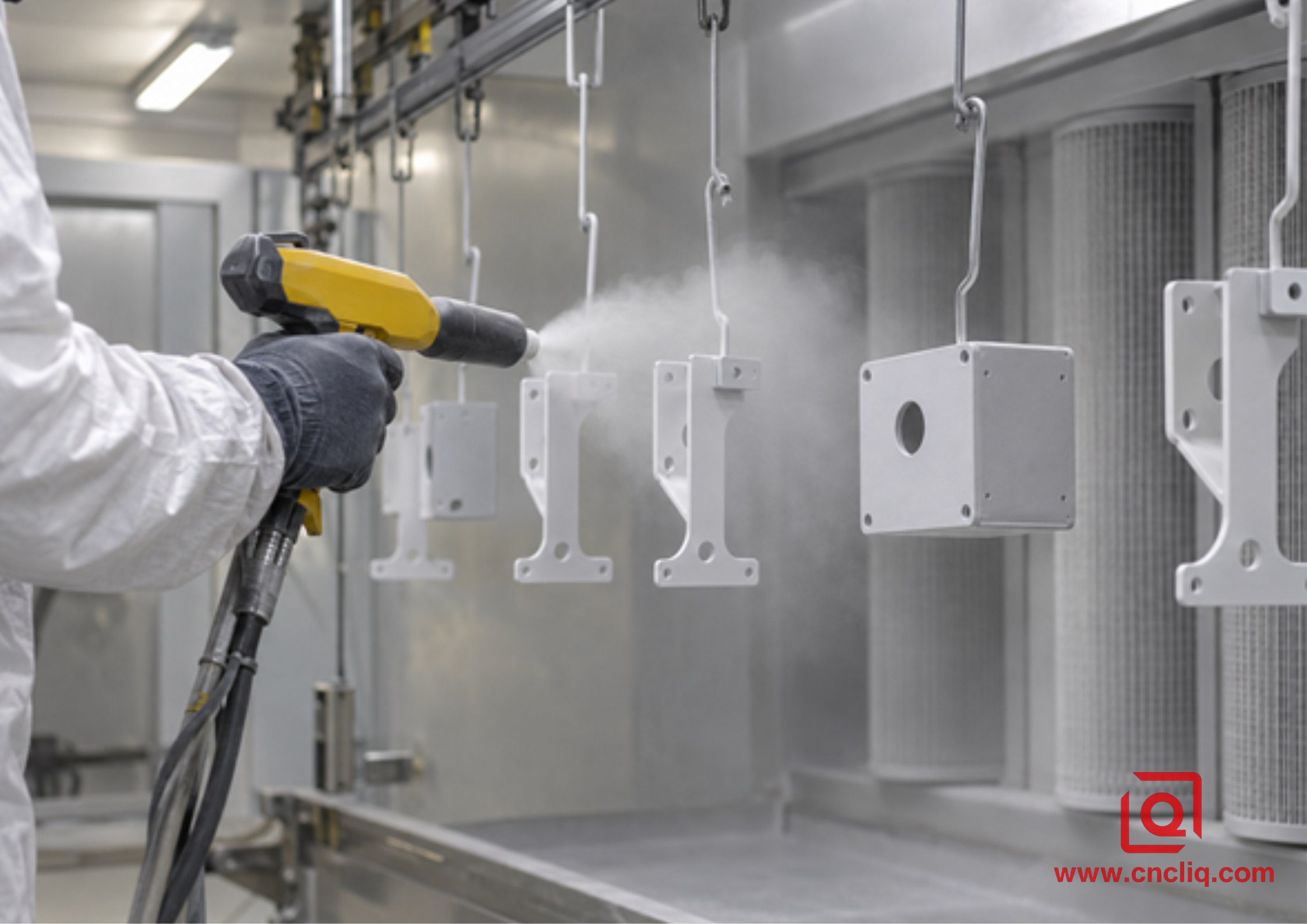
Figure 1. Electrostatic powder application on grounded aluminum components.
That pretreatment is not a minor detail. Powder can look perfect as it leaves the oven and still fail later if the bond line underneath is poor. On an RFQ, ask for the pretreatment route, resin family, target dry-film thickness, cure verification, and adhesion test. ASTM D3359 provides tape-test methods for rating coating adhesion on metallic substrates, but ASTM also warns that the method is an indicator with a 0–5 rating scale, not an absolute bond-strength measurement. A “5B” result is useful only when the method, film thickness, conditioning, and acceptance plan are agreed.
Electrostatic powder struggles inside deep recesses because of the Faraday-cage effect, while exposed edges may build heavily. Blind holes, bores, grounds, sealing lands, and small threads normally need masking. An 80 µm film on both walls can close an unmasked 20.000 mm bore by roughly 0.160 mm—enough to stop assembly.
Anodizing: Converting the Aluminum Surface
An anodizing tank takes a different route. The aluminum part becomes the anode, and controlled oxidation turns its surface into porous aluminum oxide. Type II is familiar on protective and decorative hardware. Type III is run for a thicker, harder working surface. Depending on the callout, the fresh layer stays natural, takes dye, or receives a seal.
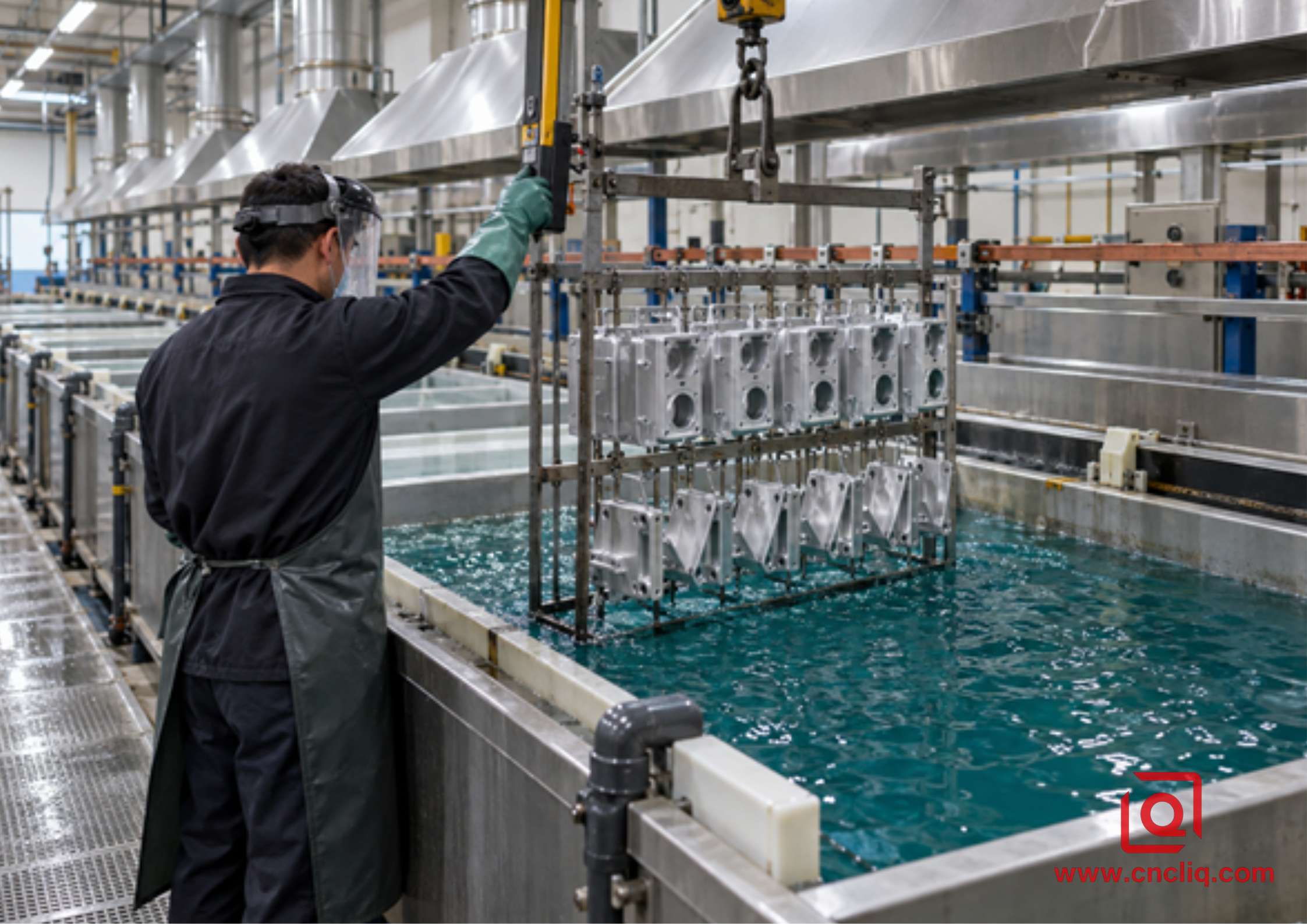
Figure 2. Racked aluminum parts entering a controlled anodizing bath.
Because the oxide is integral to the base metal, it cannot peel like a separate film. That does not make it indestructible. Hard anodic oxide is hard but comparatively brittle. Sharp edges, press fits, heavy impacts, and local flexing can initiate chips or cracks. Sealing improves corrosion behavior, while the selected seal can affect wear and other functional properties.
For decorative and protective anodizing, ISO 7599:2018 defines a specification method, characteristic properties, test methods, minimum performance requirements, suitable alloy guidance, and the importance of pretreatment. ISO notes that engineering hard anodizing is handled separately under ISO 10074. For non-architectural US purchasing, MIL-PRF-8625 remains a common reference and distinguishes Type II sulfuric anodizing from Type III hard anodic coatings.
Durability: Define the Failure Before Picking a Winner
Abrasion and Sliding Wear
Consider a dusty guide rail. Here, hard anodizing normally gets the first trial because its oxide wears well and cannot lift off as a polymer sheet. Still, a hard number on a certificate does not guarantee a good pair of sliding surfaces. Counterface material, lubricant, edge shape, and the roughness left before anodizing can turn a sound coating into an early wear problem. For a real tribology requirement, put load, cycles, lubricant, allowable wear, and the test arrangement on paper.
Powder is comfortable with handling marks and the occasional bump. Continuous metal-on-metal travel is another story; it can polish or slice through the film. We tend to keep it on guards, covers, frames, brackets, and housing walls. If one component needs both a colored shell and a bearing track, mask the track and engineer that surface separately.
Impact, Chipping, and Edge Damage
Powder film has some elasticity. On a bracket that receives occasional knocks, a properly cured film may absorb more deformation before exposing metal. Hard anodize is less forgiving when thick oxide crosses a razor edge. Add practical edge breaks, avoid coating highly loaded interference surfaces unless engineered for it, and do not expect a finishing bath to rescue fragile geometry.
Deep damage exposes aluminum in either system. Powder then relies on pretreatment to resist under-film corrosion; anodizing will not delaminate, but a breached oxide no longer protects that point. Both need drainage, crevice control, and galvanic isolation.
Corrosion and Outdoor Exposure
There is no honest “coastal winner” without a complete finish system. A sealed anodic coating can provide strong corrosion protection while preserving a metallic look. A high-performance polyester powder over controlled pretreatment can provide an excellent barrier and much wider color choice. Alloy, thickness, sealing or cure, edge coverage, chloride exposure, cleaning, and damage all affect the result.
Be cautious when a quotation promises a large salt-spray hour figure with no failure rule beside it. ASTM B117 tells a laboratory how to run the fog cabinet; it does not turn 1 test into a universal number of outdoor years. Ask whether the panel is scribed, what blistering or creep is allowed, and how the part is judged after exposure. For long outdoor service, pair accelerated testing with the relevant product specification and field history.
UV, Color, and Appearance
Anodizing keeps the visual character of metal, which is why designers accept its narrower color range. Natural and electrolytic colors can be very stable; organic dyes still need an exposure review. Powder behaves according to its resin grade. An indoor formulation and an exterior system may share a color chip while aging very differently.
A specified brand color, a fine texture, or a surface meant to hide small substrate differences points toward powder. A part meant to look unmistakably like aluminum points toward anodizing. The trade is honesty: an anodized face can show die lines, weld zones, machining grain, or a new material heat. For cosmetic work, we approve a real limit sample made from production alloy, not a color viewed on a monitor.
Thickness and Tolerance: Where Good Designs Commonly Fail
Now put the finishes onto the CAD model. Powder sits above the original boundary, so a coated wall moves by about the measured dry-film thickness. Anodizing consumes some aluminum and builds some oxide outward. Engineers often begin with a 50/50 split for layout work, but we never freeze a tight bore from that shortcut alone. Alloy and tank conditions move the ratio. Qualified growth data from the chosen finishing source must set the final machining offset.
Use this workflow before releasing the drawing:
1. Mark all post-finish functional dimensions and state whether dimensions apply before or after finishing.
2. Identify no-coat and mask zones: bearing bores, O-ring lands, threads, grounding pads, datum targets, and adhesive interfaces.
3. Put a numeric thickness range on the print. Avoid “standard thickness.”
4. Decide whether the finish supplier or CNC shop owns pre-compensation.
5. Inspect the part after finishing, using the same datum scheme that controls assembly.
Our guide to CNC machining tolerances and cost explains why an unnecessarily tight tolerance multiplies inspection and scrap risk. The same rule applies here: do not hold a cosmetic panel to a bearing-seat tolerance, but do not let a thick film drift into a genuine fit.
Practical Drawing Examples
Write the powder note so another supplier can quote the same job: alloy, pretreatment, resin family, color reference, dry-film range, cure control, adhesion check, and every masked face. The anodize note needs the current specification, Type, Class, thickness, color, seal, rack-mark location, and mask boundary. If any of those items controls assembly, show it on a marked view rather than burying it in a general note.
Old notes deserve a quick audit. MIL-A-8625, for example, was superseded by MIL-PRF-8625. A contract may deliberately retain an older revision, but mixing an old designation with new acceptance language leaves the finisher guessing. State the required revision and keep the choice consistent.
Cost: Compare the Complete Route, Not the Price per Part
There is no reliable rule that powder is the budget finish and anodize the premium one. Rack density, batch size, color, masking, thickness control, part envelope, inspection, and rework risk can reverse the order from one RFQ to the next.
|
Cost driver |
Why it changes powder-coating cost |
Why it changes anodizing cost |
|
Small lot |
Booth cleanup and color-change time are spread across fewer parts |
Bath setup, racking, test coupons, and checks are spread across fewer parts |
|
Large or heavy part |
Oven space, thermal mass, conveyor loading, and handling increase |
Tank size, current demand, rack design, and handling increase |
|
Complex masking |
Plugs, tapes, caps, and manual removal add labor |
Stop-off, plugs, electrical contact, and post-process cleaning add labor |
|
Tight thickness band |
More measurement and spray/cure control are required |
Current density, bath time, temperature, and position need tighter control |
|
Cosmetic color |
Powder lot and cure window must be controlled |
Alloy lot, etch, dye, sealing, and rack position affect the shade |
|
Rework |
Stripping and recoating may affect dimensions |
Stripping removes material and can make re-anodizing dimensionally risky |
|
Qualification tests |
Coupons, adhesion, impact, gloss, and corrosion tests add cost |
Thickness, seal, corrosion, wear, and color checks add cost |
Compare two quotes against the same acceptance plan, annual volume, batch size, cosmetic standard, and post-finish dimensions. A clean RFQ can save more than choosing the nominally cheaper process; use our China CNC factory RFQ checklist to remove hidden assumptions.
Alloy and Manufacturing Route Matter
6061 is a friendly starting point for either route, though 2 material lots can still come back from anodizing in slightly different shades. The conversation gets stricter with 2024, 7075, or a casting. Silicon and porosity may leave a die-cast anodized face gray or mottled. Powder can level the appearance, but only after the shop controls cleaning, trapped gas, and pretreatment.
Finish cannot be separated from the blank. Extrusions carry die lines. Welds may anodize unlike the parent plate. Bead blasting changes texture and softens a sharp edge; chemical etching removes material. Cast pores may open during cleaning or vent gas in the oven. Our aluminum OEM manufacturing comparison follows those differences through CNC machining, extrusion, and high-pressure die casting.
If your part is a fluid-control block, the website’s custom anodized aluminum hydraulic manifold is a relevant example of how machining, internal passages, sealing faces, and anodized protection must be considered as one manufacturing route—not as separate purchase lines.
Anonymized Case Study: Outdoor Robot Controller Housing
An industrial automation buyer needed a 6061-T6 robot controller housing with a 32.000 mm bearing seat, 8 M4 threads, an O-ring groove, a controlled exterior color, and a conductive PCB ground pad. The drawing only specified a black finish.
DFM showed a more nuanced answer. The bearing seat needed a controlled post-finish fit; the ground pad needed bare conductive metal; the O-ring groove could not accept uncontrolled buildup; and the marketing team wanted a consistent dark-gray texture across future batches, including a planned die-cast version.
We selected a conversion pretreatment plus exterior polyester powder coating for the illustrated production plan, with an agreed dry-film target, while masking the bearing seat, O-ring groove, M4 threads, and grounding pad. The housing was CNC-machined first, deburred with defined edge breaks, ultrasonically cleaned, masked with dedicated plugs and die-cut covers, coated, cured, and then inspected after demasking. Coating thickness was checked on witness coupons and accessible housing faces; adhesion was evaluated to the agreed tape-test method; CMM inspection verified the masked bore and sealing geometry.
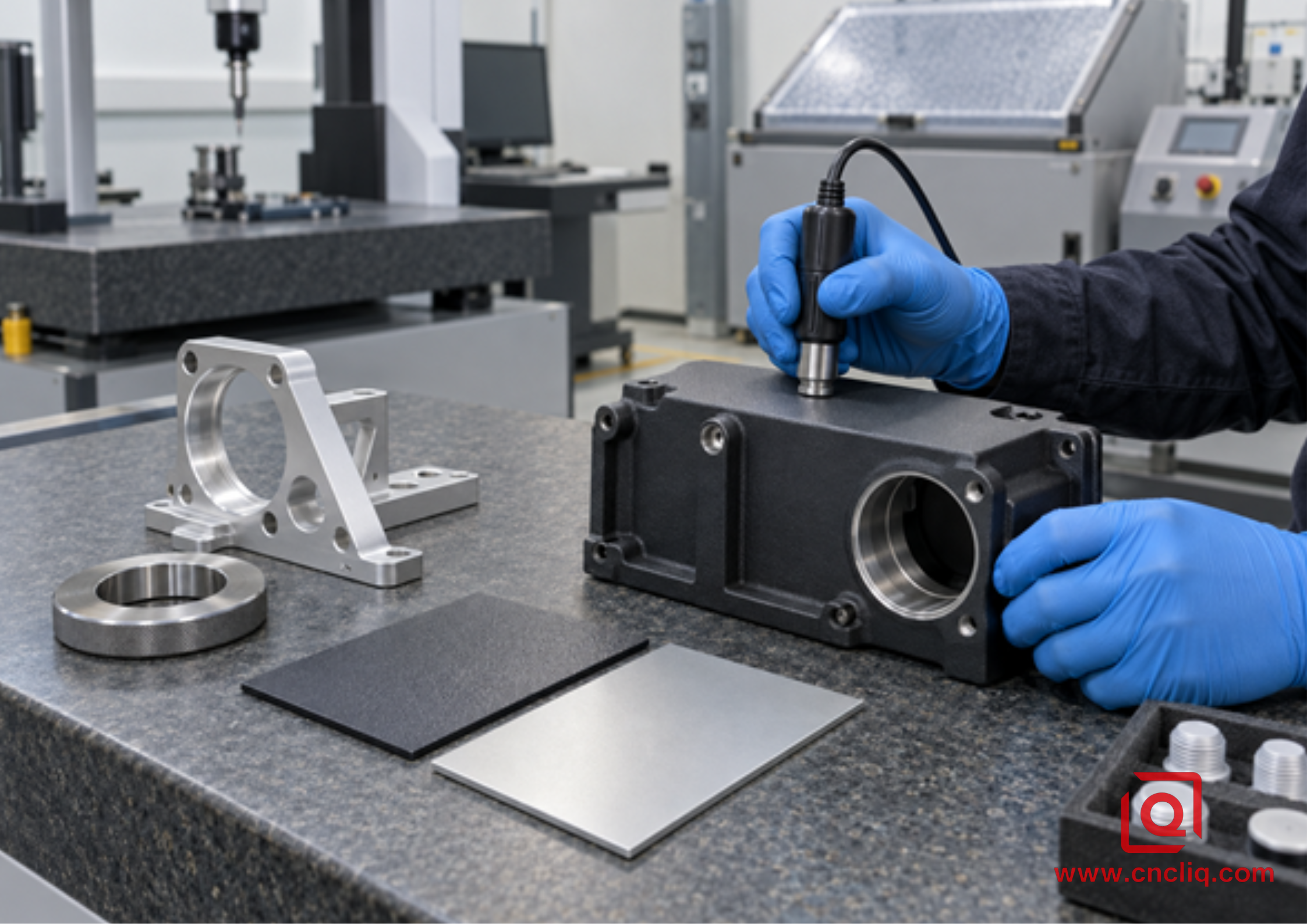
Figure 3. Post-finish coating and dimensional inspection at the quality bench.
The result was a stable assembly route: clean bearing fit, protected O-ring land, verified PCB ground, and repeatable exterior color. If sliding wear, low build, and metallic appearance had dominated, selective Type II or Type III anodizing would have been preferred. This anonymized case is representative, not a universal specification.
How We Inspect Finished Aluminum Parts
Finish inspection must connect to assembly, sealing, conductivity, and service—not thickness alone. A practical control plan may include:
• Dry-film or anodic-coating thickness at defined measurement locations.
• Visual comparison against an approved limit sample under controlled lighting.
• Adhesion testing for powder-coated coupons using the agreed method and rating.
• Post-finish CMM or gauge inspection for bores, datums, threads, and sealing features.
• Masking verification, including clean transition edges and no coating debris in holes.
• Cure or seal verification appropriate to the specified system.
• Salt-fog, wear, impact, or chemical testing only when justified, with explicit acceptance criteria.
For critical anodized parts, the Type III hardcoat anodizing DFM guide goes deeper into growth, masking, and tolerance planning. For projects covering several aluminum finishes, our surface-finishing overview helps place powder coat and anodize beside chem film and other options.
A 7-Point RFQ Checklist
Before asking for a powder-coated or anodized aluminum quote, send these 7 items:
1. A 3D model and controlled 2D drawing with revision level.
2. Aluminum alloy and temper, plus the manufacturing route if already fixed.
3. Finish specification, Type or resin family, Class or color, and numeric thickness range.
4. A marked-up view of mask, rack-contact, electrical-contact, seal, and no-coat areas.
5. Final post-finish dimensions and the inspection datum scheme.
6. Tell us what the part will face: indoor or outdoor service, UV, salt, chemicals, heat, rubbing, and impact.
7. Prototype quantity, batch quantity, annual demand, documentation, and test requirements.
If you are comparing finishes for a live project, send both the drawing and the expected service environment. Liqin’s engineering team can review coating growth, masking, alloy behavior, and inspection points before quotation. That is the fastest way to turn “powder coat or anodize?” into a controlled manufacturing specification rather than a late production debate.
FAQ
1. Is powder coating or anodizing more durable on aluminum?
Think first about how the finish will be hurt. A sliding rail normally favors Type III because the oxide is hard and belongs to the metal itself. A cover that gets bumped may suit powder, with its thicker and slightly more forgiving film. Salt, UV, cleaners, and maintenance still have to be judged on their own.
2. Which finish is better for tight-tolerance CNC aluminum parts?
For a close fit, Type II is often the easier starting point because it is usually thinner. Hardcoat can still choke a bore, and a 60–120 µm powder film nearly always sends us to the masking drawing. Whichever route wins, give the supplier a thickness range and inspect the fit after finishing.
3. Is powder coating always cheaper than anodizing?
No. Powder often prices well on a colored batch, until a rare color, small quantity, heavy masking, or extra testing enters the job. Anodizing moves with alloy, rack density, thickness, dye, seal, and inspection. Quote both from the same quantity and acceptance plan or the comparison means little.
4. Can cast aluminum be anodized or powder coated?
Both can work, though the visual risks are not the same. Silicon and pores may leave an anodized casting gray or patchy. Powder covers that variation more readily, but heat can pull gas from the casting and leave pinholes. The finisher needs the exact alloy, cleaning route, outgassing plan, and cosmetic limit.
5. What should I put on the drawing for powder coating or anodizing?
State the alloy, governing specification, finish type or powder resin, color or Class, numeric thickness range, surfaces to mask, allowed rack-contact area, whether dimensions apply after finishing, required tests, and cosmetic acceptance reference. Also identify conductive interfaces, threads, sealing lands, and precision fits. A note such as “black anodize” or “powder coat” leaves too many variables open for a reliable B2B quotation.
Summary
Powder and anodize protect aluminum in different ways. One adds a thick colored film; the other turns the surface into hard oxide. Make the choice from service damage, alloy, appearance, fit, masking, inspection, and the full route cost. Put a number on thickness, keep coating away from functional faces, and check critical dimensions after finishing. Send Liqin the CAD data, operating environment, and volume for a practical DFM review and quotation.
Contact Information
Company: Ningbo Liqin Industry Co., Ltd.
Daily customer maintenance & after-sales support:service@shturl. zhuwanying@cncliq.com
New inquiry, quotation & order discussion:business@shturl. zhouli@chinaliqin.com
Hotline: +86 18757148656
Disclaimer
All technical articles, material specifications, machining recommendations, and surface treatment details published on this blog are for informational and reference purposes only. Please note that general blog insights do not replace signed technical agreements. Because custom parts vary by material heat numbers, machine calibrations, and specific tolerances, binding quality specs are governed solely by your approved CAD drawings, signed contracts, and formal quality plans.
All customer case studies featured on this blog have been thoroughly anonymized and sanitized. The performance metrics, manufacturing workflows, and imagery displayed serve solely to demonstrate our custom machining capabilities and do not represent a single universal standard for all orders.
Liqin Manufacturing Team
Built on 18 years of precision engineering experience, Ningbo Liqin Industry manufactures high-tolerance metal components for demanding global markets. We operate out of a 6,500 m² production hub equipped with over 150 machines, running 4-axis and 5-axis CNC machining, mill-turn machining, cold extrusion, and pressure die casting under one roof. This setup allows us to manage projects seamlessly, taking parts from initial CAD concepts directly to finalized shipments.
We handle quality control with zero compromise. We treat tight tolerances with the engineering discipline they require. Backed by ISO 9001, ISO 13485, and IATF 16949 certifications, our QA engineers run strict IPQC, FQC, and OQC checks on every single production batch. From CMM dimensional mapping and optical profiling to hardness and salt-spray testing, we validate your critical specs upfront—so you receive drop-in ready components with zero assembly headaches or costly line stoppages. On top of manufacturing, you can rely on us for two-hour response times on new RFQs, direct support for prototype sampling, and smooth export shipping across Europe, North America, Asia, and Oceania.
Welcome your inquiries and samples. Visit our website or contact us directly for a competitive quote!